
Upgrading or changing your pickleball paddle depends heavily on how often you play. Every hit compresses the core inside the paddle slightly, whether it's a honeycomb structure or a foam layer. Over thousands of hits, sections of that core stop springing back the way they used to, which is what players mean by a "dead spot."
The paddle face wears too, just more slowly. Grit texture used for spin smooths out with friction over months of play, so a paddle that once grabbed the ball for topspin starts skidding through contact instead. Our breakdown of paddle materials and generations goes deeper into how core type and face material affect how fast this wear actually shows up.
Besides the usual wear and tear, you may also want to upgrade your paddle to match your current skill level. As we discussed in our article about the best pickleball paddle by level and pickleball specs, your paddle is like an extension of your skill and play style. For example, if you are a beginner, you would prefer paddles with more control to learn the basics and technique. At the same time, you would need a paddle with power if you're an advanced player.
This guide will break down when you should replace your pickleball paddle and when you should upgrade.
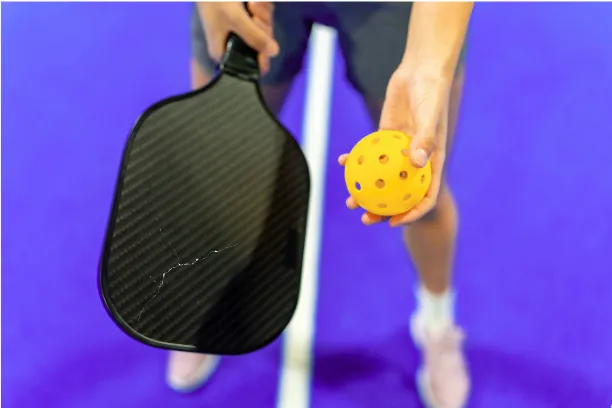
When to Replace Your Paddle?
Replacing means buying the same type of paddle again because the one you have has physically worn down. When to replace your paddle primarily depends on how often you play. A casual rec player who plays only once or twice a week gets roughly 1-2 years before it starts breaking down. On the other hand, a weekly league player can burn through their paddles in 6-12 months.
Pickleball paddles degrade through subtle surface smoothing, internal structural breakdowns, and edge wear.
1. Surface Texture Loss (Grit Degradation)
Paddle grit (whether peel-ply raw carbon fiber or painted-on grit) wears down from high-velocity impact and friction against plastic balls. As grit flattens, the paddle cannot bite into the ball to create rotational friction. The center sweet spot feels noticeably smoother than the outer edges. Your topspin drives will land long, and your slice resets won't bite into the kitchen court floor.
How to Check: Run your fingernail across the sweet spot and compare it to the edge near the guard. If the center feels noticeably smoother, the texture has eroded past optimal spin limits. A glossy spot or distinct faded patch where the ball repeatedly hits indicates skin erosion
2. Internal Core Damage (Dead Spots & Delamination)
Most paddles use a polymer (polypropylene) honeycomb core. Over thousands of hits, these plastic cell walls crush (creating dead spots) or shear away from the outer skin (delamination). This can result in the following:
- Dead Spots: Crushed cells absorb ball energy instead of transferring it back, resulting in inconsistent drop shots and weak power in the sweet spot.
- Delamination: When the face detaches from the core, it creates a trampoline effect that launches soft dinks out of bounds or makes the paddle sound like a loud wooden board.
How to Check: Hold the paddle by the handle and drop a ball from 12 inches high onto different spots across the face. A healthy core bounces consistently. Damaged spots produce a low, dead drop or an erratic pop with a pitch change. You can also press your thumbs firmly into the center of the paddle face. If there is noticeable flex, softness, or a crunching feel, the polymer honeycomb internal cells are crushed.
3. Structural & Component Wear
Scrapes against outdoor hard courts weaken the adhesive binding the edge guard to the core. Once loose, moisture gets inside, accelerating core rot and shifting the paddle's swing weight. A rattling noise when shaking the paddle usually means broken glue seals or internal honeycomb debris.
The neck joint also experiences maximum torque on off-center off-the-bounce drives. Micro-fractures inside the throat lead to subtle energy loss during swings long before the handle completely snaps.
Sweat and oil breakdown lower overgrip friction. Compounding this, a slick grip forces your hand muscles to over-tighten to compensate, causing premature forearm strain and reduced wrist snap on serves.
When to Upgrade Your Paddle?
Upgrading is different from replacing. You are moving from one skill level to another and you need a paddle that can keep up.
The shift usually starts when pickleball stops being a casual weekend thing and becomes a regular routine, whether that's a weekly league, open play, or your first tournament. At that point, you would need a paddle with more spin on drives and serves, better touch at the kitchen line and a paddle that stays stable during fast hands battles.
Where you are | What your current paddle likely gives you | What starts to feel missing |
New player (0 to 3 months) | A wide, forgiving sweet spot and an easy, light swing | Nothing yet. This is the right paddle for now. |
Improving player (3 to 12 months) | Consistent depth on drives but limited touch on dinks and resets | A textured face that actually grips the ball for spin |
Competitive player (league or tournament) | A dependable, general-purpose feel | Specs matched to your exact style, not a generalist paddle |
If you're still working out whether your natural style leans toward spin, control, or power, our guide to spin, control, and power paddles breaks down which specs match which playstyle before you spend a ringgit.
1. Your Game Outpaces the Paddle’s Performance Specialty
If your soft game (dinks, drops, resets) is consistently accurate, but you find yourself unable to put balls away at the kitchen or generate speed on speedups, you've outgrown a light or control-oriented paddle (like a thin fiberglass face or wide-body plush paddle).
If you started with a poppy, stiff power paddle but your technique now relies on high-topspin drives, sharp angle dinks, and touch resets, a hard-surfaced paddle will result in pop-ups and unforced errors. You need more dwell time and shape control.
2. You Max Out Spin Potential
Intermediate and advanced strokes rely heavily on heavy topspin to keep fast drives inside the baseline or sharp sidespin to pull opponents off-court. Beginner or entry-level paddles lack the high-grit raw carbon fiber face required to generate 1800+ RPMs, causing your aggressive shots to sail long.
3. Hand Speed and Weight Dynamics Feel Off
As your opponents play faster, heavy entry-level or elongated power paddles with high swing weights can make your kitchen re-attacks feel slow or clumsy.
Conversely, if your current paddle is too light (low twist weight), incoming fast drives from stronger opponents will cause the paddle to twist in your grip on off-center block volleys, causing dead pop-ups.
4. Inconsistent Sweet Spot & Off-Center Forgiveness
Standard square-shaped or budget composite paddles have small sweet spots. As you attempt more difficult, off-balance resets or mid-court transition drops, budget paddles lose power precipitously outside the center. Upgrading to a Thermoformed raw carbon paddle provides perimeter stability across the whole face.
You Don't Need to Spend More to Upgrade
Upgrading does not mean buying the most expensive paddle on the shelf. If you're only playing at an intermediate level, a paddle in the RM300-plus range won't compensate for slow reflexes or poor shot placement. A mid-range paddle usually closes most of the performance gap that actually matters.
The real upgrade decision comes down to matching specs to your game. A heavier paddle isn't automatically better for power, and a thinner core isn't automatically better for control. Fit matters more than the number on the price tag.
We go deep on this exact question in are expensive pickleball paddles worth it, including where the extra cost buys you something real and where it's mostly branding.
Before you buy anything, it's worth understanding what the numbers on a spec sheet even mean. Our guide to pickleball paddle specs explained walks through weight, thickness, and swing weight in plain terms, so you're not guessing at a store counter.
Buying Your Next Paddle in Malaysia
If you're planning to play in sanctioned tournaments, check any paddle you're considering against the current USA Pickleball approved paddle list first. Malaysian tournaments increasingly follow this standard, and getting caught with a non-approved paddle on match day is an avoidable headache.
Local sports shops in Kuala Lumpur, Penang, and Johor Bahru carry a growing range of mid-tier paddles, and more Southeast Asian pickleball brands are entering the market each year. If you'd rather skip the guesswork entirely, our best pickleball paddles roundup lists current picks across beginner, intermediate, and competitive budgets, with availability in the region in mind.
For a broader starting point before narrowing your choice, our full paddle buying guide covers the basics from scratch.
More Paddle Guides
Common Questions
How often should I really replace my paddle?
Players who play two to three times a week tend to notice real performance drop-off somewhere between six and twelve months. Casual once-a-week players can often stretch that closer to two years.
What's the difference between replacing and upgrading?
Replacing means buying the same type of paddle again because your old one has physically worn down. Upgrading means switching to different specs because your skill level and shot selection have moved past what your current paddle can deliver.
Is it bad to keep using a paddle that's not USA Pickleball approved?
It's fine for casual and social play. It becomes a problem the moment you enter a sanctioned tournament, since officials can disqualify a non-approved paddle before or during a match.
Should beginners buy an expensive paddle right away?
No. A beginner's swing and shot selection change fast in the first few months, so a forgiving mid-range paddle serves you better than an expensive one built for specs you haven't grown into yet.