
Indoor and outdoor courts are made from distinct materials, as we discussed in our full comparison of indoor and outdoor courts. Indoor courts are covered with gym wood, sport tile, or cushioned vinyl. Outdoor courts are made of concrete or asphalt, both far rougher and less forgiving underfoot.
Believe it or not, there are shoes constructed for either indoor or outdoor play. Soles perform differently when in contact with different surfaces. For example, soles polished for gym floors turn slick and unstable on rough concrete. On the other hand, soles made for concrete feel stiff and grabby on wood.
This guide will cover the difference between indoor and outdoor shoes. We will also cover what all-court shoes are and if they are worth it.
What are Indoor Pickleball Shoes?
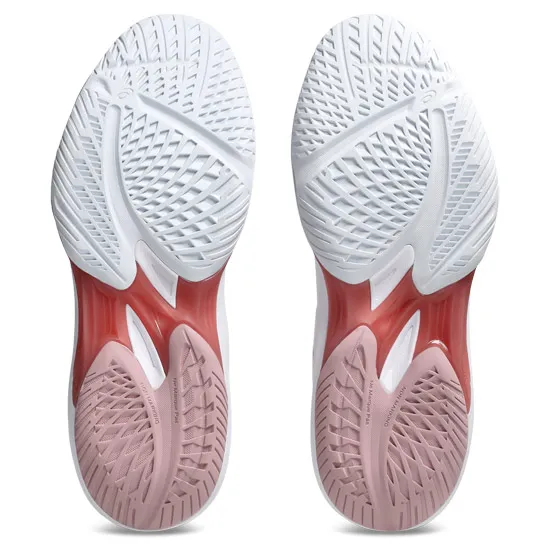
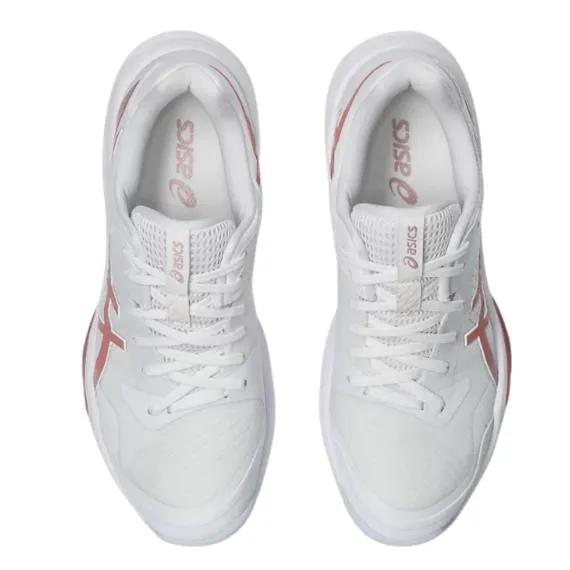
Indoor pickleball shoes use gum rubber outsoles, a softer compound that reads as tacky rather than hard. That softness is what lets the sole grip a smooth wood or synthetic floor without you feeling like you are fighting the surface.
The tread pattern on indoor shoes also runs shallower. Deep, aggressive lugs are not needed on a flat gym floor, and a shallower tread actually gives you a cleaner, more predictable release when you pivot.
Indoor shoes tend to run lighter and more breathable too. Gyms trap heat, especially with four courts running at once, so uppers lean toward mesh panels that let your feet cool down between points.
Non-marking soles are the other defining feature. Most indoor facilities require them by rule, since regular outdoor rubber leaves black scuff marks on gym flooring that are a pain to clean off.
What are Outdoor Pickleball Shoes?
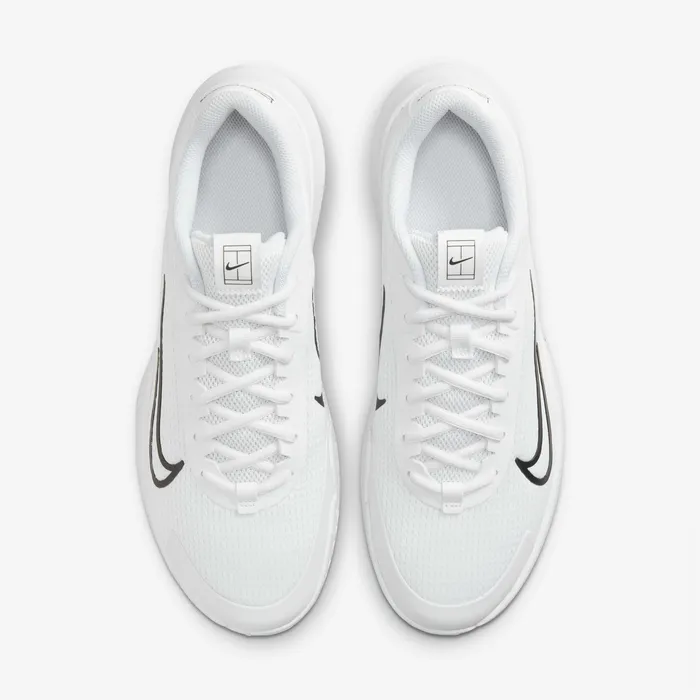
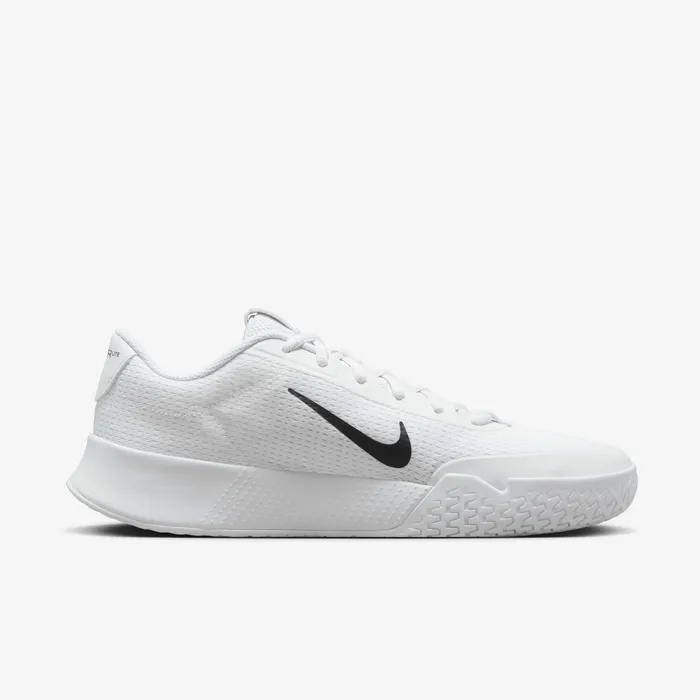
Outdoor shoes (closely related to hard-court tennis shoes) are built for high friction, heavy wear, and joint protection on unyielding concrete. The outsole uses a harder, more abrasion-resistant rubber compound built to survive concrete and asphalt without wearing through in a few sessions.
Tread runs deeper too, often in a herringbone or modified herringbone pattern. That deeper groove pattern sheds dust, sand, and loose debris that collect on outdoor courts and would otherwise reduce your grip mid-rally.
Outdoor shoes generally weigh a bit more and carry extra reinforcement around the toe and sidewalls. Dragging your toe on a drop shot or bracing hard for a lateral cut wears through a thin upper fast on rough concrete, so outdoor builds add material where that wear happens most.
Marking is a non-issue outdoors. Nobody is scoring the asphalt, so outdoor soles skip the non-marking requirement entirely and prioritize durability instead.
What are All-court Shoes?
All-court shoes are built as a middle ground, a single outsole meant to hold up reasonably well both indoors and outdoors. Brands used to just call this build "outdoor," since a firmer, more durable sole was always the safer default for a shoe that had to survive whatever court showed up. The all-court label caught on as brands leaned into that versatility as a selling point rather than a side effect.
The trade-off is real. An all-court sole grips well enough on a gym floor and holds up well enough on concrete. But it rarely matches a dedicated indoor shoe's grip or a dedicated outdoor shoe's durability. You are buying convenience, not the best possible performance on either surface.
All-court shoes make the most sense for players who own one pair on purpose. That includes anyone shopping on a budget, playing casually, or genuinely splitting time between both surfaces without wanting to carry two pairs in the bag.
Indoor vs. Outdoor Shoes at a Glance
Feature | Indoor Shoes | Outdoor Shoes | All-Court Shoes |
Outsole rubber | Softer gum rubber, built to grip | Harder compound, built to resist abrasion | Medium compound, balances grip and durability |
Tread depth | Shallow, made for smooth floors | Deep herringbone, sheds dust and grit | Moderate, works on both without excelling at either |
Weight | Lighter, more flexible | Heavier, more reinforced | Similar to outdoor, slightly less reinforced |
Breathability | Higher, mesh-forward uppers | Moderate, prioritizes durability | Moderate |
Non-marking sole | Usually required | Not required | Check the model, varies by brand |
Best for | Dedicated indoor players | Dedicated outdoor players | Players who want one pair for everything |
Can One Pair Handle Both Courts?
If you play mostly on one surface with the occasional session on the other, yes, one pair can work. Most players who split their time unevenly get away with a single shoe without much drama, especially an all-court model built for exactly that.
The trade-off shows up over time rather than in a single session. Wear an indoor shoe outdoors regularly, and the softer sole grinds down within a few months instead of the year or more it would last on a gym floor.
Wear an outdoor shoe indoors, and nothing breaks, but you will likely notice less bite on quick direction changes at the kitchen line. The firmer rubber simply was not built to read a polished floor the same way.
Players who split their court time closer to evenly, say a few sessions each per week, get more mileage and better performance out of owning one pair of each. Our pickleball shoe buying guide walks through specific models and price points if you are shopping for either.
Signs You Grabbed the Wrong Pair
Your outdoor shoes are wearing unusually fast if the tread on the toe and forefoot looks flattened out within a couple of months of steady outdoor play. That is the softer indoor compound losing the fight against concrete.
Your indoor shoes feel less stable than they should if you notice your foot sliding slightly on plants and pivots on a gym floor. Outdoor rubber does not flex or grip a smooth surface the way gum rubber does.
Black scuff marks on a gym floor are the clearest sign of all. If a facility attendant flags your shoes, you are very likely wearing an outdoor pair with standard rubber on a court that requires non-marking soles.
Playing on Malaysia and Southeast Asia's Courts
Most public and club courts across Malaysia, Singapore, and the wider region are outdoor hard courts, so an outdoor shoe should be your default if you are only buying one pair. Our guide to the best surfaces for pickleball courts breaks down what those surfaces actually look like across the region.
Indoor, air-conditioned venues have grown fast in KL and Penang mall developments over the past year. More players here are genuinely splitting time between both surfaces than they were a few years ago. If that describes your week, the two-pair approach earns its keep faster in this region than in places with fewer indoor options.
Heat and humidity also break down cheaper outdoor rubber faster than they would in a drier, cooler climate. Budget for more frequent sole checks if you are playing several times a week outdoors here.
More Gear Guides
Common Questions
Do I really need two pairs of shoes?
Not right away. Buy for whichever surface you play on most, and only add a second pair once you notice real wear or grip issues on the other surface.
Will an indoor shoe get me kicked off an outdoor court?
No. Outdoor courts have no non-marking rule, so an indoor shoe is allowed outside. It will simply wear out much faster than it would indoors.
Can I use the same shoe for tennis or badminton and pickleball?
Often, yes. Tennis shoes share the same flat sole and lateral support pickleball needs. Many indoor badminton or futsal shoes also use a gum rubber outsole close to pickleball's indoor category.
How do I know if a shoe is rated for outdoor use?
Check the outsole description on the box or product page. Brands typically list the rubber type directly, and outdoor models are usually marketed with words like "durable" or "abrasion-resistant" rather than "non-marking."
Is an all-court shoe the same thing as an outdoor shoe?
They are close cousins. Both use a firmer, more durable outsole, but all-court models are tuned to also hold up reasonably well on gym floors, which a pure outdoor shoe is not built to prioritize.