
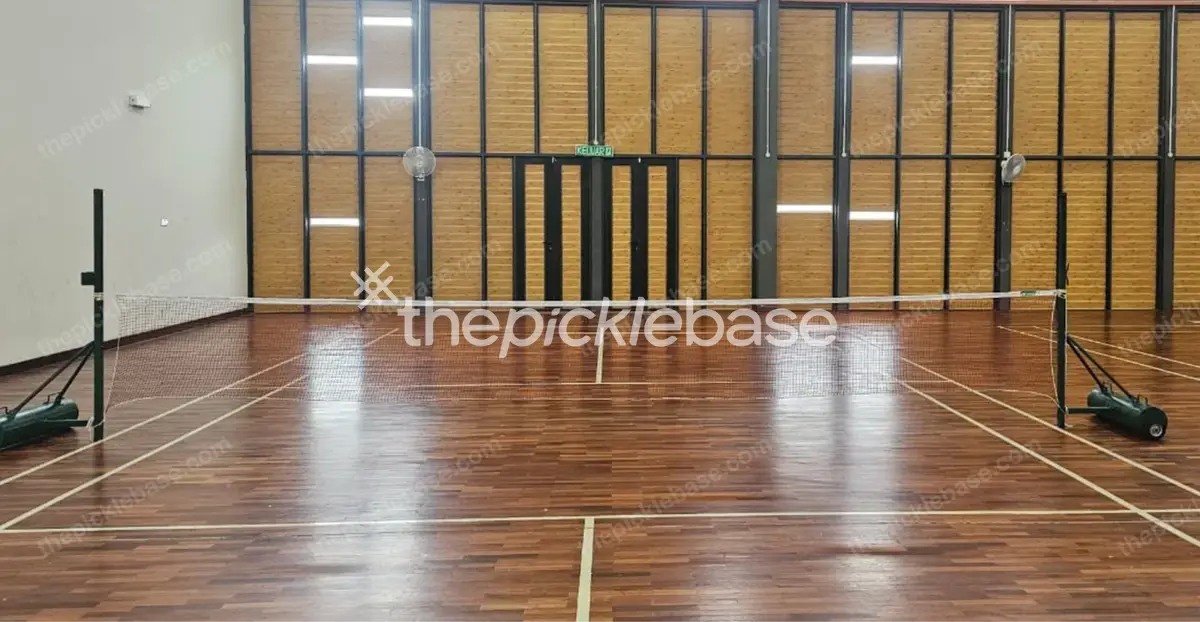
Ever played two courts in the same week and felt like you were playing two different sports? One court sends the ball skidding low and fast while another gives it a lazy, high bounce. A third leaves your knees aching before the second game is even over. That difference almost always comes down to the surface underneath your feet.
For anyone booking a session or scouting a new venue, knowing your court surfaces is important. It shapes how the ball behaves, how your body holds up after a long rally, and how safe you feel chasing a drop shot into the corner. Here is what to look for before your next booking.
Why the Surface Matters More Than You Think
There are five ways the court surface can affect your game:
- Sets the ball bounce: whether a shot comes off low and true or kicks up higher than you expect.
- Sets the game speed: A hard, smooth surface sends the ball through the court faster, while a softer one slows the pace down and gives you more time to react.
- Affects Joint Strain: A firm surface like bare concrete sends more impact straight back up through your knees and ankles with every step. Meanwhile, a cushioned or wooden surface absorbs more of that shock.
- Shoe Grip: Matters most on quick side-to-side movements at the kitchen line, where a slick or dusty surface can send a foot sliding out from under you.
- Venue Upkeep: Cracks, faded lines, and worn patches on an old surface are usually the first sign that a court has not been resurfaced in a while.
Knowing your surfaces also means you walk in with the right expectations. A player used to a bouncy acrylic court needs to adjust their timing on a softer, grippier one, and vice versa. If you are trying a new venue for the first time, a quick check on what it is made of can save you an awkward first few points.
How a Pickleball Court Surface Is Actually Built
Most pickleball courts are built with two layers, each made from different materials:
- The base is the structural slab underneath everything, usually asphalt or concrete. It carries the load of players moving around and manages how water drains off the court. A weak or poorly graded base cracks and pools water no matter how good the coating on top of it is.
- The surface system is what gets applied on top of that base. It is what actually controls ball bounce, game speed, grip, and how the court feels underfoot. Because it goes on last, it is often the last thing buyers think about, even though it is the hardest and most expensive part to change later.
So when a court gets described simply as "acrylic" or "concrete," that only tells half the story. The base underneath matters just as much as what sits on top of it, and a premium coating over a badly built base will still fail early.
For the sake of conciseness, we will be focusing on the surface material rather than the base.
Types of Pickleball Court Surfaces
Asphalt (with an Acrylic Coating)
Good for: recreational courts and public parks where cost matters and heavy year-round play is expected.
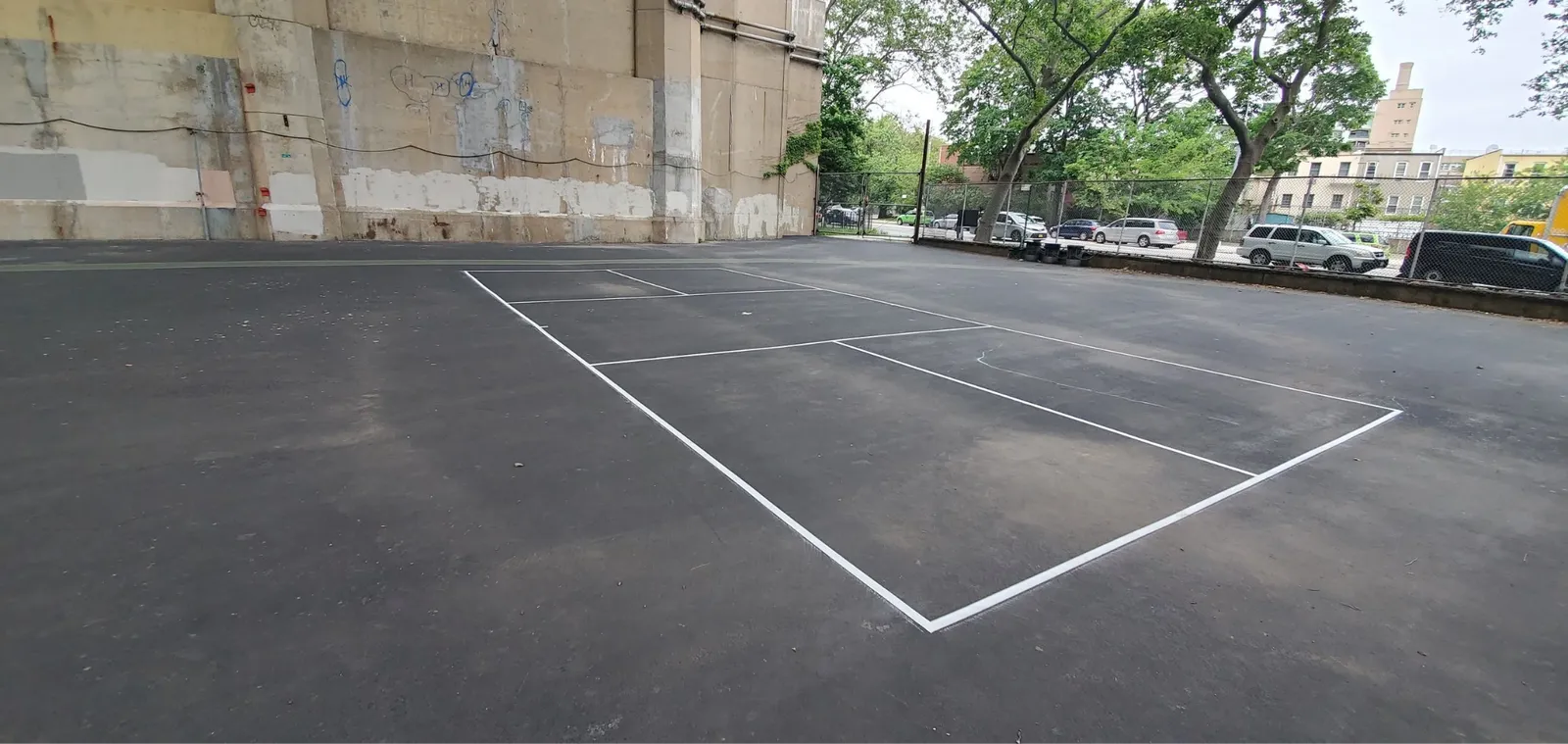
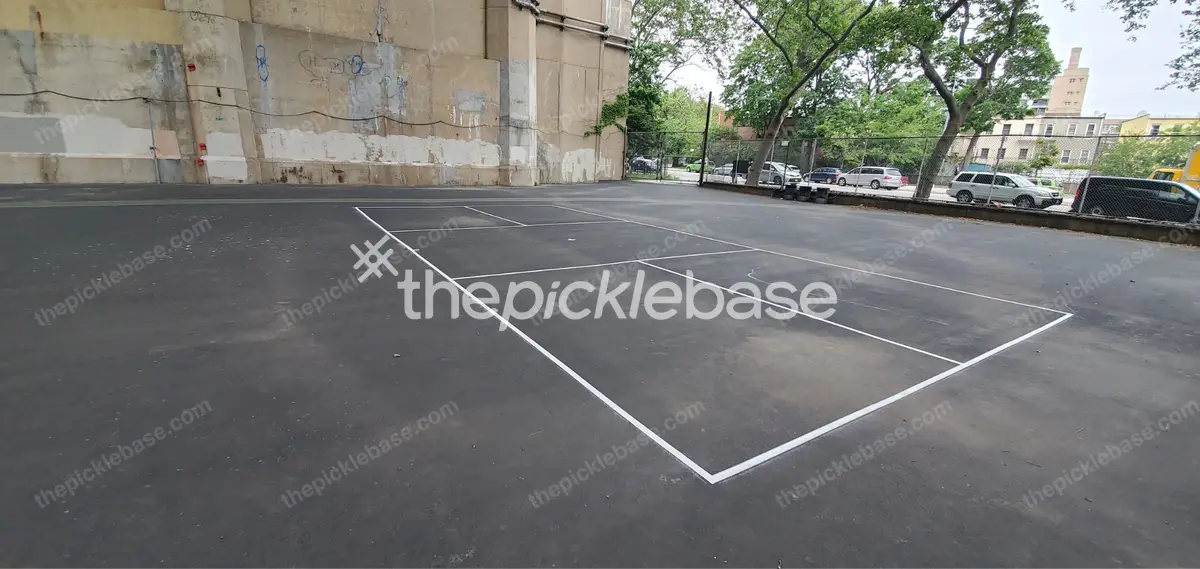
Asphalt is one of the most common bases for outdoor courts, especially at public parks. On its own, it is affordable to install, but it is rarely left bare. Most asphalt courts get finished with a multi-layer acrylic coating on top, which gives a smoother, more consistent bounce than raw asphalt would.
Asphalt is the most budget-friendly of the durable options, but it is also more prone to cracking and oxidation over time than concrete. It depends heavily on a properly built base and drainage. Outdoor asphalt courts typically need resurfacing every four to eight years depending on climate and how much play they see.
Concrete (with an Acrylic Coating)
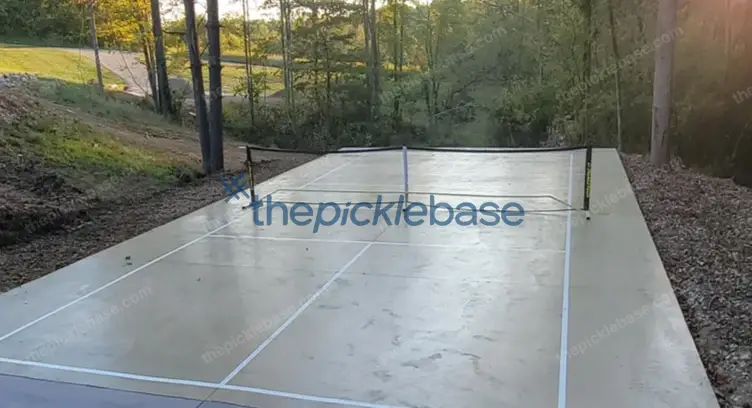
Good for: permanent, high-traffic courts where longevity and low long-term maintenance matter more than the initial price tag.
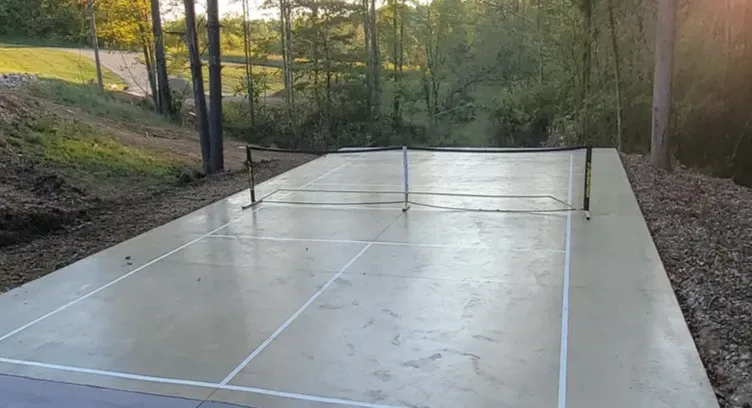
Concrete does the same job as asphalt, serving as a base for an acrylic top coat, but it costs more upfront in exchange for being more dimensionally stable. It resists the cracking and surface movement that asphalt can develop over the years, which makes it the longer-lasting foundation of the two.
For facilities thinking in terms of total cost over ten or twenty years rather than the opening invoice, acrylic over concrete tends to be the better long-run value.
Cushioned Acrylic
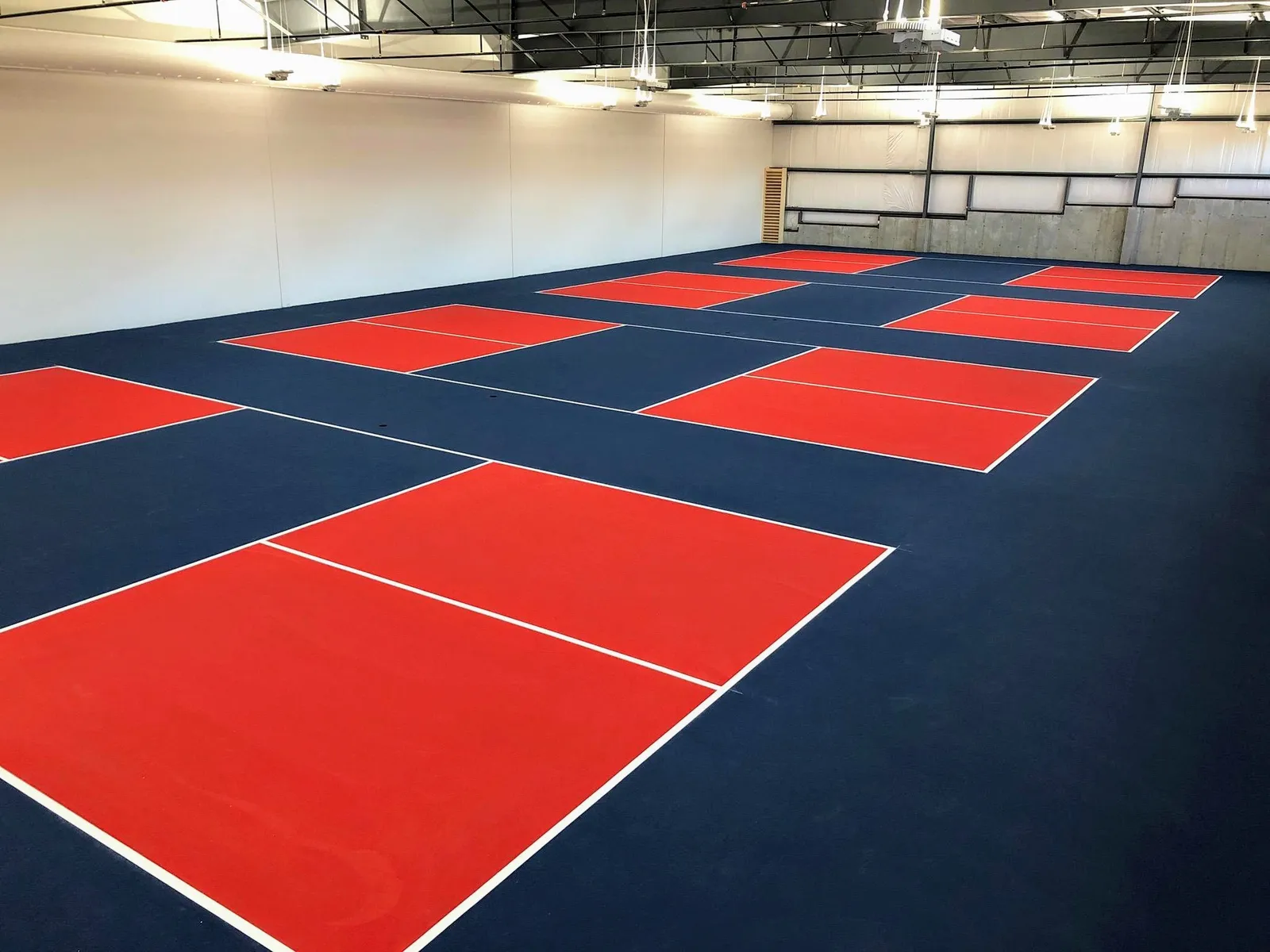
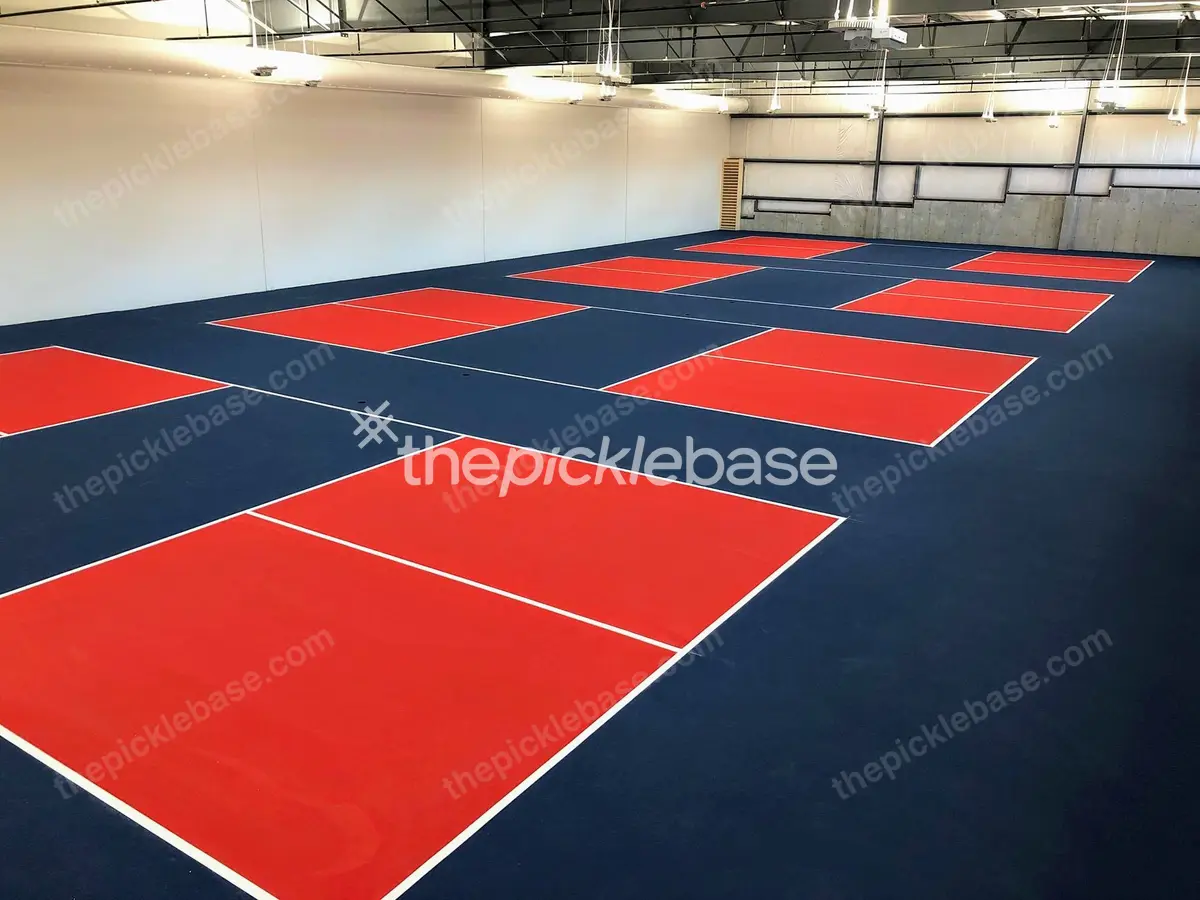
Good for: clubs, condominiums, and community courts serving a mix of ages and skill levels, especially where comfort and player retention matter.
Cushioned systems add one or more resilient layers underneath the acrylic top coat to introduce some give underfoot. It costs more than a standard acrylic finish, but it meaningfully cuts the impact on knees, hips, and backs, which matters for courts with heavy daily play, older players, or a member experience the venue wants to protect.
More clubs and residential communities are specifying cushioned acrylic for exactly this reason. It plays as a noticeably softer, slightly slower surface than standard acrylic, while keeping the same familiar hard court bounce.
Modular or Snap Together Tiles
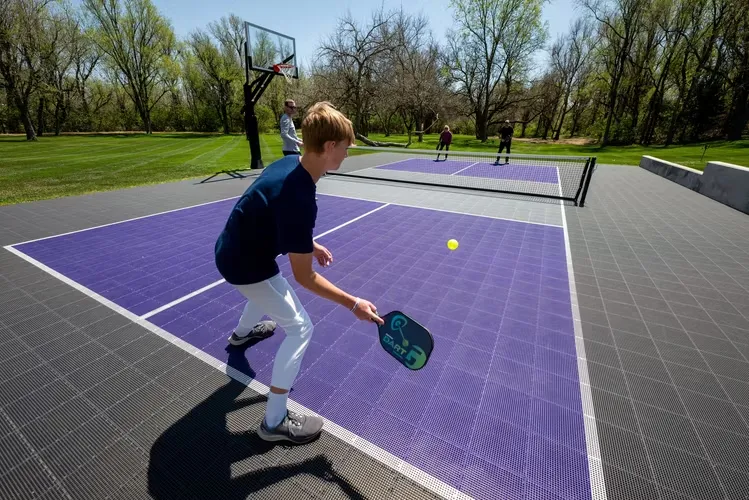
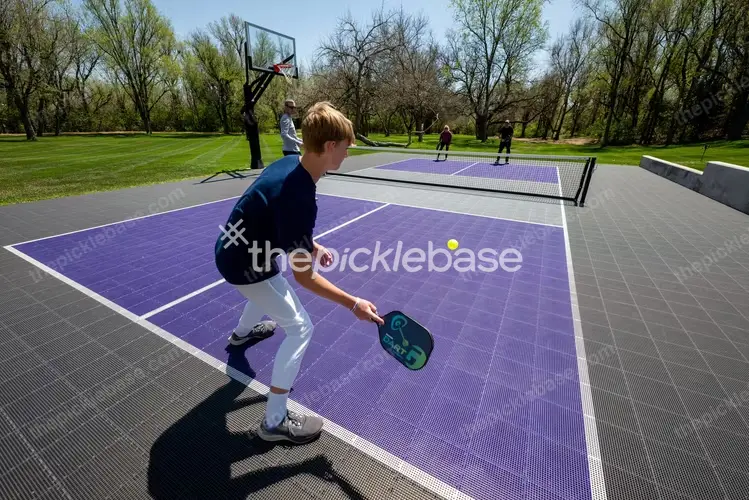
Good for: temporary courts, conversions on existing slabs, and venues that host more than one sport on the same space.
These are interlocking plastic tiles that sit on top of an existing base rather than being poured or coated. They are popular for conversions, multi-sport courts, and setups where a faster or removable installation matters more than a permanent one.
Tiles offer some shock absorption and drain well, but the play feel is genuinely different from a coated surface. Competitive players often prefer the consistent response of acrylic, while casual and recreational setups benefit from how quickly tiles go in or get swapped out.
Wooden Courts
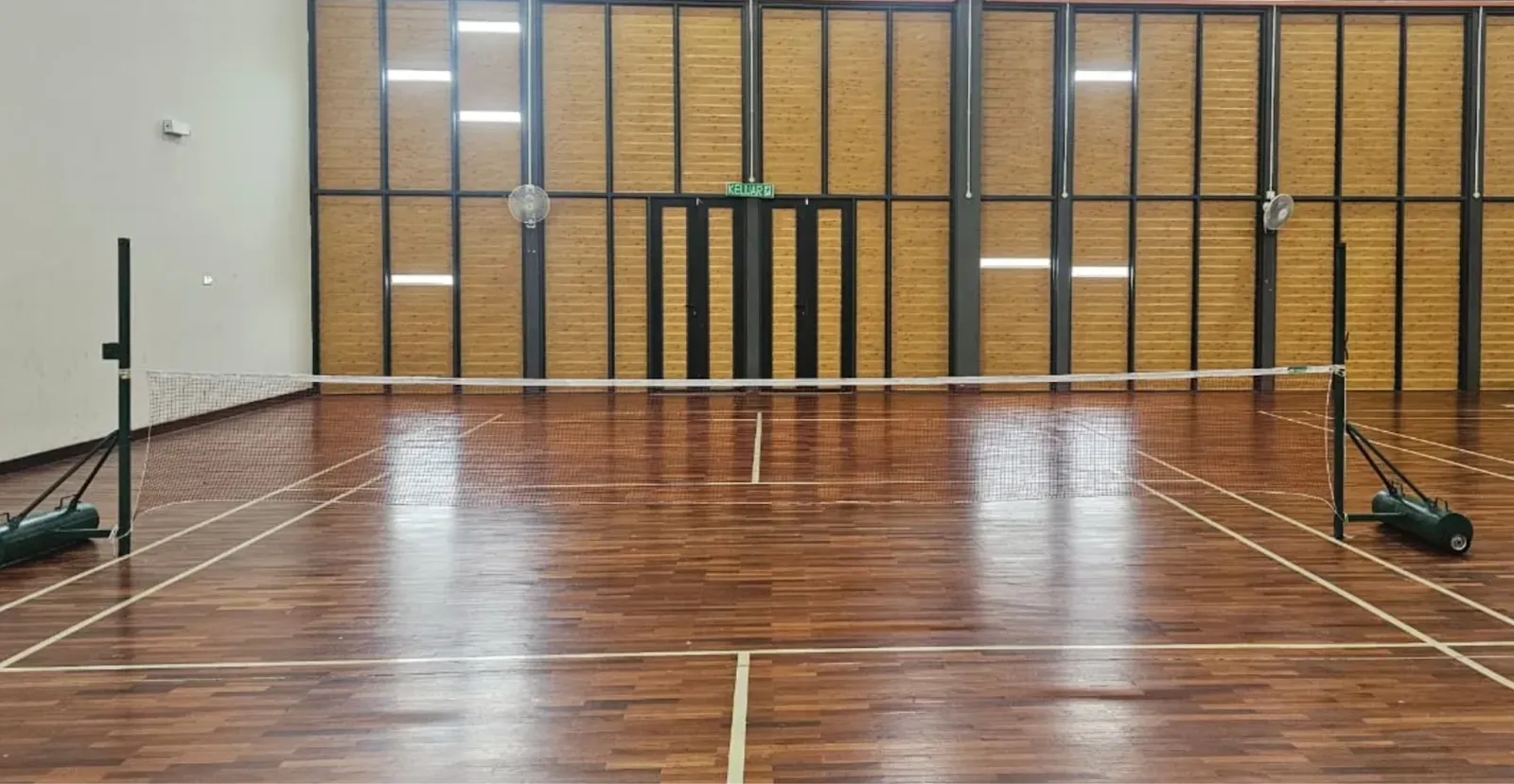
Good for: indoor players who want a smooth, controlled environment and do not mind checking the floor condition before diving for a ball.
Common indoors, especially in facilities converted from basketball or volleyball courts. Wood gives a smooth, controlled surface with good bounce and traction, and moderate game speed, which makes it a comfortable option for indoor play.
The tradeoff is maintenance. Wooden floors turn slippery fast if dust or sweat builds up, and older facilities sometimes have boards that have gone slightly uneven, leading to unpredictable bounces.
Clay and Grass Courts
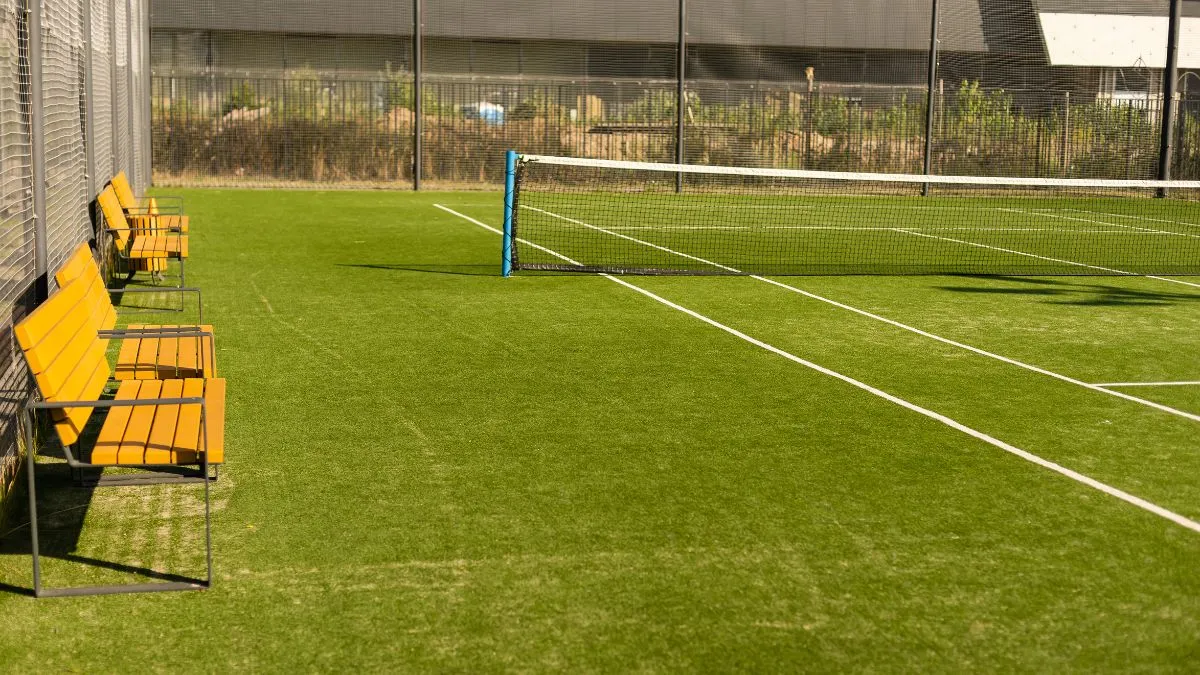
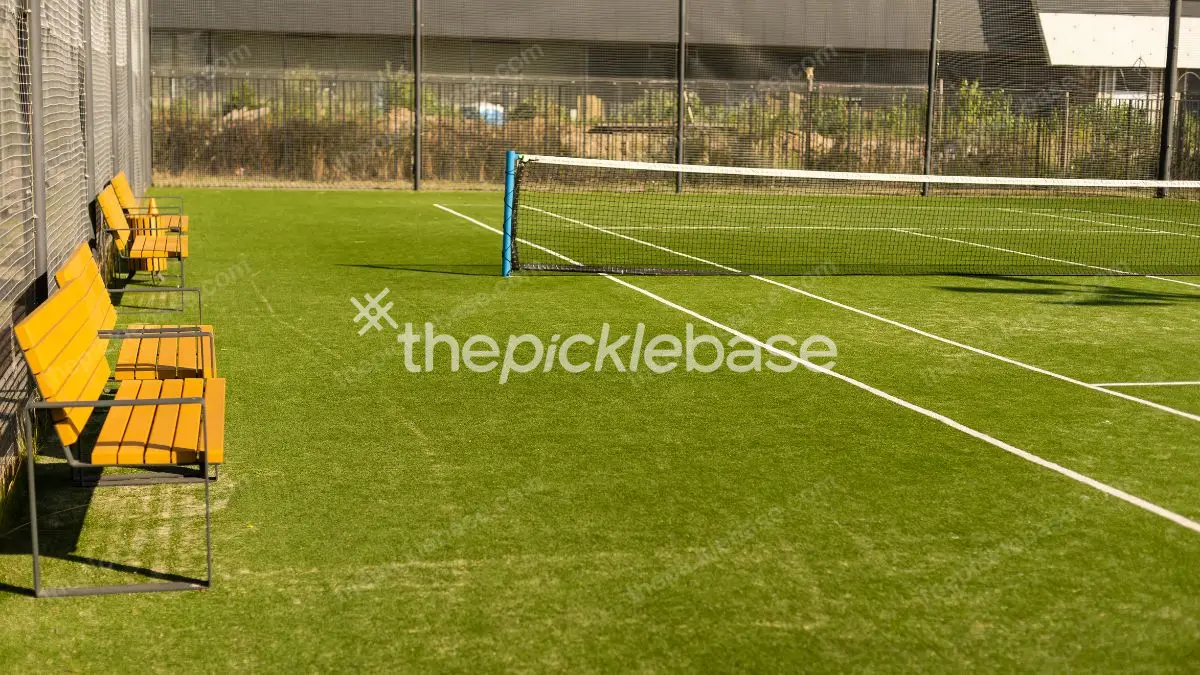
Good for: backyard or resort-style sessions where the score matters less than the company.
Far less common for pickleball, but they show up, usually where tennis courts double up for pickleball play. Clay slows the ball down considerably and produces a higher bounce, which makes for longer rallies and takes the sting out of aggressive shots. It is easier on the joints, but it requires regular upkeep and can turn muddy or slippery when wet.
Grass behaves similarly in that it deadens the bounce, but it adds an extra layer of unpredictability since the bounce depends on how recently the grass was cut and how wet the ground is. Both work best as a relaxed, social alternative rather than a serious competitive setup.
Outdoor vs Indoor Factor
Outdoor courts have to prioritize drainage, UV resistance, and the ability to handle temperature swings without cracking. That is why asphalt and concrete with an acrylic top coat dominate outdoor builds across the region, from public courts to private facilities.
Indoor courts skip the weather problem entirely, which opens the door to wood, cushioned vinyl, or high-quality sport tile. Indoor surfaces can lean more heavily into comfort and consistent bounce, since UV exposure and rain are never factors.
What This Means When You Are Booking a Court
Next time you are choosing where to play, a few quick questions tell you a lot about what to expect on the day:
- Is it indoor or outdoor?
- Does it look freshly coated or are there visible cracks and patchy spots?
- Is it a hard, fast surface, or does it have some give underfoot?
None of this needs a site inspection, just a bit of observation when you arrive, or a quick check with the venue beforehand if you are booking somewhere new. Whether you prefer the crisp bounce of acrylic over concrete or the joint-friendly feel of a cushioned court, knowing what you are stepping onto helps you play smarter and stay safer, game after game.
Looking for courts near you to put this knowledge to use? Browse venues across Malaysia, the Philippines, Singapore, and the rest of the region on courts.thepicklebase.com, or follow @thepicklebase on Instagram for more court guides and gear breakdowns.