
Walk into almost any club, condominium, or community sports complex across the region right now, and there is a decent chance the pickleball court you play on used to be, or still doubles as, a tennis court.
In fact, it's one of the most common ways facilities introduce the sport. A regulation pickleball court measures 20 by 44 feet, while a tennis court, including doubles alleys, measures 36 by 78 feet. That size gap means a single tennis court has more than enough room to host a full pickleball court, with space left over.
Most facilities take one of two approaches:
- Laying down temporary lines and a portable net for casual play, or
- Striping permanent pickleball lines directly onto the tennis court alongside the existing tennis markings.
This setup is often called a combo or dual-line court.
How Many Pickleball Courts Fit on One Tennis Court
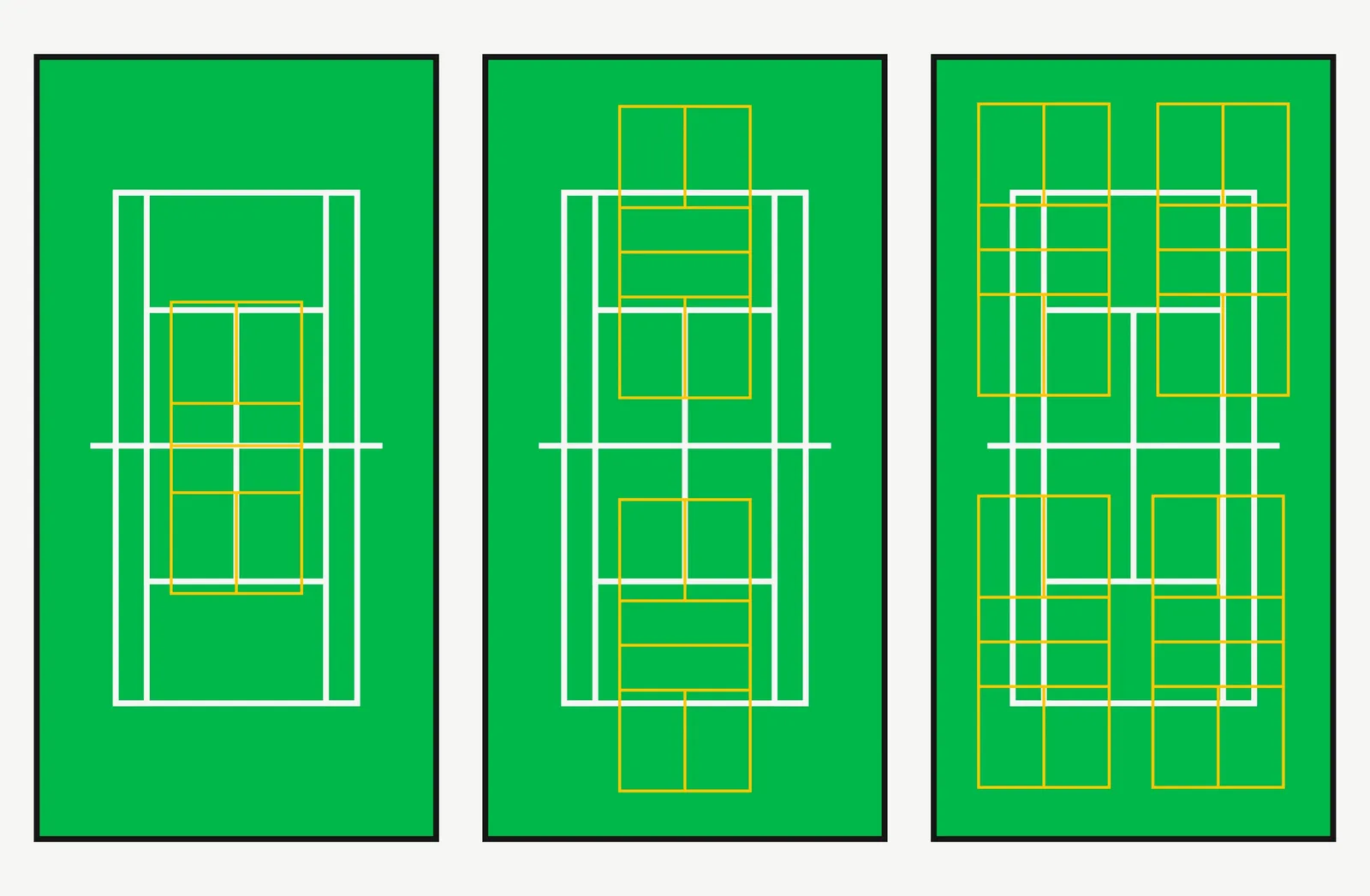
The math works out generously in pickleball's favor. A standard tennis court can fit up to four full pickleball courts inside its footprint. This is exactly why so many clubs facing high demand and limited area have converted underused tennis courts rather than building new facilities from scratch. For the full dimension breakdown behind this comparison, see our guide to pickleball court size.
Court type | Dimensions | Fits inside one tennis court |
|---|---|---|
Tennis court (with doubles alleys) | 36 ft x 78 ft | N/A |
Pickleball court (playing surface) | 20 ft x 44 ft | Up to 4 |
Why Tennis Courts Became Pickleball's Default Starting Point
Pickleball itself grew out of a tennis-adjacent origin story, invented on a badminton court with improvised equipment. The sport has always shared infrastructure with racquet sports rather than building its own from zero.
Across Malaysia and the wider region, the fastest path to more court access has consistently been converting existing tennis, badminton, or futsal courts rather than waiting on ground-up construction. It's cheaper, faster, and lets a facility test genuine demand before investing in a dedicated build.
Temporary Setup vs Permanent Conversion
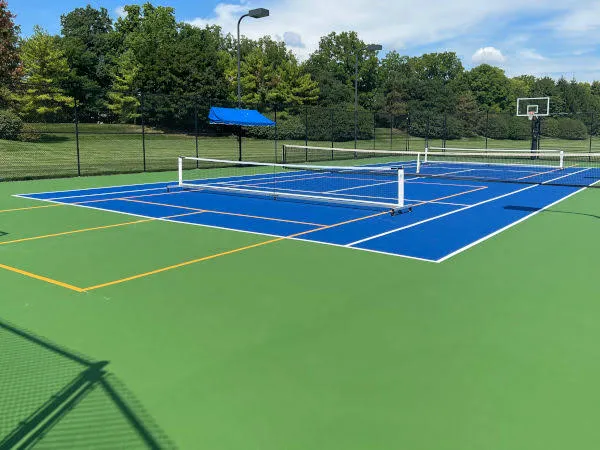
There are two routes that a court provider can take once they decide to make room for pickleball. They can either have a temporary or permanent setup. This depends on the demand for pickleball courts.
Temporary Setup
Temporary setup is the fastest and cheapest way to get playing. It typically involves a portable, wheeled net system and either painter's tape, chalk, or a set of pre-measured plastic strips laid directly onto the tennis court surface.
This is common for one-off sessions, pop-up events, or clubs testing demand before committing to a permanent build. The downside is that lines wear quickly under regular play and need to be reapplied often, and portable nets don't always hold tension as consistently as a fixed net system.
Permanent Conversion
Permanent conversion means striping pickleball lines in a contrasting color directly onto the existing tennis court, alongside or overlapping the tennis lines, and often installing fixed or quick-release net posts.
This is the route most clubs and condominium management committees take once demand is proven, since it holds up to daily use and looks intentional rather than improvised. For the surface materials involved in either route, see our guide to best surfaces for pickleball courts.
What You Actually Need
At minimum, converting a tennis court for a pickleball session requires three things:
- A way to mark the smaller court boundaries
- A net set to pickleball height rather than tennis height
- Pickleball paddles and balls rather than tennis equipment
The net height difference matters more than people expect. A tennis net sits at 3 feet (36 inches) across its entire length. A pickleball net needs to sag to 34 inches at the center while staying at 36 inches at the sidelines. This means a straight tennis net set at a fixed height is technically not regulation for pickleball, even though many casual games proceed anyway without adjusting it. For the full net specification, read our guide to official pickleball net measurements.
The Trade-Offs Worth Knowing
A converted tennis court is not automatically an ideal pickleball court:
- The surface material, usually a hard acrylic-coated concrete or asphalt built for tennis's larger, slower ball, plays differently for the smaller, harder plastic pickleball ball, which can bounce faster and less predictably on some tennis surfaces.
- Combo courts with overlapping lines can also be visually confusing for beginners, with two different sets of boundary lines competing for attention.
Facilities that go all in on permanent pickleball infrastructure, rather than a converted or combo court, tend to use dedicated colors and clearer sightlines specifically for the smaller game. This is one reason purpose-built pickleball venues have become their own category rather than staying a tennis court side hustle.
Whether you're playing on a converted tennis court or hunting for a dedicated venue, browse verified courts near you at courts.thepicklebase.com and follow @thepicklebase for more venue guides across the region.
Common questions
Do I need a special net for pickleball on a tennis court?
Technically yes. A regulation pickleball net sags to 34 inches at the center, two inches lower than a standard tennis net height. Casual games often skip this adjustment, but it does change how low shots clear the net.
Is the ball different too?
Yes. Pickleballs are hard, perforated plastic balls, closer in feel to a wiffle ball than a tennis ball, and they will not bounce or play correctly on a tennis court using tennis balls or equipment.
Can four pickleball games really happen on one tennis court at once?
Yes, this is common at busy facilities during peak hours, with four separate pickleball courts marked out inside a single tennis court's footprint, each with its own portable net.
Is a converted tennis court as good as a purpose-built pickleball court?
It's a solid starting point but not a permanent substitute. Surface texture, ball bounce, and sightlines are usually noticeably better on courts built specifically for pickleball from the ground up.