
If you just picked up a paddle, one of the first things you should know about is the pickleball court size. The court shapes everything in your play, from how far you sprint for a lob to why kitchen rules exist in the first place.
Here's a full breakdown of the official dimensions, how different pickleball is from tennis and padel, and how to use the space to your advantage.
Official Pickleball Court Measurements
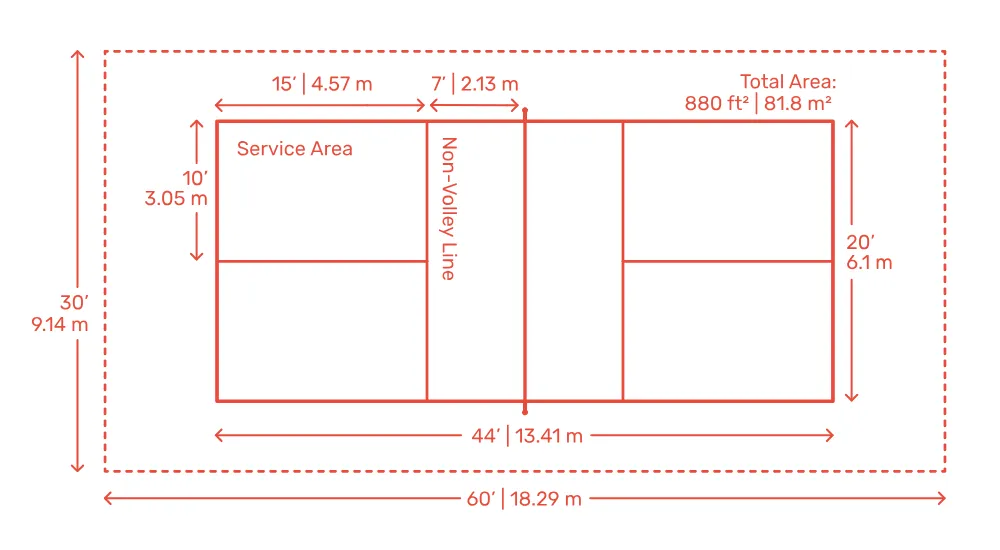
A regulation pickleball court measures 6.1 m wide by 13.41 m long (20 ft x 44 ft). That's the same size for both singles and doubles, unlike tennis, which adds extra width for doubles play. The full playing area works out to about 82 sq m (880 sq ft), which is roughly a third the size of a doubles tennis court.
Here's how the court breaks down zone by zone:
- Non-volley zone ("the kitchen"): Extends 2.13 m (7 ft) from the net on both sides. Players cannot volley the ball while standing in this zone, which is what gives pickleball its signature soft game near the net.
- Service courts: Each side has two service boxes measuring 3.05 m wide by 4.57 m deep (10 ft x 15 ft), split by a centerline.
- Net height: 91.44 cm (36 in) at the sidelines, dipping to 86.36 cm (34 in) at the center.
- Line width: 5.08 cm (2 in), and lines count as part of whichever zone they border. A ball touching any line is called "in."
- Recommended total playing space: While the marked court is 6.1 x 13.41 m, most facilities build out to at least 9.14 x 18.29 m (30 ft x 60 ft) to leave safe run-off room around the edges. Tournament venues often go bigger, closer to 10.36 x 19.5 m (34 ft x 64 ft).
Do different governing bodies use different dimensions? USA Pickleball, the International Federation of Pickleball (IFP), and the International Pickleball Federation (IPF) all use the identical 6.1 x 13.41 m specification. Wherever you're playing in Malaysia, Singapore, or beyond, the court you're standing on follows the same global standard. The only real variation you'll come across is in recommended run-off space, which can differ slightly depending on whether a facility is built for recreational play or tournament hosting. |
Pickleball vs Tennis vs Padel Court Size
New players often ask how pickleball compares to sports they already know. Here's the side-by-side.
Court | Width | Length | Total Area |
Pickleball | 6.1 m (20 ft) | 13.41 m (44 ft) | ~82 sq m (880 sq ft) |
Tennis (doubles) | 10.97 m (36 ft) | 23.77 m (78 ft) | ~260 sq m (2,808 sq ft) |
Padel | 10 m (32.8 ft) | 20 m (65.6 ft) | 200 sq m (2,153 sq ft) |
A tennis doubles court is roughly three times larger than a pickleball court, which is a big reason pickleball feels so much more accessible to new players and older joints alike. You can actually fit four pickleball courts inside the footprint of a single tennis court, which is exactly why so many facilities across Malaysia and the region have converted old tennis courts into pickleball courts.
Padel sits in between. It's smaller than tennis but still noticeably bigger than pickleball, and it's enclosed by walls that stay in play, which changes the whole rhythm of rallies. Pickleball's compact footprint is what keeps points quick, the kitchen rule relevant, and the learning curve short.
Pickleball Court Rules Every Beginner Should Know
Court size on its own doesn't mean much until you understand the rules that govern how it's used. A few essentials tied directly to the court layout:
- You cannot volley the ball while standing inside the kitchen, even if your momentum carries you in after the hit
- Serves must land diagonally in the opposite service box, never in the kitchen
- The two-bounce rule means the ball must bounce once on each side before anyone can volley, which is why the kitchen line matters so much early in a rally
These rules are just the starting point. For a full walkthrough of scoring and match rules, check out our beginner's guide to pickleball scoring and rules.
Why Court Size Matters for Your Game
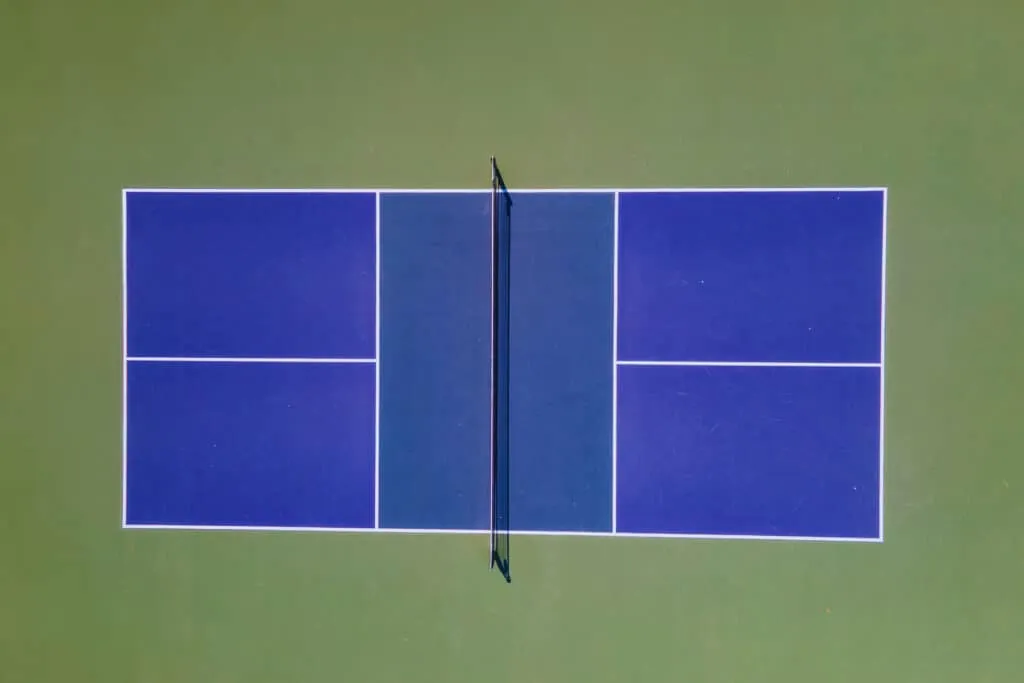
Understanding the court dimensions directly shapes how you should be moving and thinking on the court.
- Court Positioning: The court is smaller than you expect, so positioning matters more than speed. Because the total playing area is compact, you don't need elite athleticism to cover it. What you do need is smart positioning. Most points at the beginner and intermediate levels are lost by being in the wrong spot rather than being too slow.
- Rhythm of the kitchen: That 2.13 m non-volley zone is the reason pickleball rewards patience and soft hands over power. Players who understand exactly where the kitchen line sits can time their approach to the net far better than players who are guessing.
- Court width in doubles: At 6.1 m wide, the doubles court leaves very little room down the middle. A huge share of unforced errors at the beginner level comes from poor communication between partners on shots hit right down the center line.
- Depth changes your shot selection: At 13.41 m long, there's enough depth for a well-placed lob to be a genuine weapon, but not so much that you can rely on baseline rallies the way you might in tennis. Games are won and lost much closer to the net.
Tips on Using Court Size to Your Advantage
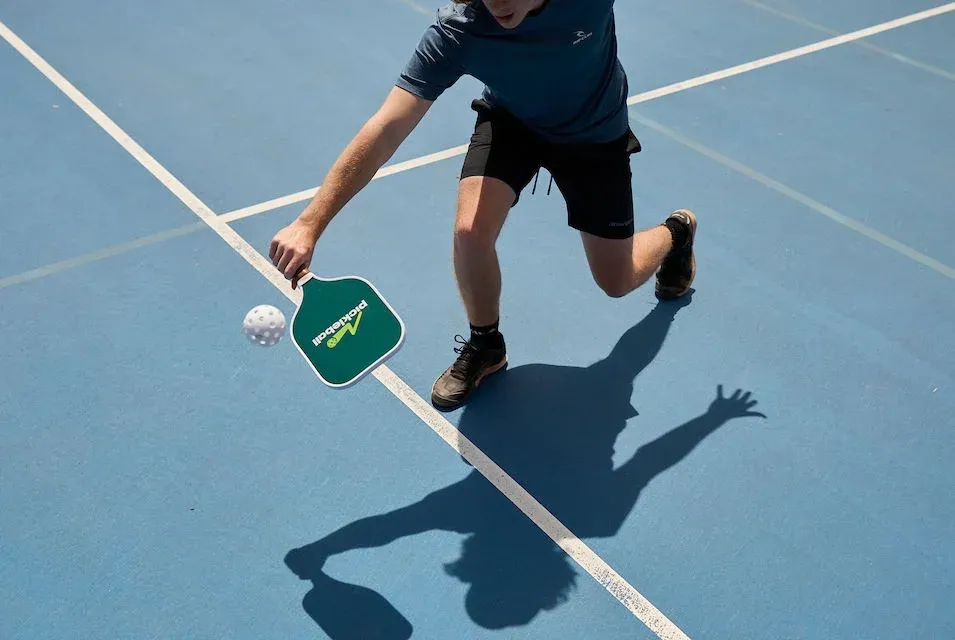
- Know the Kitchen by heart: Spend a few minutes before matches simply standing at the 2.13 m mark so your body learns where it is. This cuts down on foot faults and lets you commit to net play with more confidence.
- Use the full width on your serve and returns: Since the court is only 6.1 m wide, aiming for the corners of the service box forces your opponent to cover more ground relative to the size of the court, even though the distances involved are small.
- Play closer to the kitchen line: New players often hang back near the baseline out of habit from other racket sports. Because the court is so much shorter than a tennis court, standing at the kitchen line as soon as it's safe to do so gives you far more control over the point.
- Communicate constantly with your partner in doubles: Given how narrow the court is, "mine" and "yours" calls matter more here than in almost any other racket sport. Most middle-of-the-court errors are a communication problem, not a skill problem.
- Practice moving diagonally, not just side to sid: Because the service boxes and kitchen zone create diagonal patterns of play, footwork drills that move you diagonally toward the net will translate to match play far better than pure lateral shuffles.
Once you've got the dimensions and the rules down, the fastest way to improve is simply logging more time on court. If you're looking for a place to play near you, courts.thepicklebase.com has a growing directory of courts across Malaysia to help you find your next game.