
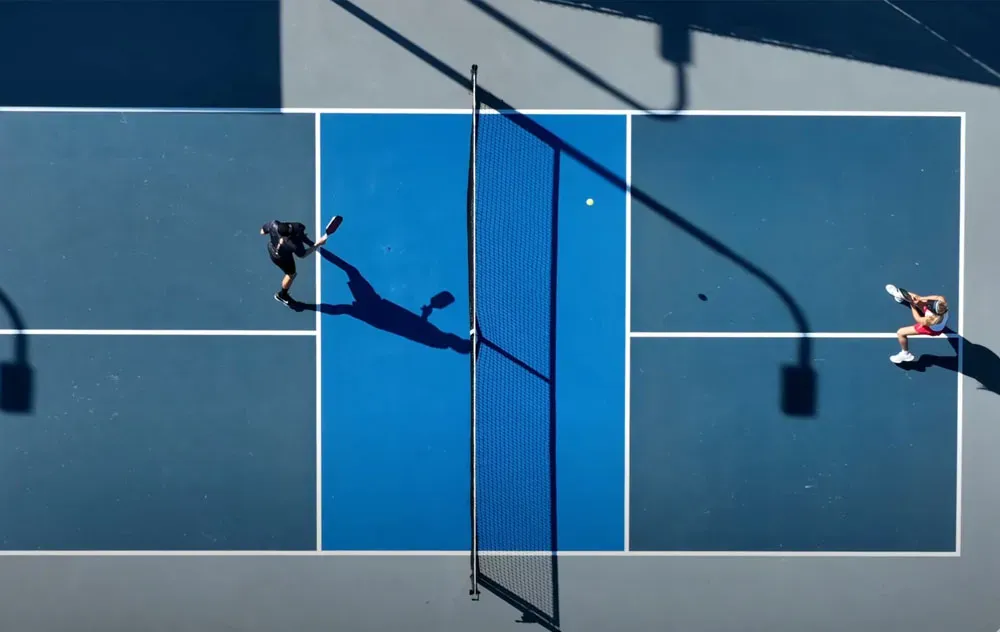
When you step into the court for the first time, one of the things you should know about is the scoring. Understanding how pickleball scoring works is what lets you follow the game and know when it is your turn to serve. It also matters once you start playing in a real tournament, since calling the score correctly before you serve is part of the rules, and not just a courtesy.
This guide walks through exactly how scoring works, from the basic point system to the three-number call doubles teams use before every serve.
The Basics
Before going into the nitty-gritty of pickleball scoring, here are some fundamentals that apply to almost every game of pickleball:
- Games are typically played to 11 points, and the winning team must lead by at least 2 points.
- Tournament matches sometimes go to 15 or 21 points, still with a 2-point winning margin.
- Only the serving side can score a point. The receiving side cannot score, even if they win the rally.
- Every match starts with a serve, and the ball must clear the net and land in the correct diagonal service court.
For beginners, the last point is the most important. In most sports, either team can score at any time. In pickleball, scoring only happens when your team is serving. This system is called side-out scoring, and it is the foundation for everything else in this guide.
What Is Side-Out Scoring?
Side-out scoring means possession of the serve is just as important as skill in a rally. If the serving team wins a point, they keep serving and add to their score. If the serving team loses the rally, no one scores. Instead, the serve passes to the other side.
The team currently serving is trying to protect its turn at bat. The receiving team is not trying to score directly. They are trying to win the rally so they can take over the serve and start scoring themselves.
This is different from rally scoring, which awards a point to whichever team wins the rally regardless of who served. Traditional side-out scoring remains the official format used in most club play and major tournaments, though some organizations have started introducing rally scoring as an alternative format for certain event types.
If you hear players mention rally scoring, know that it is a separate system, and the side-out method below is still what you will encounter in the vast majority of games.
How Doubles Scoring Works
Doubles is the most common way to play pickleball, and it uses a three-number scoring system. Before every serve, the server announces the score in this order:
- Serving team's score
- Receiving team's score
- Server number (1 or 2)
For example, a call of "4-2-1" means the serving team is ahead 4 to 2, and the player currently serving is the first server for their team in that rotation.
In doubles, each team gets two chances to serve before a side-out, one for each player on the team. When the first server on a team loses a rally, the serve does not go to the other team right away. It passes to their partner, the second server, who continues trying to score for the same team. Only when the second server also loses a rally does the serve finally go to the opposing team.
However, there is one exception that always confuses new players. At the very start of a game, the very first server is treated as the second server, not the first. This means the game begins with the score called "0-0-2." This rule exists to balance out the advantage of serving first, since the team that serves first only gets one chance instead of two before the very first side-out.
Doubles Positioning
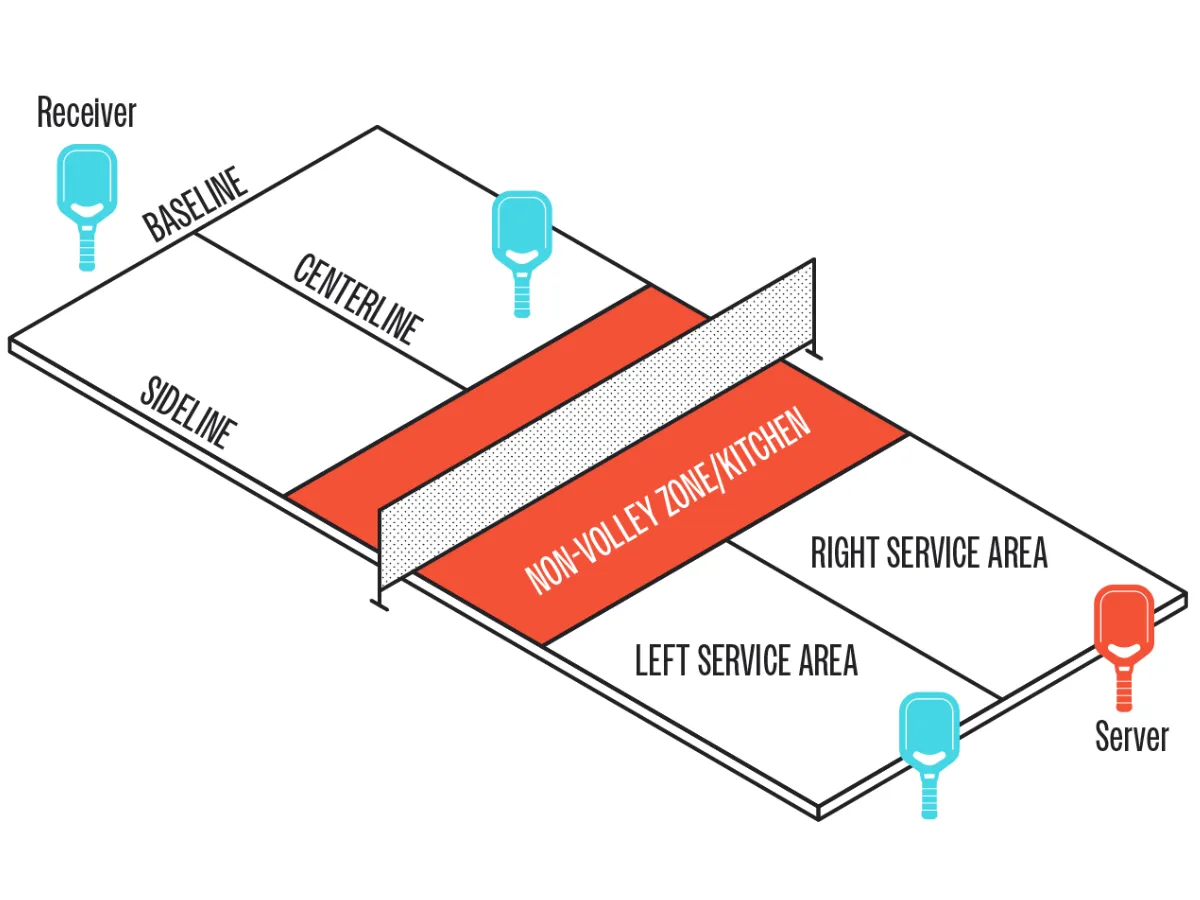
Where each player stands also depends on the score:
- If the serving team's score is an even number (0, 2, 4, and so on), the player who started the game on the right side must be on the right side of the court.
- If the serving team's score is an odd number, that same player should be on the left side.
- Every time the serving team scores a point, the two players on that team switch sides with each other.
- The receiving team never switches sides, no matter what the score is.
This positioning rule is tied to the server and not the receiver. As long as the correct player on the serving side is standing in the correct spot, the receiving players can generally stand wherever works best for them within their court.
How Singles Scoring Works
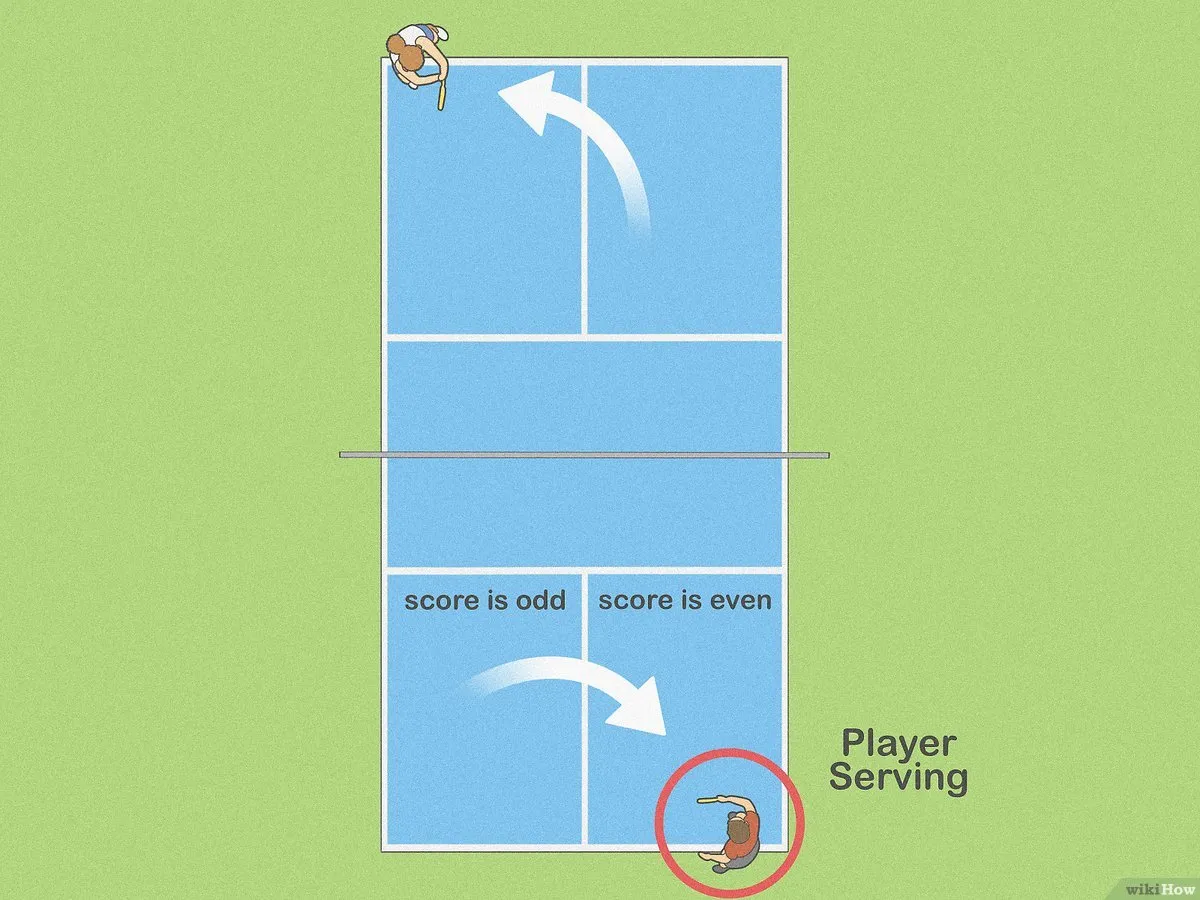
Singles scoring is simpler because there is no second server to worry about. Only two numbers are called out: the server's score first, then the opponent's score.
- If your score is even, you serve from the right side of the court.
- If your score is odd, you serve from the left side.
- You keep serving as long as you keep winning rallies. Once you lose a rally, it is an immediate side-out, and the serve goes to your opponent.
Example Scoring
Let's walk through a short doubles sequence to see how the score changes in real time.
- The game begins. The first server on Team A serves from the right side. The score is called "0-0-2" because of the first serve exception.
- Team A wins the rally. They score a point, and the server switches to the left side. The next call is "1-0-2."
- Team A loses the next rally. Since their server was already on their second turn, this is a side-out. The serve now passes to Team B.
- Team B's first server, on the right side, calls the score "0-1-1" and serves.
- Team B wins the point, their server moves to the left side, and the score is called "1-1-1."
Notice how the score is always read from the perspective of whichever team is currently serving. This trips up a lot of beginners watching from the sidelines, since the same numerical score can be announced two different ways depending on who is serving.
Common Situations For Beginners
- What counts as a fault? A fault ends the rally in favor of the other side and can include hitting the ball out of bounds, hitting it into the net, stepping into the non-volley zone (the kitchen) while volleying, or serving incorrectly. A fault by the serving team causes a side-out. A fault by the receiving team gives the server a point.
- Do you have to win by two? Yes. If the score reaches 10-10 in a game to 11, play continues until one team leads by 2 points, such as 12-10 or 13-11.
- What formats will I see at tournaments? Most club and tournament matches are best of three games, with each game going to 11 points. Some tournaments extend games to 15 or 21 points, especially for medal rounds, but the win-by-two rule always applies.
- Is rally scoring something I need to learn too? Not urgently. Side-out scoring is still what you will use in the overwhelming majority of recreational and tournament matches. If you ever join an event using rally scoring, organizers will explain the format beforehand, and the core idea (whoever wins the rally gets the point) is easy to pick up once you already understand the basics above.
Practice Makes the Numbers Make Sense
Reading about pickleball scoring only gets you so far. The fastest way to understand it is to get on a court, play a few rallies, and call out the score out loud each time, even if you get it wrong at first. Most players pick it up within a game or two once they see how the serve, the score, and the positioning all move together.
If you want more structured guidance on getting the fundamentals down, whether it is scoring, serving, or strategy, a coach can shortcut a lot of the trial and error. You can browse and connect with coaches across Malaysia and the region at coach.thepicklebase.com. And for more beginner tips, event coverage, and everything happening in the Southeast Asian pickleball scene, follow us on Instagram @thepicklebase.