
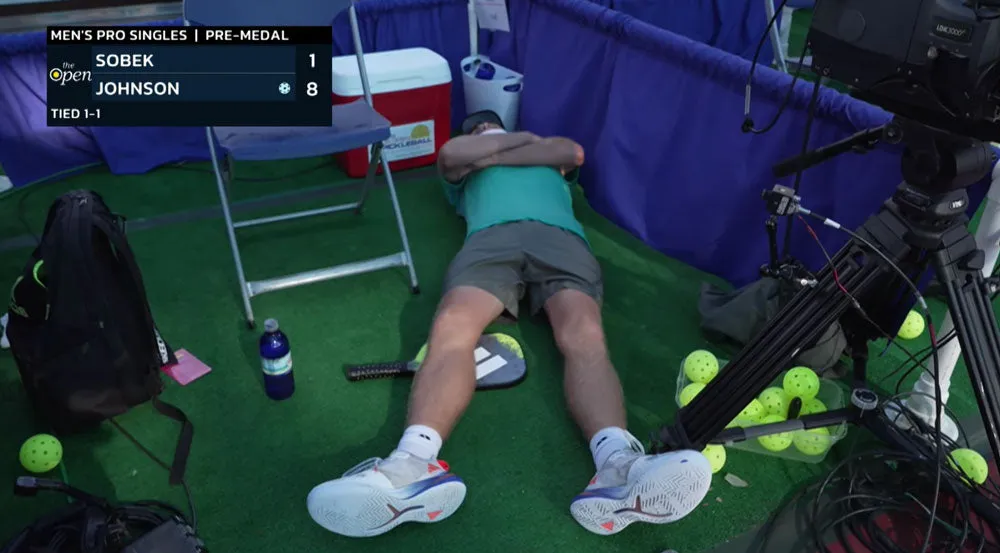
Walk around any pickleball tournament venue on a Saturday afternoon, and you will see players waving over the physio. Someone stretched out on a bench with their calf locked up. Another competitor is sipping water that should've been consumed two days ago. Cramping, headaches, dehydration, and stitches are so common at tournaments that many players have started to treat them as part of the experience rather than a warning sign.
Are players simply underprepared for what tournaments demand, or have tournaments themselves become more physically punishing than most players realise? It's a bit of both, and understanding why can help every player walk onto the court better prepared.
Tournament Pickleball Is a Different Sport From Your Weekly Social Game
Tournaments are not the same as your regular Tuesday open play at the local court.
In a typical tournament, you might play six, eight, or even ten matches across a single day. You could be at the venue for eight to ten hours. You are playing high-intensity games, sitting around waiting between rounds, and then having to switch back on and perform again with almost no warm-up. Your body barely gets to recover before it is asked to go again.
Then there is the adrenaline. Tournament nerves push players to chase every ball, dive for shots they would never attempt in a casual game, and push harder because they do not want to let their partner down. All of that extra effort adds up over the course of a long day, often at an intensity level the body simply is not conditioned for.
Add Southeast Asia's tropical heat and humidity into that equation, and the physical cost climbs even further. Players lose fluids fast, sweat out electrolytes without realising it, skip proper meals because they are focused on the next match, and fail to recover properly between games. Before long, the warning signs start.
Your calf tightens. Your hamstring twitches. Then, without much notice, the cramp hits and the match, or the tournament, is over.
Why Some Players Never Seem to Cramp
However, not everyone falls apart under the same conditions. Some players go through an entire tournament weekend without a single cramp, headache or dizzy spell, while others struggle by the second match of the day.
The difference usually comes down to conditioning. Players who rarely cramp tend to be the ones who treat tournament day as a physical event that requires preparation, not just a bigger version of their usual game. They start hydrating a day or two in advance rather than waiting until the morning of the event. They manage their nutrition with intention, take electrolytes proactively, and understand how to recover properly in the gaps between matches rather than just sitting and scrolling on their phones.
In other words, cramping is rarely bad luck. Most of the time, it is the body's way of saying that today's demands exceeded what it was prepared for.
Maybe We are Asking the Wrong Question
Perhaps the real question is not "why do players cramp" but rather "are we respecting the physical demands of competitive pickleball enough?"
As the sport grows across Southeast Asia and as tournaments become increasingly competitive, treating tournament day like a casual weekend hit is no longer good enough. That mindset shift needs to happen on both sides of the net, and honestly, on both sides of the tournament itself. Players and organisers each carry part of the responsibility.
What Players Can Do to Reduce Cramping and Fatigue
Tournaments are demanding, and most players underestimate just how demanding until they are in the middle of one. A tournament day can involve playing multiple intense matches with very little rest, long hours spent under the sun or in a hot indoor hall, and adrenaline that pushes you to exceed your normal limits without you even noticing.
To reduce the risk of cramps, headaches, dehydration, and stitches, players should keep a few things in mind:
- Start hydrating one to two days before the tournament, not just on the morning of. By the time you feel thirsty on match day, you are usually already behind.
- Consume enough electrolytes, particularly sodium, potassium, and magnesium, especially if you are a heavy sweater. Plain water alone often is not enough to replace what you lose over a long tournament day.
- Sleep adequately in the nights leading up to the event and avoid alcohol the night before. Poor sleep affects reaction time, recovery, and how well your muscles handle repeated strain.
- Fuel properly with carbohydrates and light meals throughout the day. Skipping meals to save time between matches usually backfires by the afternoon rounds.
- Build tournament fitness gradually over time. Playing one social session a week does not necessarily prepare your body for six or more hours of competitive matches back to back. Tournament conditioning is its own kind of training.
- Know when to stop. If dizziness, severe cramps, or symptoms of heat exhaustion show up, withdrawing from the rest of the event is sometimes the smarter and safer decision, even if it feels disappointing in the moment.
What Organisers Can Do
Players carry a lot of the responsibility for their own preparation, but organisers are not off the hook either. A well-run tournament environment can genuinely reduce the number of players who end up cramping or overheating over the course of the day.
Are there enough rest periods built into the schedule? Is there sufficient shade and cooling areas for players waiting between matches? Are water and electrolyte stations easily accessible around the venue? Are the schedules realistic for amateur athletes who are not full-time professionals with dedicated recovery staff?
The answer to preventing tournament cramping probably lies somewhere between these two responsibilities. Players need to take ownership of their preparation and conditioning, and organisers need to build an environment that minimises unnecessary risk for those competing.
Respect the Demands, Not Just the Game
Cramping during a tournament is not a mystery, and it is rarely just bad luck. It is usually the result of a mismatch between how the body was prepared and how much it was asked to give on the day. As pickleball across Malaysia and the region continues to grow more competitive, both players and organisers have a role to play in making tournament day a safer and more sustainable experience for everyone involved.
If you are heading into your next tournament weekend, give your body the same respect you give your game plan. Hydrate early, fuel properly, and know your limits.
Looking for a place to put in the training hours before your next tournament? Check out courts.thepicklebase.com to find courts near you, and follow us on Instagram @thepicklebase for more tournament coverage, tips, and everything happening in the regional pickleball scene.