
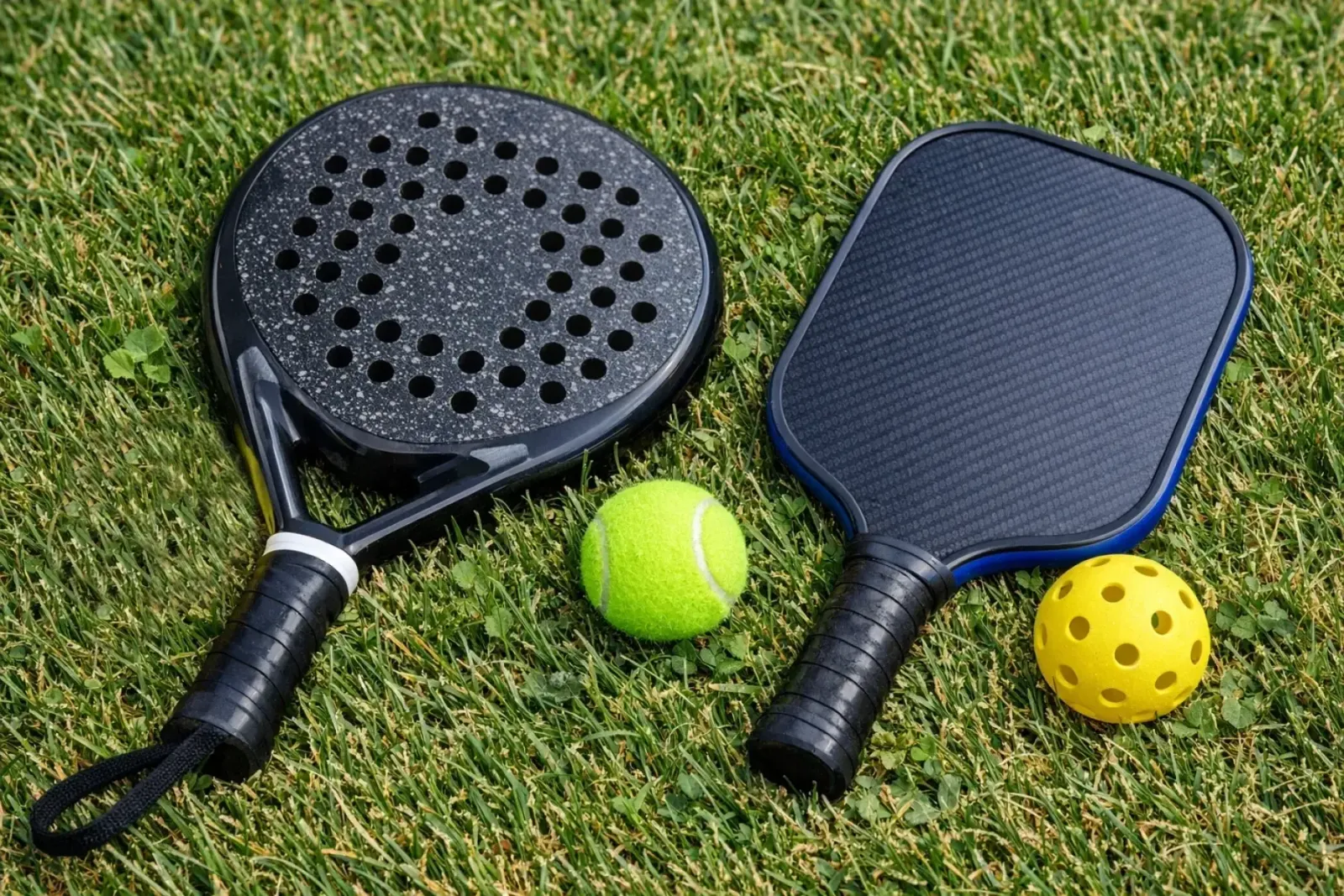
Walk into almost any new sports club in Kuala Lumpur, Manila, or Singapore right now, and you will find courts for both racquet sports. Padel and pickleball get lumped together constantly. Both use solid paddles instead of strung rackets. Both are played on courts smaller than tennis, and both took off with a doubles-first and a social-first culture that made them easy to fall into.
But the two sports are not variations of the same idea. They come from different countries, follow different rulebooks, and reward completely different physical skills. If you already play one and are curious about the other, or if you are trying to decide which court to book first, here is the full breakdown.
The Quick Answer
Factor | Pickleball | Padel |
Origin | Bainbridge Island, USA, 1965 | Acapulco, Mexico, 1969 |
Court size | 13.4m x 6.1m (44ft x 20ft) | 20m x 10m (66ft x 33ft) |
Walls | None, ball is dead once out | Glass and mesh walls, ball stays live off rebounds |
Paddle | Flat, no holes, wood or composite | Perforated, carbon fiber or fiberglass, 340 to 390g |
Ball | Hollow plastic with holes, wiffle-style | Low-pressure ball similar to a smaller tennis ball |
Scoring | First to 11, win by two, best of three games | Tennis scoring (15, 30, 40, game), best of three sets |
Serve | Underhand, diagonal, below the waist, one attempt | Underhand, diagonal, after one bounce, two attempts |
Format | Singles or doubles | Almost always doubles |
Signature rule | The kitchen, no volleying near the net | Wall rebounds stay in play |
Learning curve | Short, beginner-friendly | Longer, wall play takes time to master |
Physical demand | Moderate, easier on the joints | Higher, more ground to cover and longer rallies |
Pickleball is the smaller, slower, more accessible game. It is played on a court about the size of a badminton court, with no walls, and a plastic ball that dies quickly once it hits the paddle. The learning curve is short, and the physical demand is moderate, which is why it has spread so fast among players of every age.
Padel, on the other hand, is a bigger, faster, more athletic game. It is played inside an enclosed court with glass and mesh walls that are part of the action, using a low-pressure ball closer to tennis. Rallies last longer, the walls add a layer of strategy that takes real time to learn, and the sport asks more of your legs and lungs.
Neither is "easier" in an absolute sense. They are just different sports wearing similar-looking gear.
A Backyard Invention vs a Squash Court Experiment
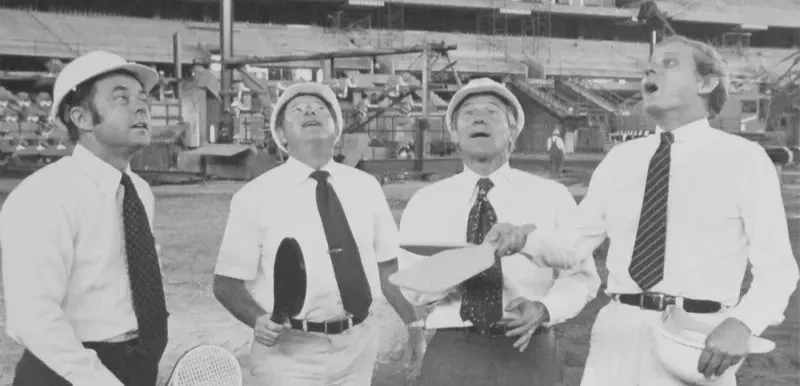
Pickleball was born in 1965 on Bainbridge Island, Washington, when three fathers improvised a game for their kids using ping-pong paddles, a badminton court, and a perforated plastic ball. Joel Pritchard, Bill Bell, and Barney McCallum settled on the format after some fine-tuning of the rules, and it barely moved outside the United States for fifty years before exploding into the global phenomenon it is today.
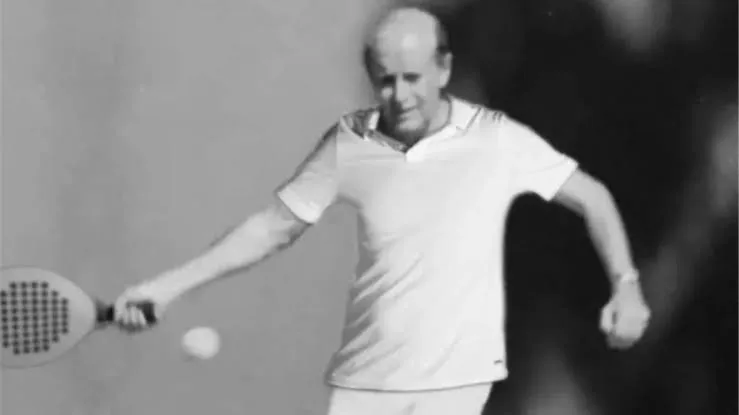
Padel has an entirely different backstory. Enrique Corcuera invented it in Mexico in 1969 after modifying a squash court on his property, and the sport found its true home in Spain within a decade. From there, it became the number one recreational sport in Spain and spread across Latin America, the Middle East, and now Asia.
That difference in origin still shows up in court. Pickleball plays like a hybrid of tennis, badminton, and ping-pong. Padel plays like tennis crossed with squash, minus the strings.
Court Size and the Wall Factor
This is the single biggest structural difference between the two sports, and it changes everything about how a point is played.
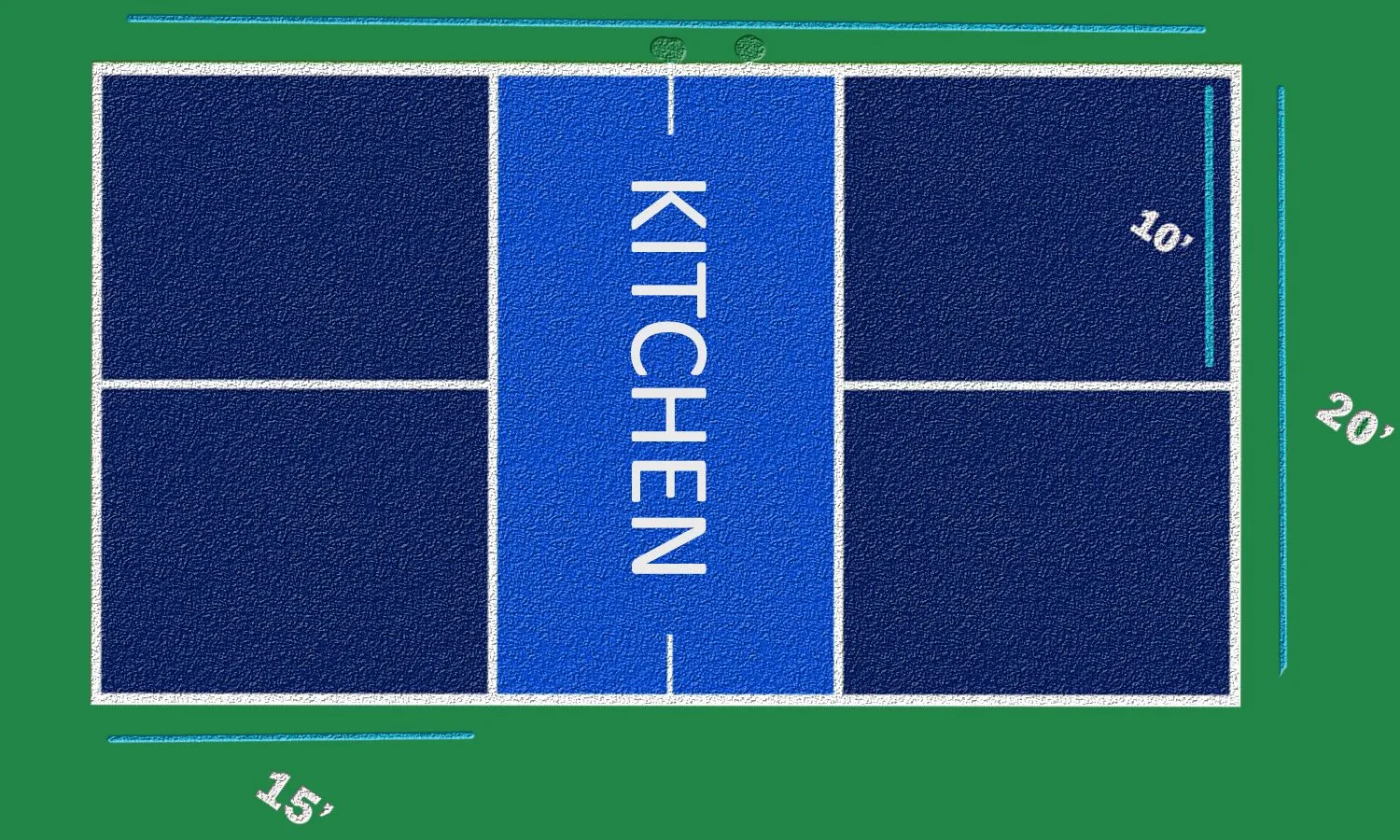
A pickleball court measures 13.4m x 6.1m (44ft x 20ft), roughly the same footprint as a badminton court, and it has no walls at all. Once the ball goes out, it is out, and players have to focus entirely on shot placement and positioning rather than relying on any surface to bail them out.
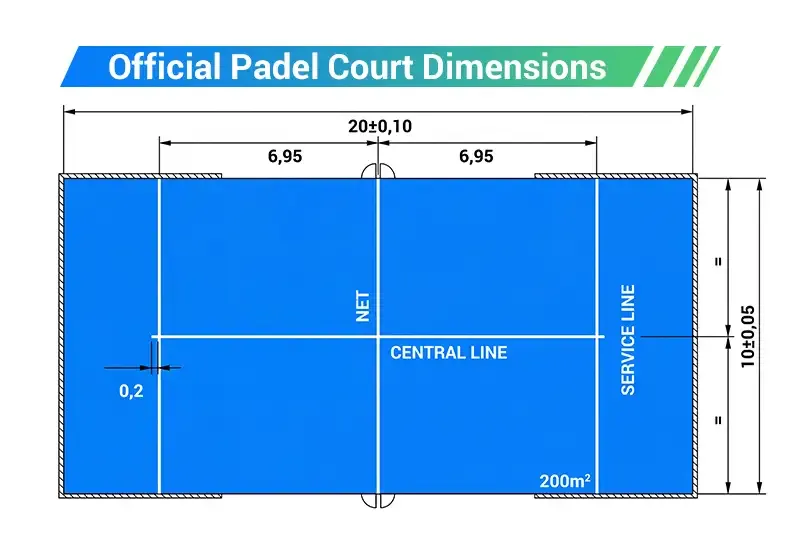
A padel court is nearly twice the size at 20m x 10m (66ft x 33ft), and it is fully enclosed by glass walls and metal mesh. The walls on a padel court don't just keep the ball in but are an essential part of the game. A good padel player must be able to read wall angles and bounce with purpose. A ball that flies past a defender is not necessarily dead. If it rebounds off the back or side wall and stays within bounds, play continues.
This single design choice explains why padel rallies tend to run longer and why padel demands more court coverage and cardio. Meanwhile, pickleball rewards compact footwork and quick hands near the net.
Paddles and Balls
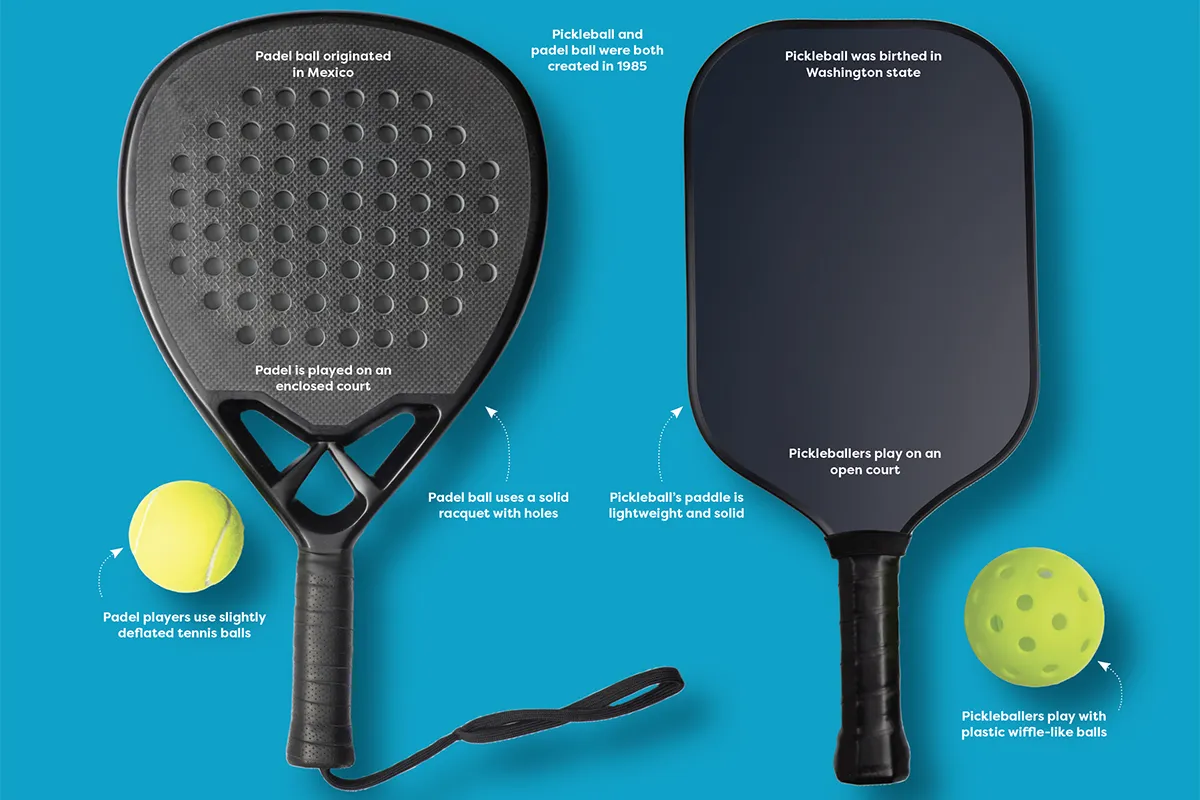
Both sports use a solid paddle with no strings, but the similarities mostly end there.
Pickleball paddles are flat, with no holes, made from wood or composite materials like graphite and polymer. The ball is a hollow plastic sphere covered in holes, similar to a wiffle ball, engineered to slow down quickly and produce a low, controlled bounce.
Padel rackets are perforated with a pattern of holes to cut air resistance, typically built from carbon fiber, fiberglass, or an EVA foam core. They are also heavier than a pickleball paddle, at roughly 340 to 390 grams. The ball looks nearly identical to a tennis ball but is smaller and less pressurized, giving it a lower, tennis-like bounce suited to the enclosed court.
If you have played tennis, the padel ball will feel familiar within a few rallies. If you have played badminton or ping-pong, the pickleball paddle and ball combination will click faster.
Tennis Logic vs a System All Its Own
Padel borrowed its scoring wholesale from tennis. Games run 15, 30, 40, with deuce and advantage kicking in at 40-40. Sets go to six games, matches are best of three sets, and only a two-game lead closes out a set.
Pickleball scoring is its own invention. Matches are typically played to 11 points, win by two, in a best-of-three-game format. Traditional scoring only allows the serving side to score a point, though rally scoring formats are gaining ground in some leagues. The serve itself must be underhand, hit diagonally, and struck below the waist, with only one serve attempt per side compared to padel's two.
Pickleball also has the kitchen, which is a non-volley zone unique to the sport. This is a 7-foot area on either side of the net where volleying is forbidden. It is the reason dinking (the soft, patient shot exchange near the net) has become such a defining part of pickleball strategy.
Fun fact: nobody actually knows for certain why it is called the kitchen. The most widely repeated theory borrows from shuffleboard, where a zone called the "10-off" area (nicknamed the kitchen) costs players points if their disc lands in it (the same way pickleball players get penalized for volleying too close to the net). |
Doubles, Singles, and Who's on Court
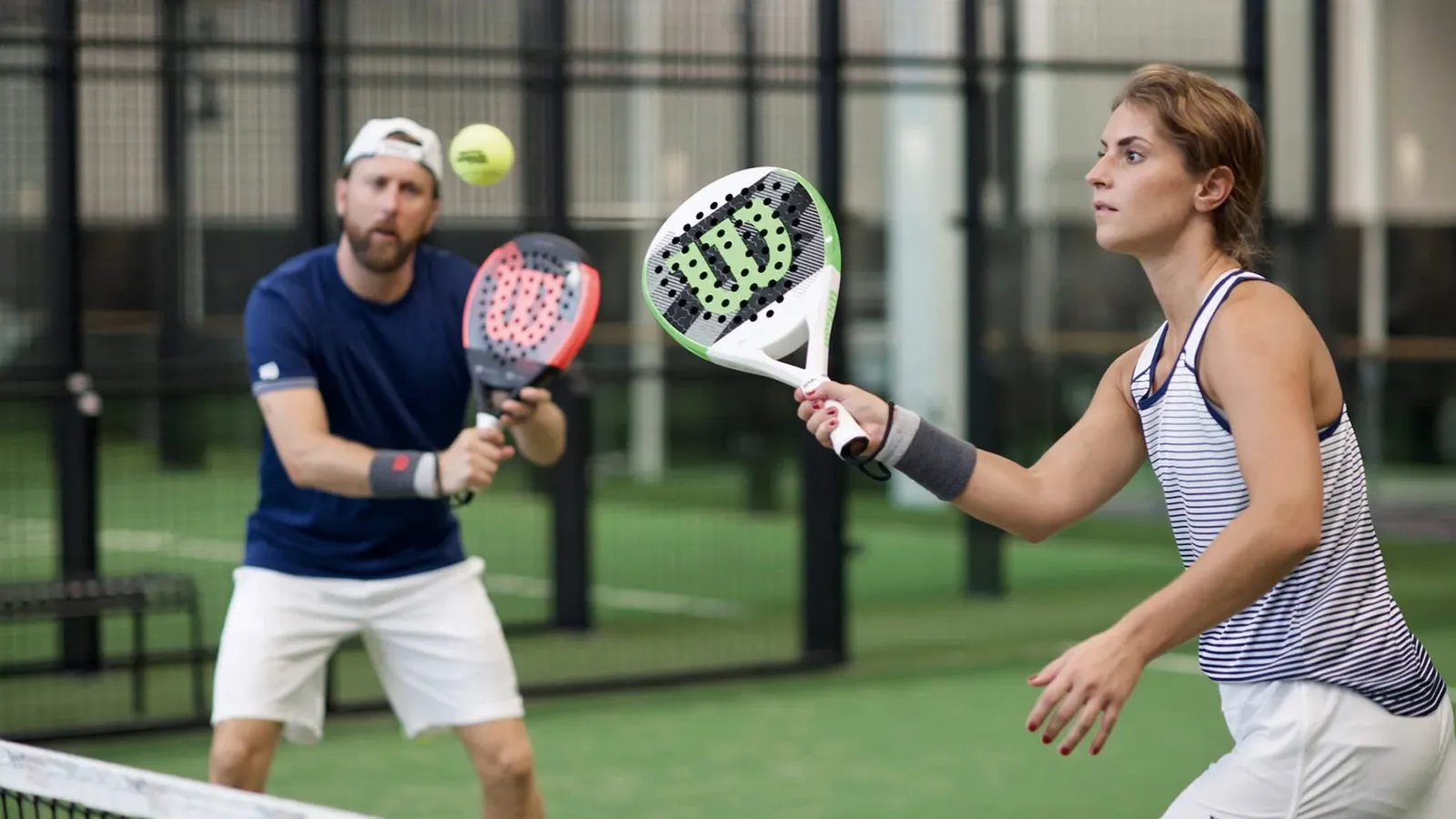
Padel is built around doubles. It is always four players on court, and that format is essentially non-negotiable at the recreational and competitive level, though singles exists on the same court size in rare cases.
Pickleball is more flexible. Doubles is the more common and social format, but singles is a fully legitimate competitive category with its own professional divisions, unlike padel, where singles remains a niche variation.
Physical Demand and Learning Curve
If you are choosing based on fitness goals or how quickly you want to progress, this is where the two sports diverge sharply.
Pickleball's smaller court and slower ball mean less ground to cover and more time to react. This is why it has become such a draw for older players, beginners, and anyone recovering from injury. That does not mean it is a gentle sport once you reach a competitive level, but the entry point is genuinely low.
Padel asks more of the body. The larger court, faster-moving ball, and constant wall-reading demand quicker reflexes, stronger footwork, and real cardiovascular fitness. Mastering wall play in particular takes months, not days, which is why padel carries a steeper learning curve even for athletic newcomers.
Neither sport is unforgiving to beginners. Both are designed to be social first. But if your priority is picking up a paddle and playing a competent point within your first session, pickleball gets you there faster.
Where Each Sport Stands in Asia Right Now
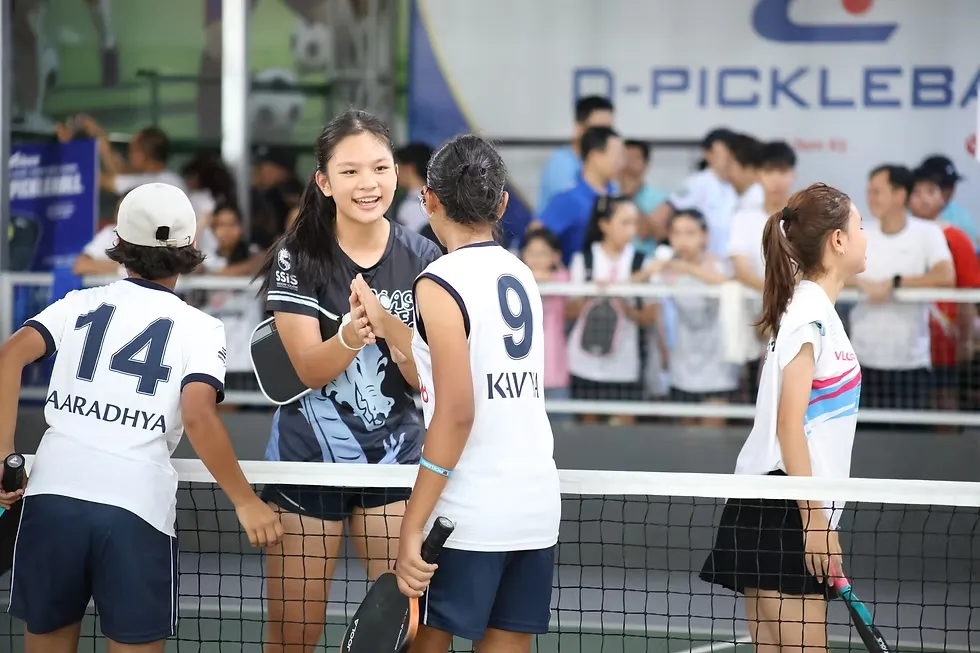
Pickleball's growth across Malaysia, the Philippines, Singapore, Vietnam, and beyond has been driven by grassroots courts, community leagues, and a genuinely low cost of entry. Padel is arriving through a different channel entirely, often positioned as a premium, members' club experience tied to networking and lifestyle branding.
That contrast is playing out clearly this year. The Tatler Padel Series 2026, backed by Standard Chartered and Club Med, is touring seven cities, including Kuala Lumpur, Singapore, and Bangkok. This tournament is framed explicitly around high-performance play meeting high-level networking. Meanwhile, dedicated padel operators like Pop Padel have secured funding to build ground-up, tournament-standard facilities in Singapore and Malaysia. They are betting that the same appetite for racket sports fueling pickleball's rise can carry padel alongside it rather than in competition with it.
Regionally, Asia is still considered early in its padel development but is viewed as one of the strongest long-term opportunities globally. The sport is already played across more than 30 countries and thousands of clubs and courts on the continent. Pickleball, for its part, continues to expand through public courts and community programs, the same accessible model that built its base everywhere else in the world.
So, Which One Should You Try?
If you want a game you can learn in an afternoon, play at any age, and find a court without much searching, start with pickleball. If you already love tennis or squash and want a more athletic, wall-based challenge with longer rallies and a social club feel, padel will scratch that itch.
Honestly, the best answer might be both. The paddle skills carry over more than you would expect, and there is no rule saying you have to pick a side.
Looking to sharpen your game on either court? Browse verified coaches across Malaysia and the region at coach.thepicklebase.com, or follow @thepicklebase on Instagram for more comparisons, event coverage, and gear breakdowns from the Asian pickleball scene.