
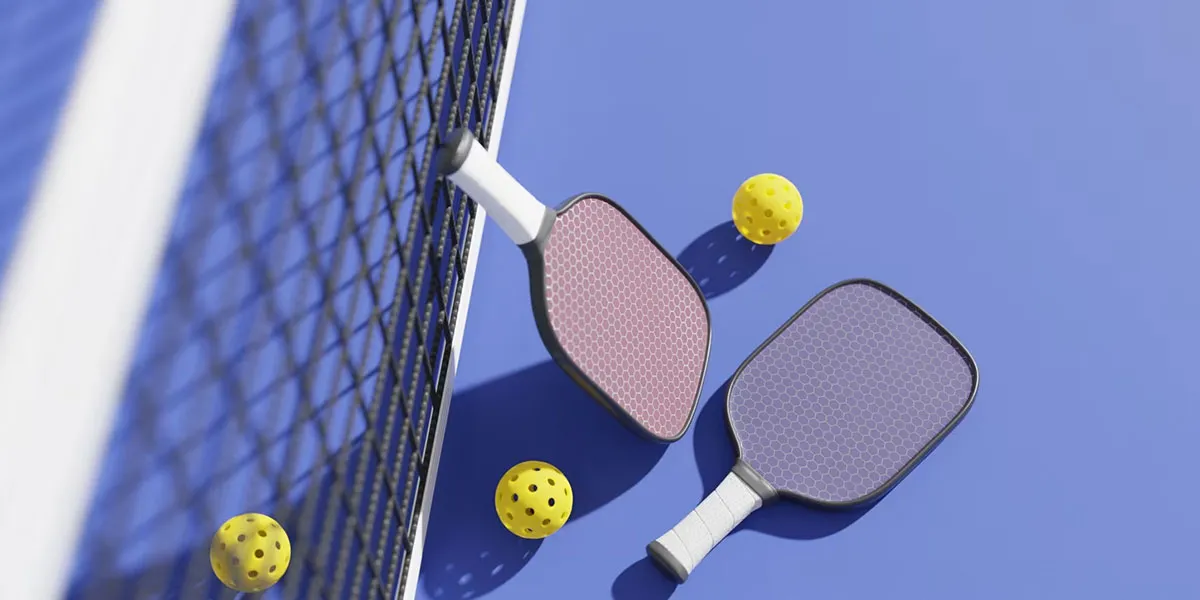
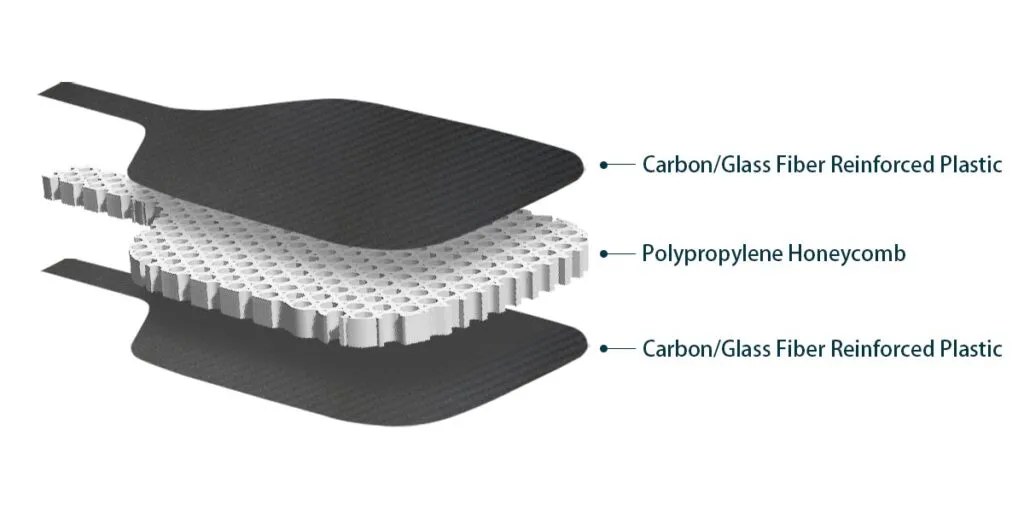
While standard honeycomb cores dominated the market for years, full-foam-core designs have emerged to address common durability issues such as core crush and dead spots. These next-generation paddles replace the hollow plastic honeycomb entirely with high-tech engineered polymers. This shift provides vastly better structural stability and more consistent play across the entire surface.
Though they sound almost identical, they play very differently on the court. Choosing between them changes how your misses behave, how the paddle feels at impact, and how much acoustic feedback you receive. This article breaks down the science, the performance differences, and the community consensus to help you decide which material fits your game. For where foam cores sit in the wider paddle timeline, see our guide to paddle materials and generations.
Understanding EPP vs MPP
What Is EPP (Expanded Polypropylene)?
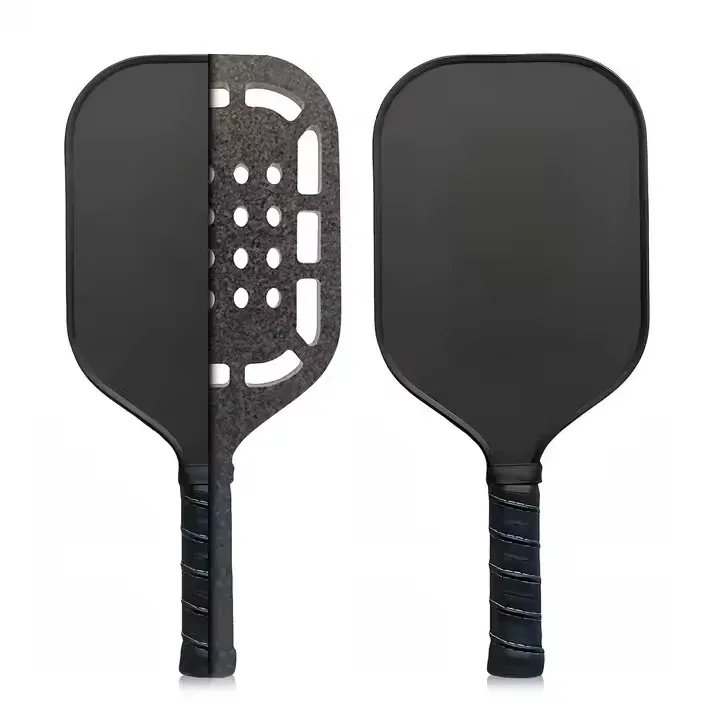
EPP stands for Expanded Polypropylene. This material is made by heating small, expandable polymer beads inside a specialized mold. The volume of beads determines the final density. EPP creates a bead-fused structure that acts like a physical shock absorber. It is highly flexible, incredibly durable, and resists structural breakdown over millions of impacts. Because energy is distributed across individual particle boundaries, the paddle dampens vibrations naturally. It absorbs a meaningful portion of the incoming energy before sending it back.
Experts who have reviewed paddles built with this core describe the feel as muted and dampened, with a quality that is a little more forgiving than what you get from denser alternatives. In plain terms, it takes some of the sting off the ball and gives you a softer, more cushioned response.
What that means on the court:
- Dinks and drops feel more controlled because the paddle absorbs pace rather than reflecting it all.
- Off-center hits are less punishing, so your effective sweet spot feels larger.
- Vibration traveling into your hand and arm is reduced, which can help with fatigue during long sessions.
- Resets are easier because the foam soaks up your opponent's pace before you redirect the ball.
What Is MPP (Modified Polypropylene)?
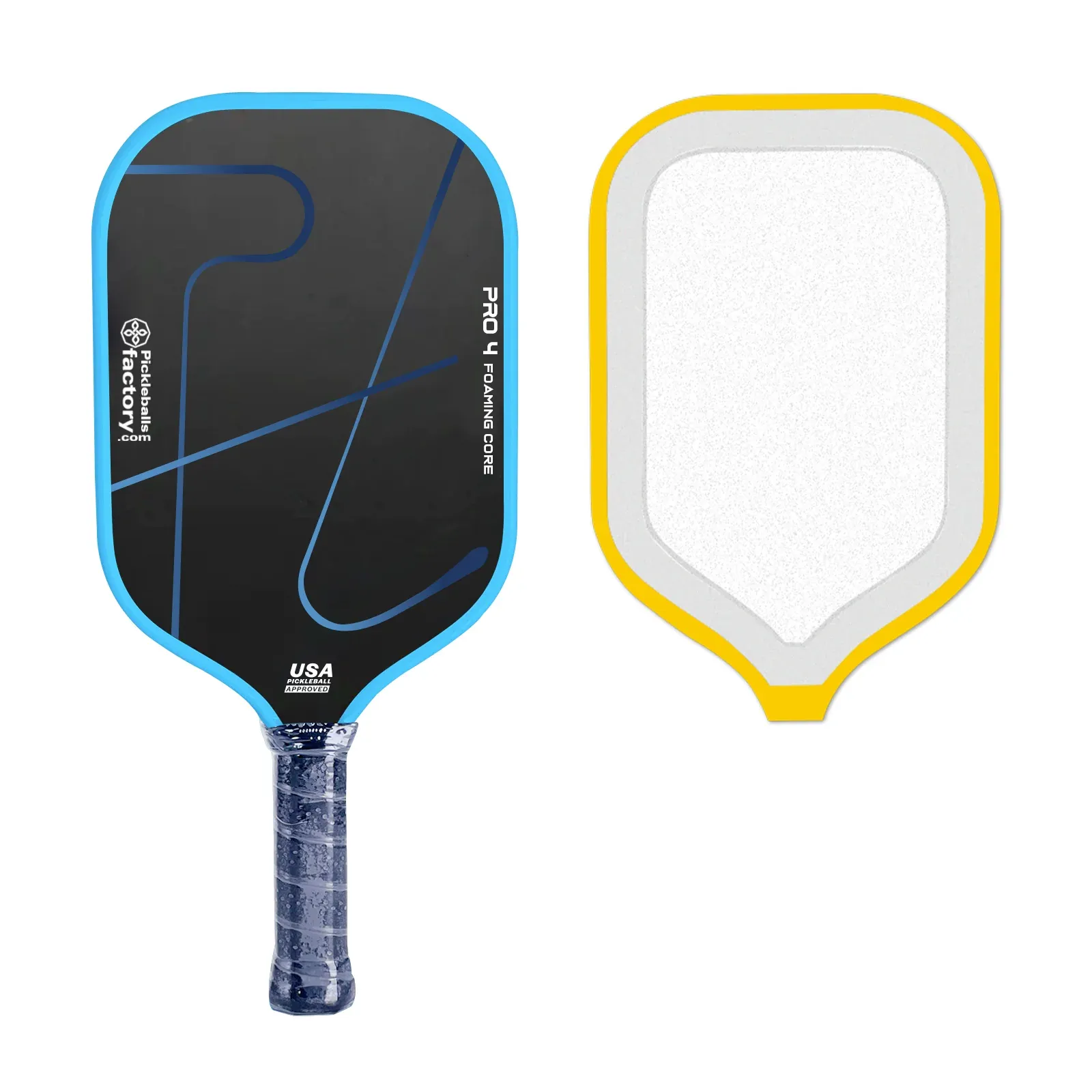
MPP shares a chemical family with EPP but goes through a different manufacturing process that results in a denser, more rigid foam. Instead of fusing pre-existing beads, manufacturers inject gas directly into molten polypropylene. This process creates millions of microscopic air pockets encapsulated within a single, unified plastic structure. MPP behaves much more like a continuous solid matrix than a bead foam. Because the material does not compress as much at impact, more of your swing energy gets transferred directly to the ball.
Reviewers consistently describe MPP paddles as poppy, with a crisper and more responsive feel off the face. It provides an exceptional strength-to-weight ratio and a highly uniform surface. This unique matrix creates a spring-like response that produces a crisper feel and a livelier rebound off the paddle face. You can think of it like a trampoline effect: the firm foam rebounds quickly and sends the ball forward with extra pace.
What that means on the court:
- Drives and putaways come off the face with noticeably more pace for the same swing.
- The crisper feedback tells you more about your contact quality and paddle angle in real time.
- Speedups off volleys can catch opponents off guard.
- Mishits are more obvious, so technique matters more.
EPP vs MPP: A Side-by-side Comparison
Performance Metric | EPP Core Paddles | MPP Core Paddles |
Sensation and Feel | Firm, solid, and connected. High vibration dampening. | Soft, hollow, and spring like. Noticeable trampoline effect. |
Ball Departure Speed | Controlled, predictable, and linear out of the face. | Explosive, energetic, and highly reactive off the surface. |
Acoustic Profile | Muted, quiet, and solid thud. Great for noise restrictions. | Loud, deep, and hollow echo. Distinctive popping sound. |
Miss Pattern Behavior | Shorter and contained. Forgives rushed or early contact. | Livelier and longer. Rushed shots tend to sail out of bounds. |
Dwell Time | Moderate rebound. The ball snaps off the face predictably. | Extended dwell time. The core cups and shape the ball. |
Best For | Dinks, resets, blocks, and soft defensive kitchen play. | Drives, serves, aggressive speed ups, and hard counters. |
Neither material is objectively better. A player who lives in the kitchen and wins through patience and consistency is going to prefer EPP almost every time. A player who looks for every chance to speed the ball up and end the point early is likely going to gravitate toward MPP.
How EPP and MPP Behave in the Court
Dinks, Drops, and Resets
The true difference between these foams shows up when you make a mistake. Laboratory tracking reveals that pure serve speed between EPP and MPP is nearly identical, often varying by less than half a mile per hour.
The performance gap is entirely about the miss pattern. With an EPP core, a slightly late or poorly timed dink still lands close to your intended target. The damped nature of the bead foam absorbs excess energy and keeps errors contained.
MPP is much less forgiving of technical errors. Because the microcellular matrix returns energy uniformly, an imprecise or rushed contact pushes the ball a foot further than you planned. At the kitchen line, an extra twelve inches turns a clean defensive reset into an attackable ball floating directly into the strike zone. EPP forgives small errors while MPP penalizes them.
Drives, Serves, and Net Exchanges
MPP shines in aggressive baseline play and rapid hand battles. The spring-like energy return offers immediate tactical feedback. There is almost no lag between your swing and the ball departure.
For players who win points through rapid hand speed and aggressive counters at the net, this immediate reaction feels incredibly rewarding. MPP also deforms slightly under heavy impact, allowing the paddle face to cup the ball longer. When combined with a premium raw carbon fiber surface, this added dwell time lets aggressive players shape heavy topspin drives and precise slices.
Perspective from the Community
On forums like Reddit, players frequently discuss the practical differences between popular foam options. These discussions highlight several distinct user preferences regarding sound, feel, and performance longevity.
Community Consensus: Sound Profile: Players note that MPP paddles sound completely different from traditional builds. It produces a deep, hollow, and loud pop that carries across the courts. While some users love this distinct feedback, others find the echo distracting. EPP offers a much quieter, solid thud that is popular for indoor play. The Adjustment Period: Transitioning to a full-foam paddle requires an adjustment period. Players moving from traditional thermoformed honeycomb to a spring-like MPP core report that it takes one to three weeks to dial in their soft game and stop sailing drops long. Long-term consistency: Reddit users favor foam cores for their overall durability. Traditional honeycomb paddles often suffer from core crush or develop localized dead zones over months of heavy play. In contrast, solid foam structures retain their uniform feel and predictable response throughout their entire lifespan. |
How to Choose the Right Foam Core
Consider EPP if you:
- Prefer a patient, defensive game built around resets and dinking wars.
- Are still building consistency and want a paddle that forgives off-center hits.
- Have had issues with arm fatigue or elbow discomfort, and want reduced vibration.
- Value the sensation of feeling the ball sit on the face for just a moment longer before directing your shot.
Consider MPP if you:
- Play an aggressive, offense-first style and want to finish points quickly.
- Have solid technique and can take advantage of the sharpened feedback rather than being hurt by it.
- Find that softer paddles feel sluggish or unresponsive for your game.
- Want more energy return on volleys and drives without having to swing harder.
The Core of the Matter
The rise of foam-core paddles has given pickleball players a more nuanced set of choices than ever before. EPP and MPP represent two philosophies about what makes a paddle feel great, and neither one wins outright. EPP leans into control, forgiveness, and touch. MPP leans into power, responsiveness, and explosive energy return.
The best paddle is the one that matches how you play and what you want to get better at. If you have been playing with a traditional honeycomb core and are curious about the foam experience, both EPP and MPP are worth trying. Just know which feel you are walking in with and what you are hoping to find. And if you are still weighing paddle types more broadly, start with how to choose a pickleball paddle.
For pickleball gear and beyond, straight to your newsfeed, follow us on Instagram @thepicklebase, or drop your email and subscribe to our newsletter.