
You have picked up a paddle, learned the difference between a dink and a drive, and maybe even survived your first tournament of embarrassing unforced errors. But if you are still playing in whatever sneakers were sitting by your front door, your feet might be holding your game back more than your third shot drop.
Footwear is one of the most overlooked parts of a beginner's pickleball setup. Most new players spend weeks researching paddles and barely give their shoes a second thought. Pickleball puts unique demands on your feet that most everyday shoes were never built to handle.
Why Running Shoes Fall Short
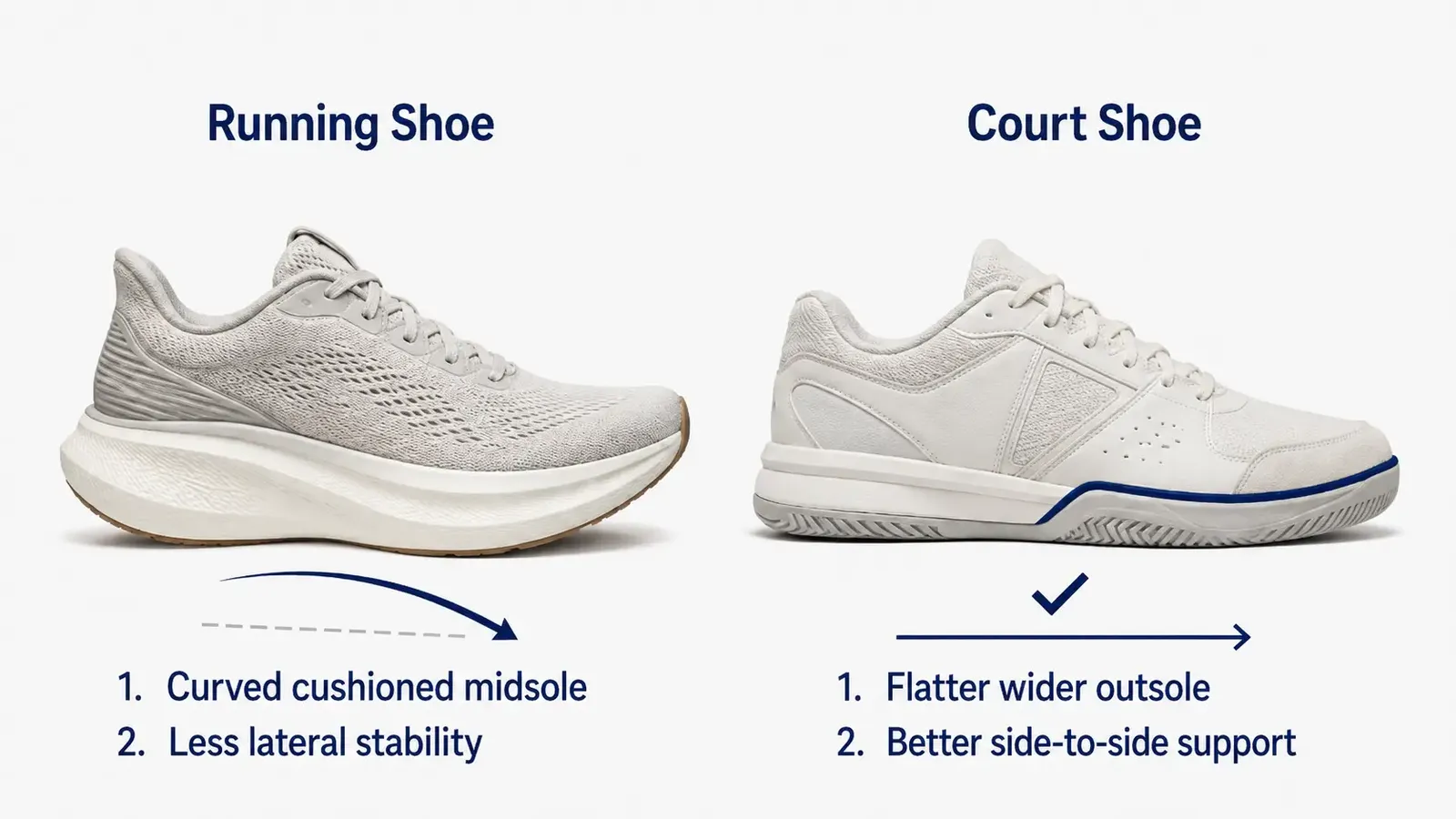
Pickleball is a game of short sprints, sudden stops, and constant side-to-side shuffling at the kitchen line. Running shoes are built for the opposite. They are designed to support forward, heel-to-toe motion over long distances, not the lateral cuts and pivots you make chasing down a dink or recovering after an overhead.
When you wear running shoes on a pickleball court, the sides of the shoes simply are not built to handle the sideways load. That is often where ankle rolls and other injuries start. A proper court shoe uses a wider base, reinforced sidewalls, and a supportive heel counter to keep your foot stable when you plant and change direction quickly.
Players who started in running shoes or old tennis shoes almost always talk about the difference once they switch to a proper court shoe. They usually describe better stability at the kitchen line and more confidence moving side to side. Don't wait until you roll your ankle to invest in real court shoes.
We touched on how wearing running shoes during a pickleball session can make you prone to injury in our guide.
What to Look for in a Pickleball Shoe
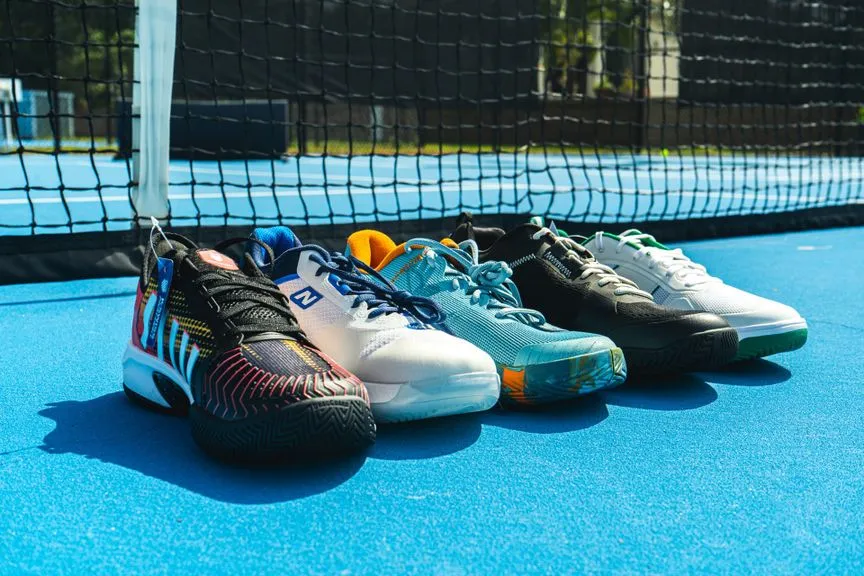
Lateral support and stability
This is the single biggest difference between a court shoe and a regular training shoe. Look for a solid, wide platform, reinforced sidewalls, and a firm heel counter that keeps your heel from shifting inside the shoe. Many pickleball-specific shoes also include a mid-foot shank, a piece of hard plastic under the arch that stops your foot from twisting during quick direction changes.
Cushioning that still feels grounded
Pickleball involves plenty of stopping and starting, so you want enough cushioning in the midsole to absorb that shock, especially during long matches or full days at the courts. That said, too much cushioning can raise your center of gravity and make you feel slower and less connected to the court. Most players do best with a midsole that strikes a balance between comfort and responsiveness rather than a thick, pillowy sole built for straight-line running.
Traction built for the court
Your outsole needs to grip the surface you actually play on. Outdoor courts are typically rougher, so outdoor shoes use firmer rubber compounds built to survive that abrasion. Indoor courts, usually wood or cushioned acrylic, call for softer gum rubber soles that grip cleanly without leaving marks. If you split your time between both, it is worth knowing that an outdoor shoe on an indoor floor will not grip as well as it should, and an indoor shoe will wear out fast outdoors.
Did you know that you can opt for indoor or outdoor pickleball shoes? Read more about it on our guide.
Breathability
Matches can run long, and your feet will sweat. Mesh panels or ventilated uppers help keep your feet cool and dry, which matters for comfort and for keeping your shoes in good condition over time.
Weight versus durability
Lighter shoes generally help with quickness and agility, but they can wear out faster than heavier, more reinforced builds. If you play often or tend to drag your toes during shots, a shoe with reinforced overlays or a toe bumper will last longer even if it adds a bit of weight.
Getting the Fit Right
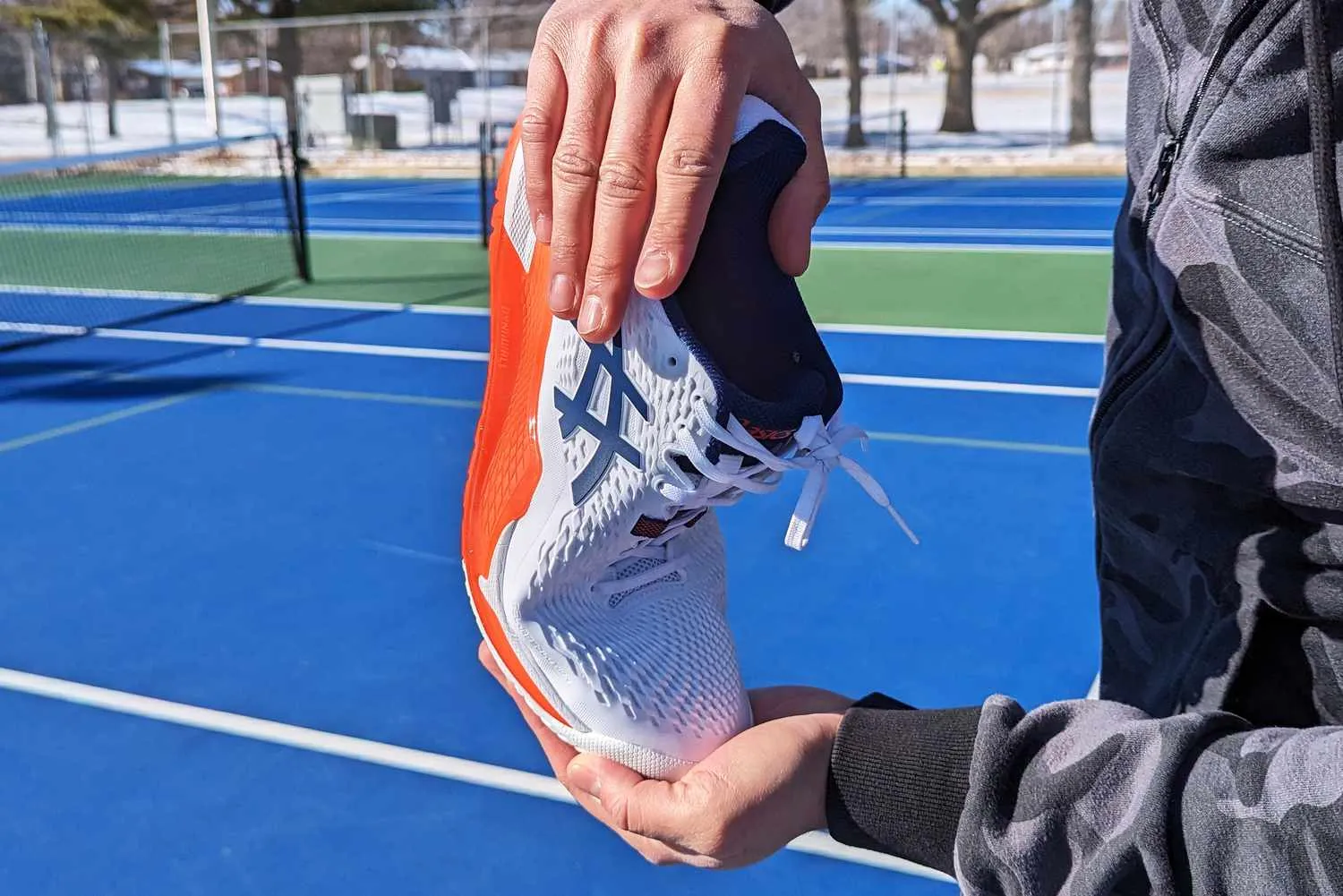
When you're looking for pickleball shoes, you need to consider these fit factors:
- Toe box room: You want a small amount of space, roughly a thumb's width, between your longest toe and the front of the shoe. Your toes should be able to splay naturally without feeling cramped.
- Heel lock: Your heel should sit snugly in the shoe with no slipping when you push off or pivot.
- Width matters as much as length: Different brands fit differently, so pay attention to how a shoe feels across the widest part of your foot, not just the toe.
- Try shoes on with your court socks: Your feet also swell slightly during play, so if you are shopping later in the day, you will get a more accurate sense of fit.
- Check the return policy if buying online: Sizing varies enough between brands that it is worth confirming you can exchange a pair that does not feel right once you actually step on court.
When to Replace Your Shoes
There is no fixed timeline, since it depends on how often you play, your playing style, and whether you are mostly indoors or outdoors. As a general guide, players who play a few times a week can expect their shoes to last anywhere from six months to a year. Once you notice the tread flattening out, the cushioning feeling dead, or your foot sliding around more than it used to, it is time for a new pair.
Quick Checklist Before You Buy
- Reinforced sidewalls and a supportive heel counter for lateral movement
- Balanced cushioning that still feels connected to the court
- An outsole matched to indoor or outdoor play
- A breathable upper
- A comfortable toe box with no heel slip
- A return policy you can rely on if buying online
Getting your footwear right will not turn you into a 4.5 player overnight, but it removes one of the easiest, most common reasons beginners get hurt or plateau early. Pair it with good technique and time on court, and your feet will thank you.
Looking for places to test out your new shoes? Browse courts near you at courts.thepicklebase.com, and follow us on Instagram @thepicklebase for more gear tips and community updates.