
So you have stepped onto a pickleball court for the first time, or maybe you have played a few sessions. You may notice unwritten rules from your friends or your doubles partner.
While the official rulebook covers the scoring, the kitchen, and the serves, there is a whole other layer to the game that determines whether people enjoy playing with you or quietly hope you end up on someone else's court.
This guide covers pickleball etiquette for beginners. This includes social norms, the courtesies, and the habits that keep the game fun for everyone. If you have played before and picked up a few bad habits along the way, there is no shame in doing a quick reset.
Before the Game
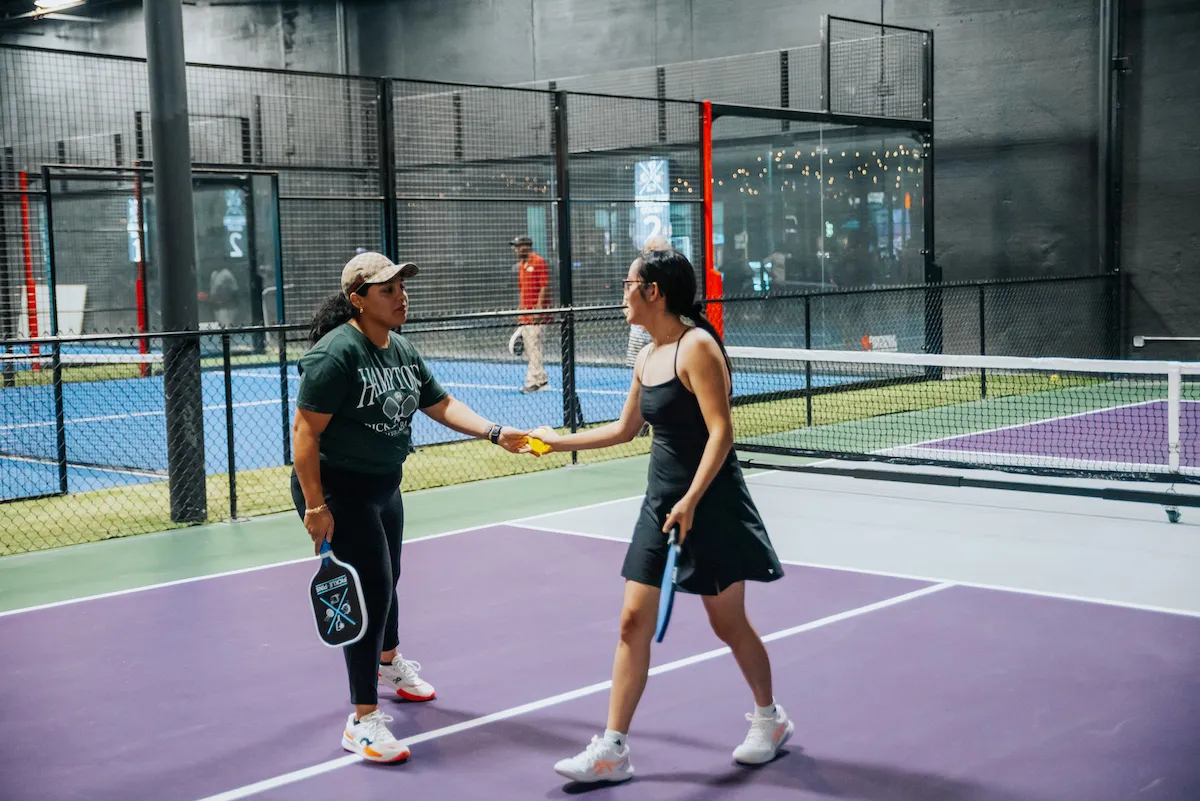
Introduce Yourself
Pickleball is one of the most social racket sports out there. Before the first serve, take a moment to introduce yourself, especially if you are playing with people you have not met before. A simple "Hi, I am [name], how long have you been playing?" goes a long way. You do not need to have a full conversation, but being cordial from the start sets a positive tone for the entire game.
Know the Basics Before You Show Up
You do not need to memorise every rule before your first session, but you should have a general understanding of how the game works: how to keep score, where you can and cannot stand, and when it is your turn to serve. Showing up with zero knowledge puts the burden on your partner and opponents to pause the game and explain things constantly.
Although others wouldn't mind it, that may not always be the case. If you are new, spending 15 to 20 minutes watching a beginner video online before your first session will make a big difference for everyone on the court.
Learn the Court's System
Every venue or open play session has its own system for managing who plays next. Some courts use a paddle stack (players place their paddles in a queue on a designated rack or post), while others run a rotation board or simply go by first-come, first-served. When you arrive, observe how things work or ask a regular player. Never jump a queue or claim a court without checking.
During the Game
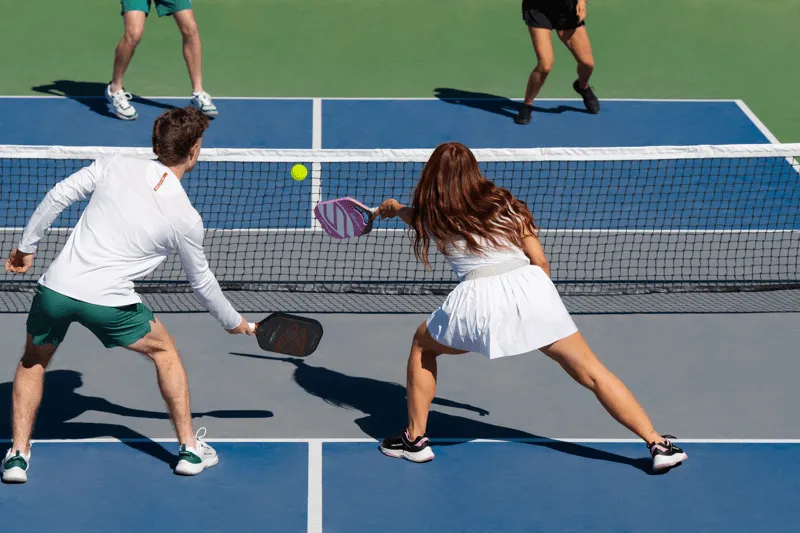
Always Call the Score Before Serving
This one is a formal rule, not just etiquette. In pickleball, the server must announce the score before each serve. Here's the sequence:
- Your team's score
- Your opponent's score
- Server number (in doubles, either 1 or 2 depending on whether you are the first or second server on your team).
For example: "3, 1, 1" means your team has 3 points, your opponent has 1, and you are the first server.
Calling the score keeps everyone on the same page and reduces disputes. Make it a habit from day one.
Give Opponents the Benefit of the Doubt on Line Calls
In recreational play, players make their own line calls on their side of the court. If a ball is close and you are genuinely unsure whether it landed in or out, the standard is to call it in and give the point to your opponent. As a rule of thumb, a ball is only "out" if you can clearly see it land outside the line. If there is any doubt, the benefit goes to the other team.
Arguing over close calls is one of the fastest ways to kill the energy of a casual game. If disputes keep happening, agree with everyone to replay the point rather than fight over it.
Do Not Coach Your Partner Unless They Ask
This applies especially to more experienced players. If your partner misses a shot, resist the urge to immediately explain what they did wrong. Well-intentioned advice mid-game often comes across as criticism, and it can knock someone's confidence at the worst possible moment. If your partner wants feedback, they will ask. Otherwise, the most helpful thing you can do is stay positive and keep the energy up.
The same rule applies to opponents. Unless someone specifically asks for tips, keep your observations to yourself.
Stay Positive With Your Partner
Doubles pickleball means you are sharing the court and the outcome with another person. If they make an error, a simple "no worries, next one" is all that is needed. Do not sigh, roll your eyes, or make comments that put them down. Negativity spreads quickly and makes the game uncomfortable for everyone.
Keep Celebrations in Check
Fist pumps, the occasional "yes," and quiet satisfaction after a great shot are all part of the game. Excessive celebration, especially after an opponent's error, is poor sportsmanship. There is a difference between enjoying a good rally and rubbing it in. Keep it proportionate, especially in casual or recreational settings.
Do Not Target the Weakest Player Constantly
In recreational doubles, it is tempting to repeatedly hit the ball to the less experienced player because it wins points more easily. But doing this aggressively in a casual game is considered bad form. It stops being competitive and starts feeling like a beatdown. Spread the ball around. Challenge yourself by hitting toward the stronger player. It makes the game better for everyone and helps you improve too.
Call "Ball On Court" When a Stray Ball Enters
If a ball rolls onto your court from another game, or your ball rolls onto an adjacent court mid-rally, the standard call is "ball on court." This immediately pauses the point so no one trips or gets hurt. Wait until the adjacent rally finishes before calling for your ball back, and do it with a wave and a thank you, not a demand.
Mind Your Space
Stay within your court boundaries and avoid wandering into neighbouring courts while points are being played. If you need to retrieve a ball from an adjacent court, wait until that rally ends before crossing over. Do not walk behind or through a court while a point is in progress.
Rotation and Court Sharing
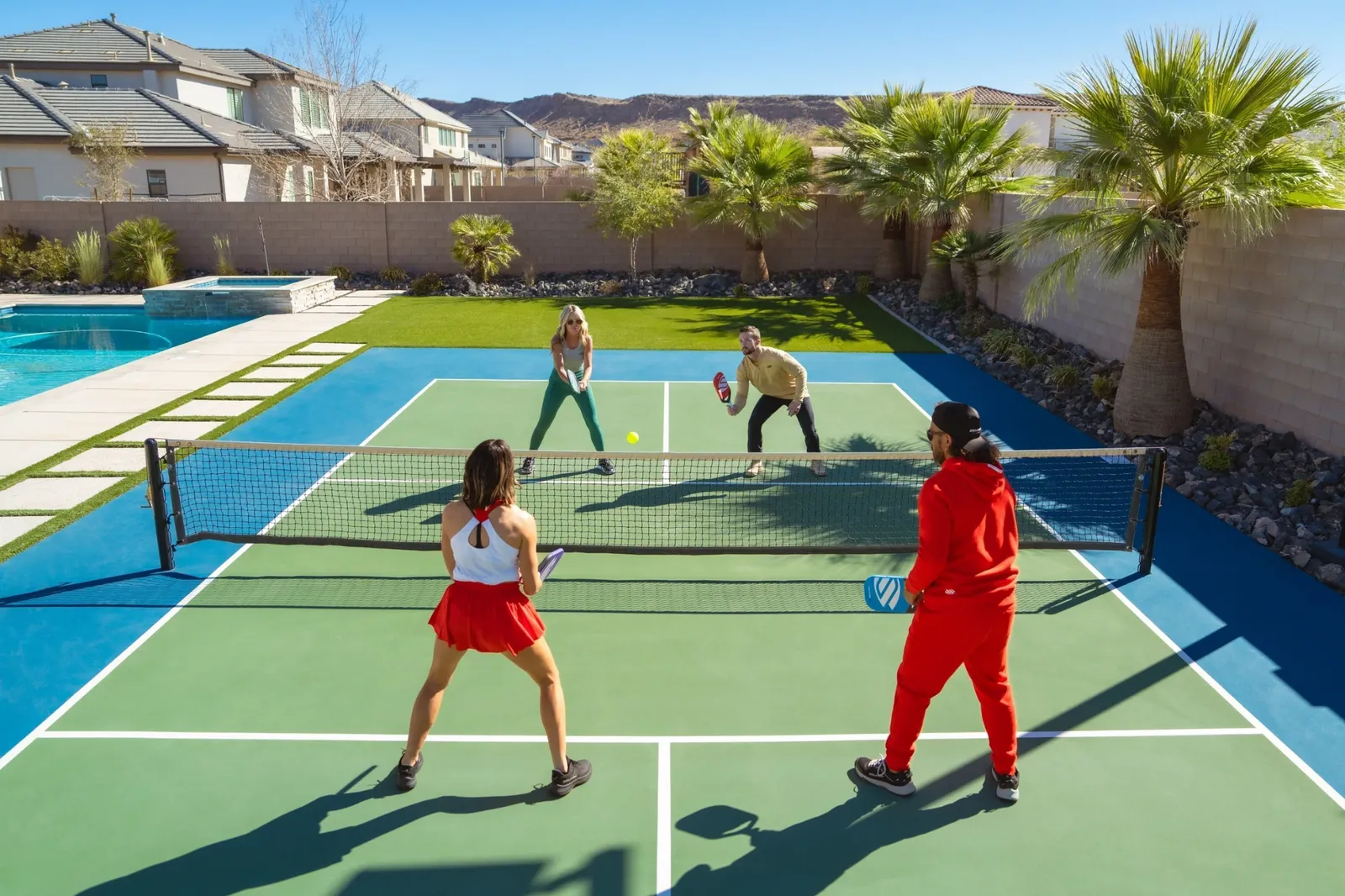
Respect the Wait Queue
Pickleball courts are often in high demand, especially during peak hours. If players are waiting to play, keep track of your time on the court. Most open play sessions rotate players after each game. Do not adjust your score or drag out a game to avoid leaving the court. That is considered one of the more notable etiquette violations in the community.
If you want to play with a specific person who is not up next in the queue, move yourself back in the queue rather than pulling them forward.
Rotate Fairly in Open Play
In many open play sessions, the winning team stays on the court while the losing team rotates off and the next pair in the queue steps in. Some venues have their own variations, so check locally. Whatever the system is, follow it without trying to bend it to your advantage.
After the Game
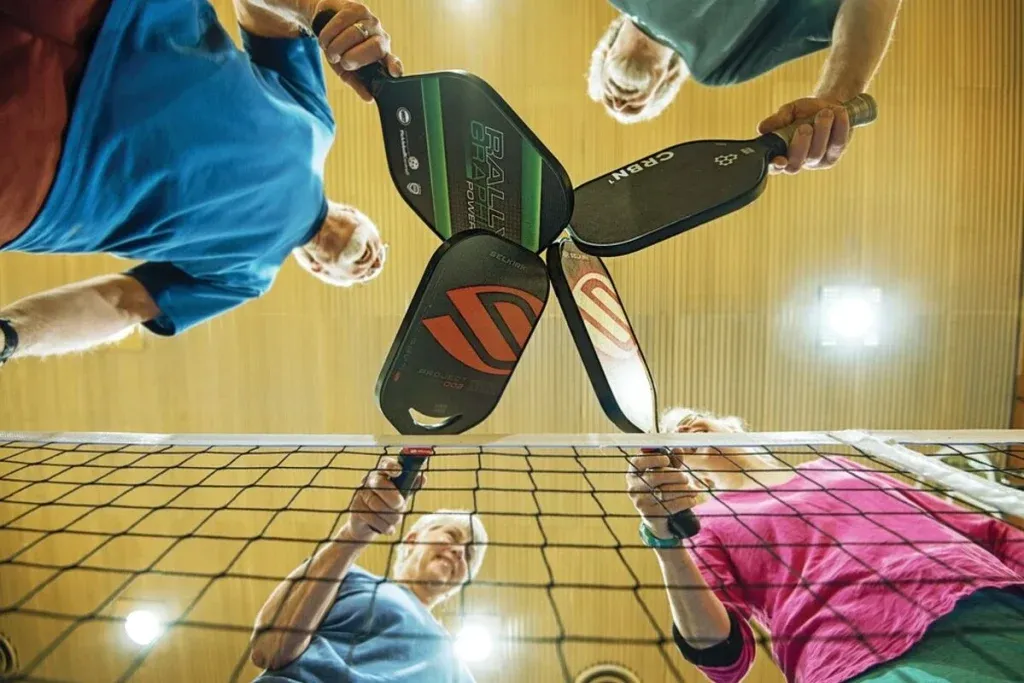
Tap Paddles or Shake Hands
At the end of every game, players meet at the net for a paddle tap or handshake. This is standard across all levels of pickleball, from recreational games to professional tournaments. It is a small gesture that acknowledges the effort both teams put in. Even if the game was frustrating or competitive, this moment of sportsmanship matters.
Avoid Unsolicited Feedback After the Game
The same principle that applies during the game carries over after it. If an opponent or partner did not ask for your thoughts on their game, do not offer them. Save the analysis for moments when someone actively seeks input.
Clean Up After Yourself
Leave the court the way you found it. Take your water bottles, towels, extra balls, and anything else you brought with you. Do not leave litter on the court or in the surrounding area. If you notice rubbish left behind by others, picking it up is a good community habit.
A Note on Playing Up or Down in Level
Is it okay to join a game where the players are much better or much worse than you?
The general guidance is to read the room. If a group of advanced players is running a competitive session, it is courteous to ask whether they are open to mixing in players at different levels. Assuming you can jump into any game just because a court is available can disrupt the dynamic they have going.
On the other side, if you are a strong player joining a beginner session, dial back the power shots. There is no glory in hammering winners against someone who is still learning to dink. Adjust your game to make it enjoyable and competitive for everyone involved.
Be Aware and Be Considerate
Good pickleball etiquette comes down to awareness. Awareness of the people around you, the time you are taking up on the court, the energy you are bringing to the game, and the effect your behaviour has on others' experience.
The game grows fastest when newcomers feel welcomed, and veterans set a good example. Every time you introduce yourself before a match, call a close ball in for your opponent, or tap paddles at the net with a genuine "good game," you are contributing to a culture that makes people want to come back.
That is what keeps pickleball fun.
Want to get the fundamentals right from the start? Find a certified pickleball coach near you at coach.thepicklebase.com. You can also follow us on Instagram at @thepicklebase for the latest in local and regional pickleball news, events, and community updates.