
Pickleball has taken Southeast Asia by storm. Courts are popping up in condominiums, community spaces, and neighbourhoods across the region. But as the sport grows, so does one of its most persistent problems: the noise.
Anyone who has lived near a pickleball court knows the sound well. That sharp, repeating "pop" carries across open spaces and through walls, drawing complaints from residents who otherwise have no problem with the sport itself.
Foam balls have entered the conversation as one of the more practical answers to this problem. They are already being trialled in Singapore, discussed in community councils, and quietly adopted by recreational players who want to keep playing without the friction. Here is what you need to know.
Why is the "Pop" So Loud?
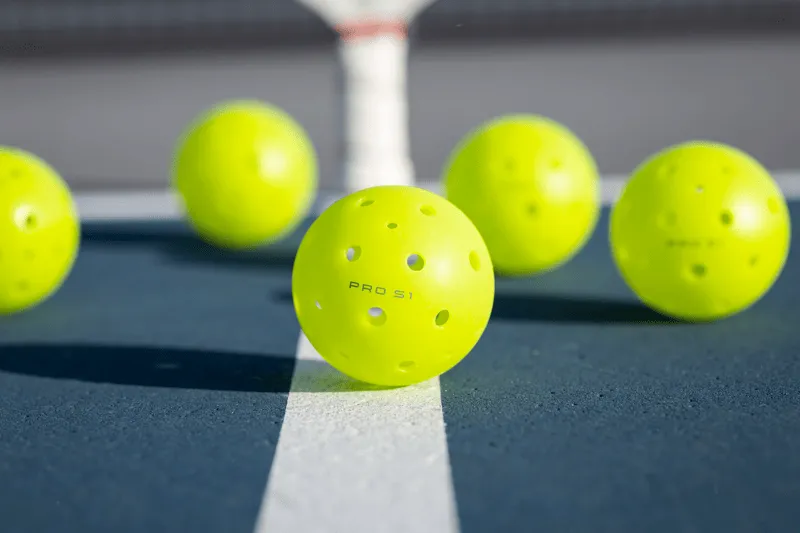
Standard pickleballs are made from hard plastic with holes punched through the surface. When a hard plastic ball strikes a hollow paddle at speed, the impact produces a sharp, resonant crack. The sound can hit 70 to 80 decibels in a typical game, and some sources put peak impact noise even higher at 85 decibels or more. For reference, that is comparable to a lawnmower running nearby.
Outdoor balls tend to be harder and heavier than their indoor equivalents, which makes the problem more pronounced on outdoor community courts. The noise also carries differently in open spaces, bouncing off fencing, walls, and hard court surfaces in a way that amplifies its reach.
The result is a sound that cuts through ambient noise and can be heard clearly from floors above, across a car park, or through a closed window. For shift workers trying to sleep, remote workers on calls, or parents trying to settle young children, that recurring pop becomes a daily disruption.
In Singapore, this tension has grown loud enough to prompt formal action. In August 2025, several community hard courts adjusted their operating hours specifically because of noise disturbances affecting residents' rest. One letter to The Straits Times described a husband working the night shift who could hear pickleball from seven floors up, unable to sleep through his daytime rest hours.
What Foam Balls Actually Do
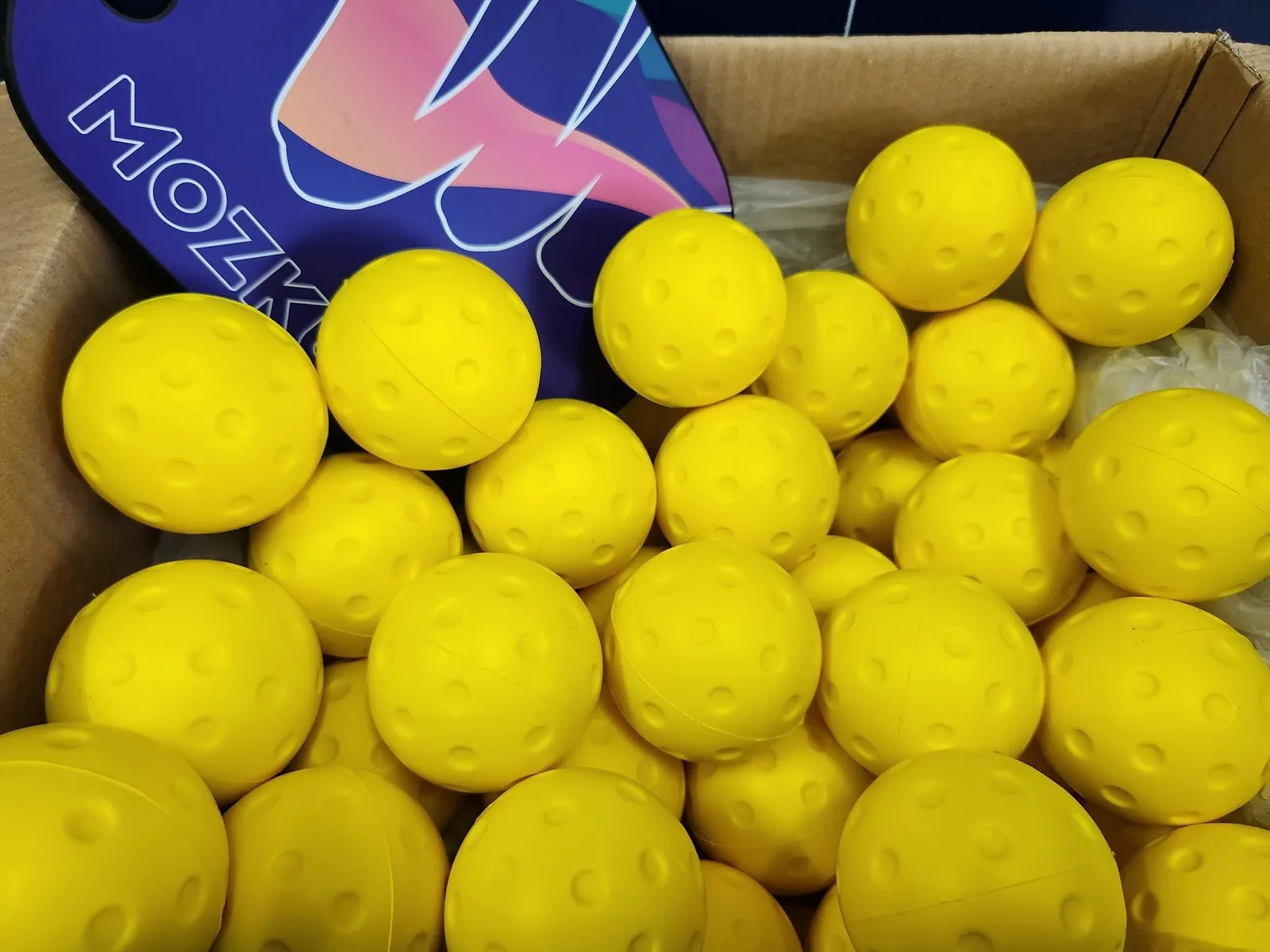
Foam pickleballs are made from high-density foam rather than hard plastic. The material absorbs impact instead of amplifying it, which is where the noise reduction happens.
Measurements from the Mountbatten community trial in Singapore showed foam balls reducing gameplay noise to around 60 decibels. That is roughly the volume of a normal conversation. Compared to the 70 to 80 decibel range of a standard ball, the difference is significant. The human ear perceives a 10-decibel drop as roughly half as loud. This means foam balls fundamentally change how the game sounds to people nearby.
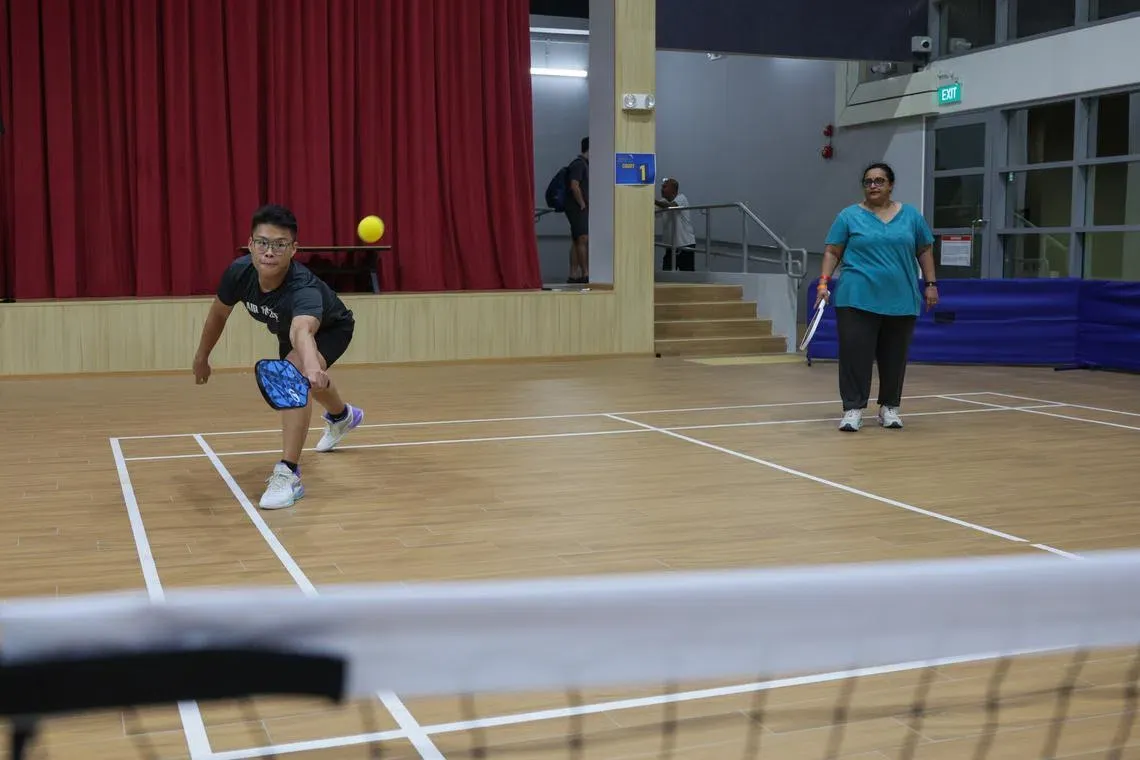
At a January 2026 tryout event at Mountbatten Community Club, over 120 residents tested foam balls on the court. The response was broadly positive. Players noted the quieter experience, and neighbours who had previously raised concerns expressed support for the approach. Mountbatten MP Gho Sze Kee described the initiative as a give-and-take solution that keeps pickleball accessible while respecting shared community spaces.
By April 2026, Mountbatten Town Council had taken it a step further, mandating foam-ball-only play during designated time slots: 7:00 to 10:00 a.m. and 7:00 to 9:00 p.m. These are the hours when noise is most likely to disturb residents starting their mornings or winding down in the evenings. It is one of the first formal policy measures of its kind in the region.
How do Foam Balls Play?
Foam balls are not a straight swap for standard plastic balls. Players who have tried them describe a noticeably different experience on court. For anyone playing above the recreational level, there is a noticeable difference:
- Speed. Foam balls travel more slowly off the paddle, which changes the timing of exchanges and makes fast-paced rally play feel different.
- Spin. The softer surface generates less spin, which affects the strategy behind dinks, drops, and kitchen play.
- Bounce. Foam balls tend to play bouncier and less predictably than their plastic counterparts, particularly on hard outdoor surfaces.
One writer who tested foam balls for the first time noted that the absence of the familiar "thwack" was disorienting. That sound, which neighbours find so irritating, is actually a useful feedback cue for players trying to gauge shot quality. Lose it, and the game feels different in ways that take time to adjust to.
Foam balls are not approved for sanctioned tournaments or competitive DUPR-rated play. They are marketed explicitly for recreational use, noise-sensitive environments, and practice settings. Pickleball Corner Singapore, which was consulted during the Mountbatten trial coverage, describes them as excellent training tools but not performance equivalents to standard balls.
If you play socially and value being a good neighbour, foam balls are a reasonable choice. If you are building skills for competition, they work well for drills and wall practice, but you will still need to train with standard balls to prepare for actual match conditions.
Other Ways to Bring the Noise Down
Foam balls are one piece of the puzzle, but they are not the only option. Communities and players looking to reduce noise have a few other avenues worth knowing about.
- Quieter paddles: USA Pickleball now certifies paddles under a "Quiet Category" rating, recognising products designed to reduce impact noise. Polymer core paddles with honeycomb structures absorb vibration more effectively than older designs. Some brands have marketed paddles specifically around their reduced noise profile, including Diadem's Hush paddle, which has been tested at significantly lower decibels than standard options.
- Acoustic barriers: Court-level modifications can help contain noise before it spreads. These range from simple mesh windscreens attached to chain-link fencing to purpose-built acoustic panels and wraps. More advanced solutions like soundproof glass barriers have been shown to reduce noise levels by up to 50%. However, it represents a significant infrastructure investment better suited to permanent facility builds.
- Time-based rules: Several courts across Singapore adjusted their operating hours in 2025 to avoid the most sensitive times for nearby residents. Some facilities have gone further by pairing time restrictions with foam-ball mandates during early morning and evening slots, as seen in Mountbatten.
- Court placement and design: For new court builds, positioning courts away from residential windows and bedrooms, and using purpose-designed court surfaces that absorb rather than amplify impact sound, can go a long way. The problem is harder to solve retroactively in courts already surrounded by housing. For those situations, a combination of equipment changes and scheduling tends to be the most practical path.
Finding a Balance
The noise debate is ultimately about finding a way for both to coexist. Foam balls are not perfect, and they will not replace the standard game for anyone playing seriously. But as a practical concession that keeps courts open, keeps relationships between players and neighbours intact, and keeps the sport growing, they are a tool worth having.
The Mountbatten example is already drawing attention from other communities in Singapore and around the region. It would not be surprising to see similar policies adopted closer to home in Malaysia as pickleball continues to expand into residential neighbourhoods and shared spaces.
Whether you are a player looking to practice without upsetting the neighbours, or a facility manager weighing how to keep everyone happy, foam balls are worth a test run.
Looking for a court near you? Find pickleball courts across Malaysia on courts.thepicklebase.com. You can also follow us at @thepicklebase on Instagram for the latest pickleball news and court updates from across the region.