
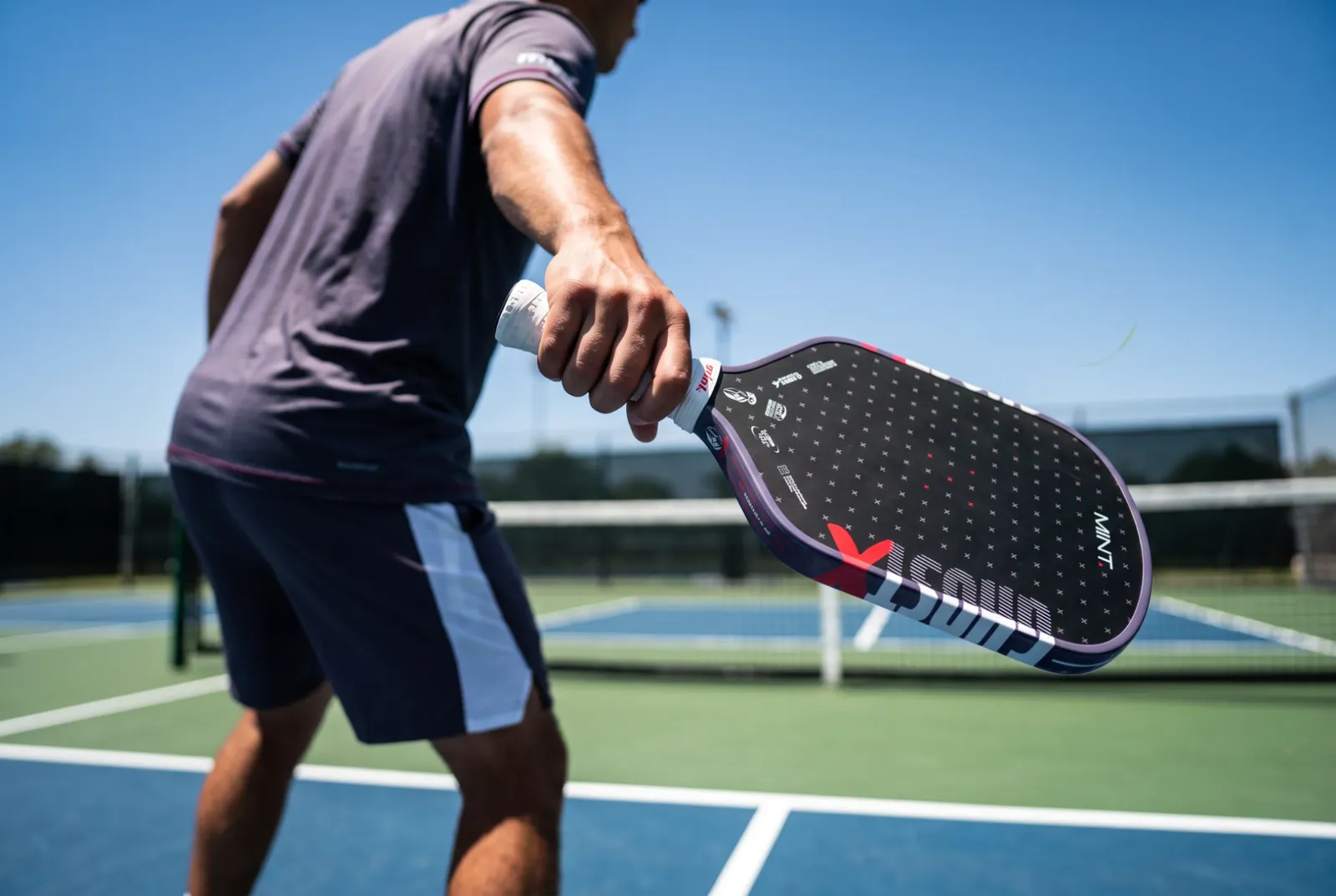
Power paddles exist to help you finish points on your terms, through hard drives, fast serves, and speedups your opponent can't get a racquet on. Power paddles are suited for more experienced players who want additional head speed and pop.
Three specs make power paddles:
- Thicker and stiffer, transferring more energy into the ball on contact.
- A head-heavy balance point that puts mass where your swing needs it.
- Firmer paddle face (usually made from a raw carbon layer) that keeps the ball from sinking too deep into the paddle and bleeding off pace.
The tradeoff is control. A stiffer, poppier paddle gives you less feel at the kitchen, so your dinks and resets need to come from technique rather than the paddle bailing you out. We made an article talking about different kinds of paddles that suit your skill level and playstyle.
Best Overall: JOOLA Perseus Pro IV
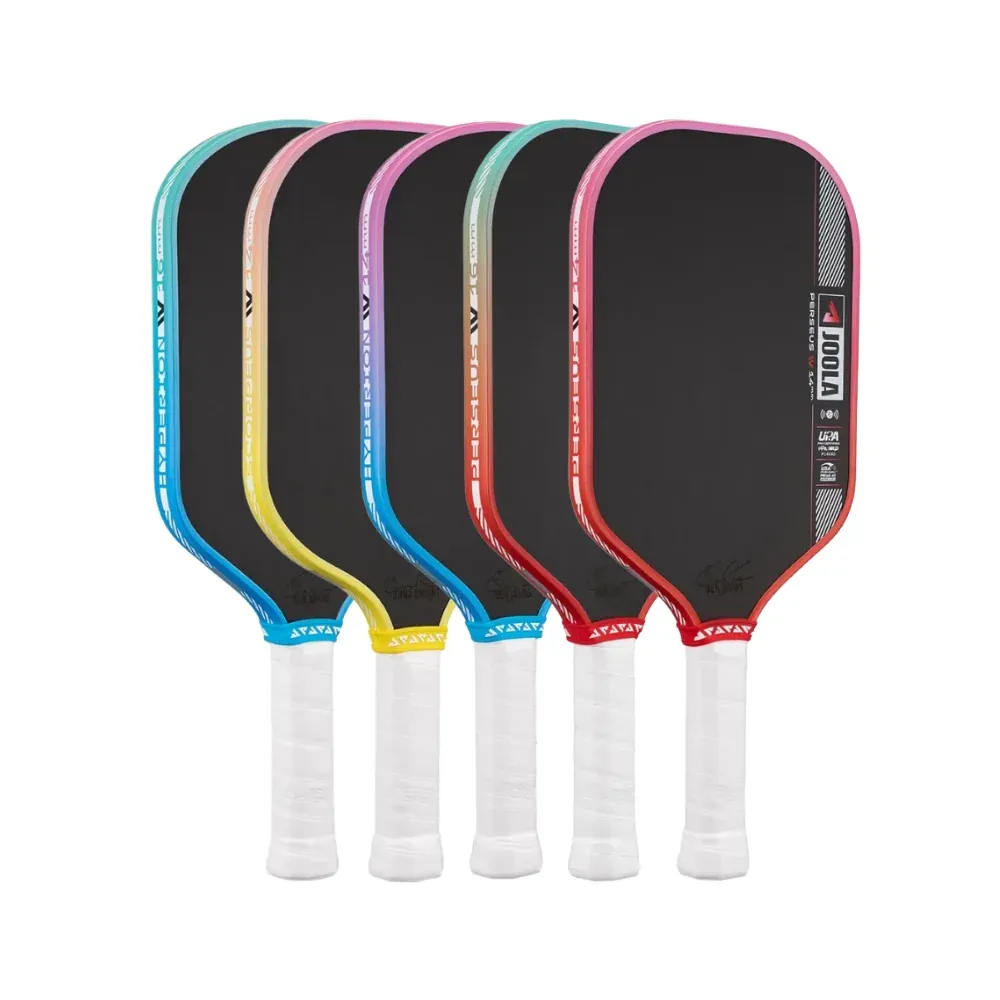
Best for: 4.0-plus players who already drive and speed up with confidence and want a paddle that rewards it.
The Perseus Pro IV is the paddle most players mean when they say "power paddle" in 2026. It runs a 16mm foam-perimeter core under a raw Toray T700 carbon face, weighs 8.0 to 8.4 ounces, and carries a swing weight around 119 to 122, which is heavy by modern standards. It punishes slow hands at the net, but for a player who already has the technique, nothing else finishes a point faster.
Best Durability: 11SIX24 Power 2 Vapor
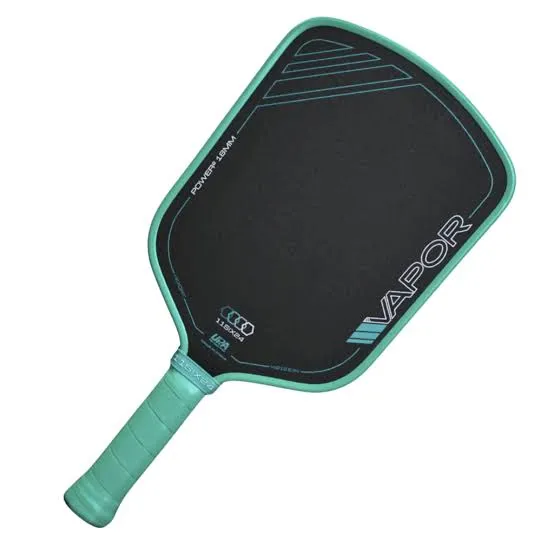
Best for: Players who hit hard and often, and don't want to replace a paddle every six months.
Most power paddles lose their grit fast, since the same firm, textured face that generates pop also wears down under repeated hard contact. The 11SIX24 Power 2 Vapor is built around a longer-lasting core specifically to resist that decay.
Best Feel: Gearbox GX2 Power
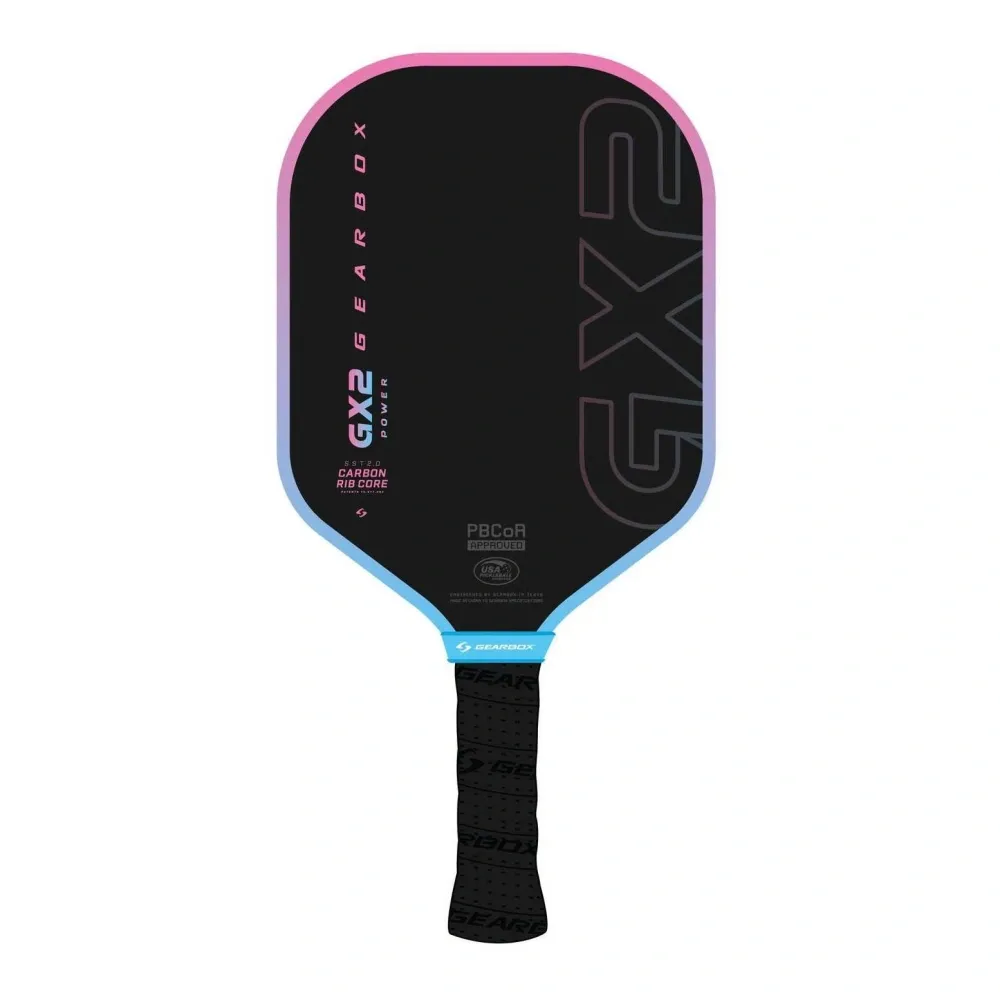
Best for: Players who want power without losing the sense of where the ball is going.
Power paddles often sacrifice dwell time, the brief moment the ball stays on the face, for maximum pop. The GX2 Power keeps a longer dwell time than most in its category, which gives you more feel on contact even at full swing speed. It runs $280 at full price.
Best Value: GRUVN LAZR 16X Full Foam
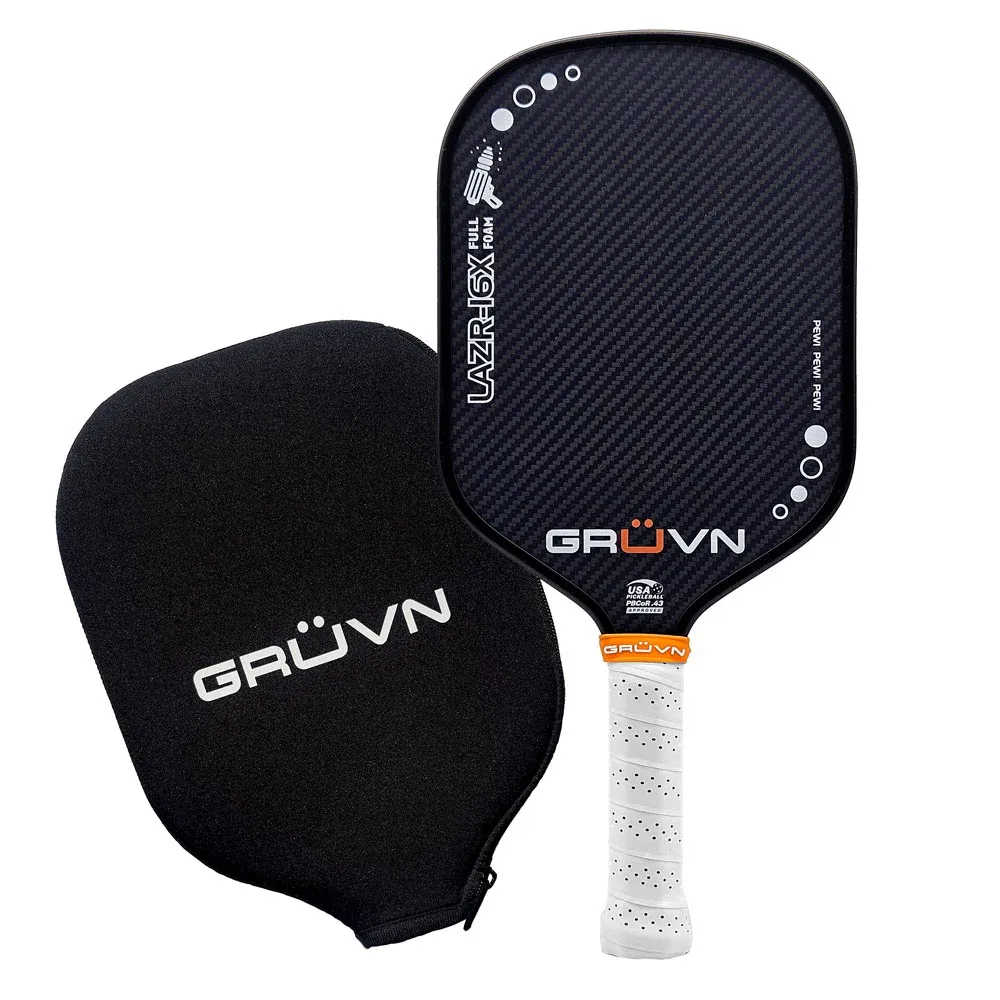
Best for: Developing players who want to add power without an all-or-nothing paddle.
Not every power player needs a $250 flagship. The LAZR 16X Full Foam brings a genuinely large sweet spot and enough pop to keep opponents honest, without the stiff, unforgiving feel that makes some power paddles hard to control. It runs around $169.
Who Should Actually Buy a Power Paddle
Power paddles suit players with compact, controlled swings who struggle to generate pace on their own and advanced players with a developed soft game who want to add a finishing gear. However, they are a poor fit for 3.0 to 3.5 players still building consistency, since the same stiffness that adds pace also adds unforced errors when technique isn't dialed in yet.
Power Paddles Won't Fix a Weak Soft Game
A power paddle makes your strong shots stronger. It does nothing for your dinks, resets, or third-shot drops, and a stiffer face can actually make those shots harder to control. If your soft game is your weak point, a control paddle will do more for your win rate than a power upgrade will.
Ready to swing something heavier? Shop power paddles at shop.thepicklebase.com.
Common Questions
Is an 8-ounce or 10-ounce power paddle better?
Most modern power paddles sit closer to 8 ounces because the foam-core construction adds pop without needing extra mass. Heavier isn't automatically more powerful once you factor in foam-core technology, and a lighter paddle keeps your hands faster at the net.
Will a power paddle hurt my elbow?
A stiff, head-heavy paddle can aggravate tennis elbow if your technique relies on the arm rather than the whole kinetic chain. Players with a history of elbow issues should lean toward a lighter, more forgiving power paddle or stick with a hybrid build.
Can beginners use a power paddle?
It's not recommended. Beginners benefit more from a forgiving, control-oriented paddle while they build consistent contact. A power paddle tends to expose mishits rather than cover for them.