
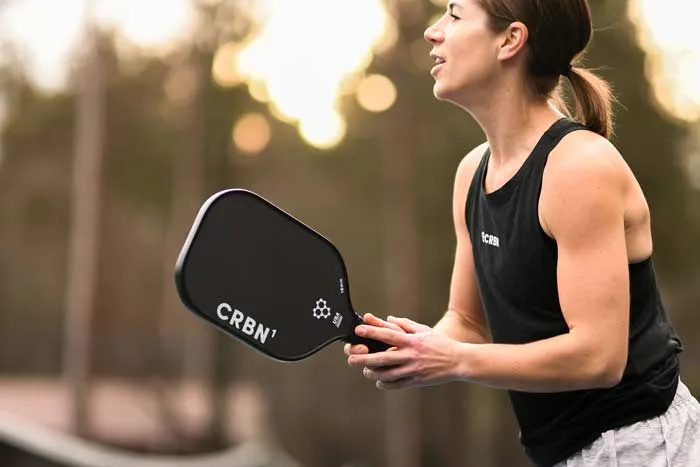
Pickleball spin paddles feature textured or gritty surfaces, often made from raw carbon fiber, specialized fiberglass, or custom grit coatings. These surfaces frictionally "grab" or bite the ball upon impact to generate extra RPMs (revolutions per minute). We covered these factors in our article on pickleball paddle specs and comparisons of different paddle types.
Spin paddles are designed for players who want to shape their shots and control the pace or arc of the ball. Interestingly, they are best suited for players transitioning from Tennis or Table Tennis since these players naturally use brushed stroke mechanics and rely on topspin or sidespin.
Beginner players can benefit from using spin paddles because they are more forgiving and provide excellent ball control. However, hitting flat, push-style shots won't fully benefit from a high-spin paddle right away.
If you're looking for the best spin paddles in 2026, here are some recommendations:
Best Overall: CRBN³ Trufoam Waves
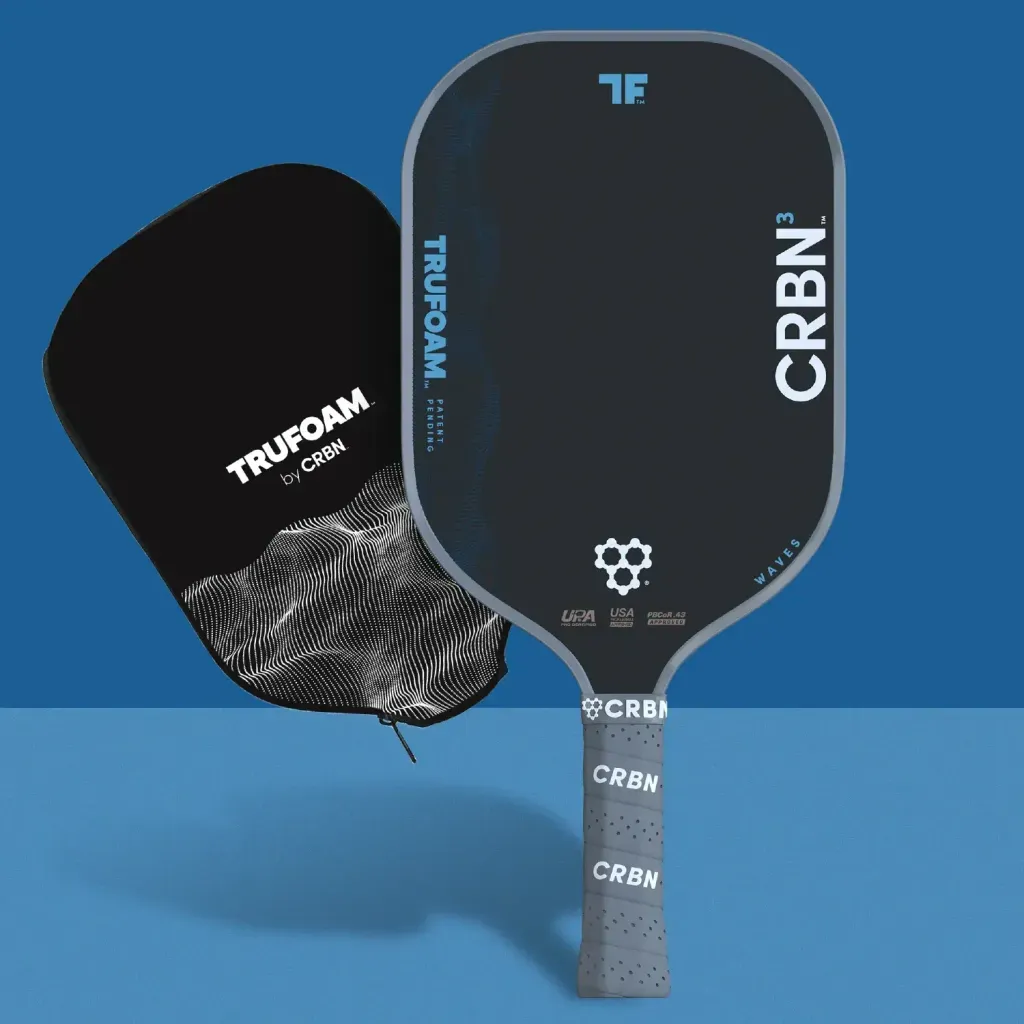
Best for: Players whose game runs through roll dinks and heavy topspin at the kitchen.
Independent lab testing at Paddle Lab clocked the Trufoam Waves at over 1,588 RPM, among the highest spin numbers recorded for any paddle tested. Its rough carbon fiber face combines with CRBN's Trufoam core technology, designed to mimic the string-bed feel of a tennis racquet, for maximum bite and dwell time.
Best Raw Carbon: Bread & Butter Loco
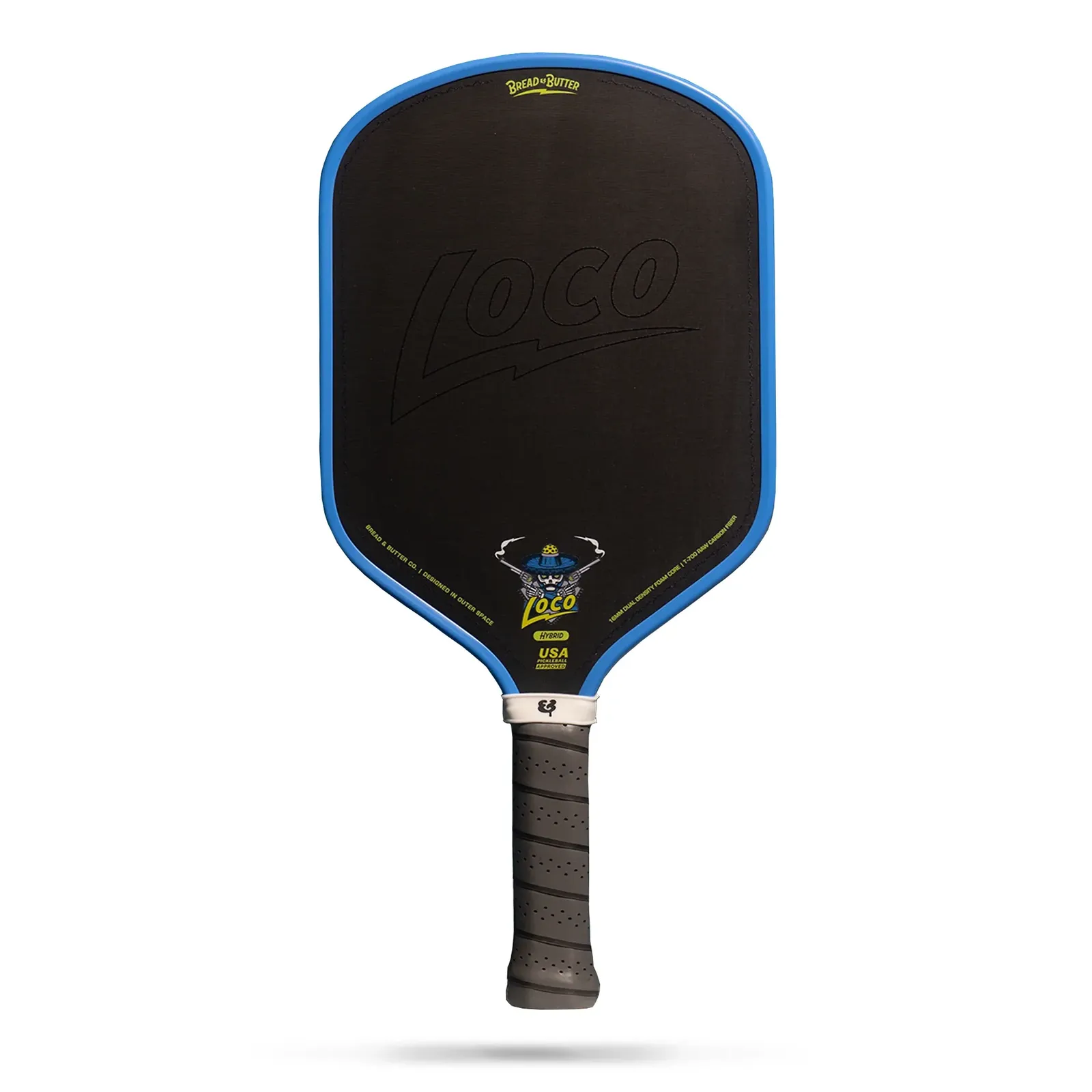
Best for: Players who want elite spin from a straightforward, well-reviewed build without chasing a proprietary texture.
The Loco is the highest-scoring foam paddle in third-party reviews from Pickleball Studio, and it earns that with a standard raw carbon fiber face rather than a proprietary texture. Expect roughly a 17 percent RPM drop after 100 games of play, which is normal decay for raw carbon and still leaves it well ahead of a painted face at the same point.
Best Long-Life Texture: Spartus P1 Hybrid
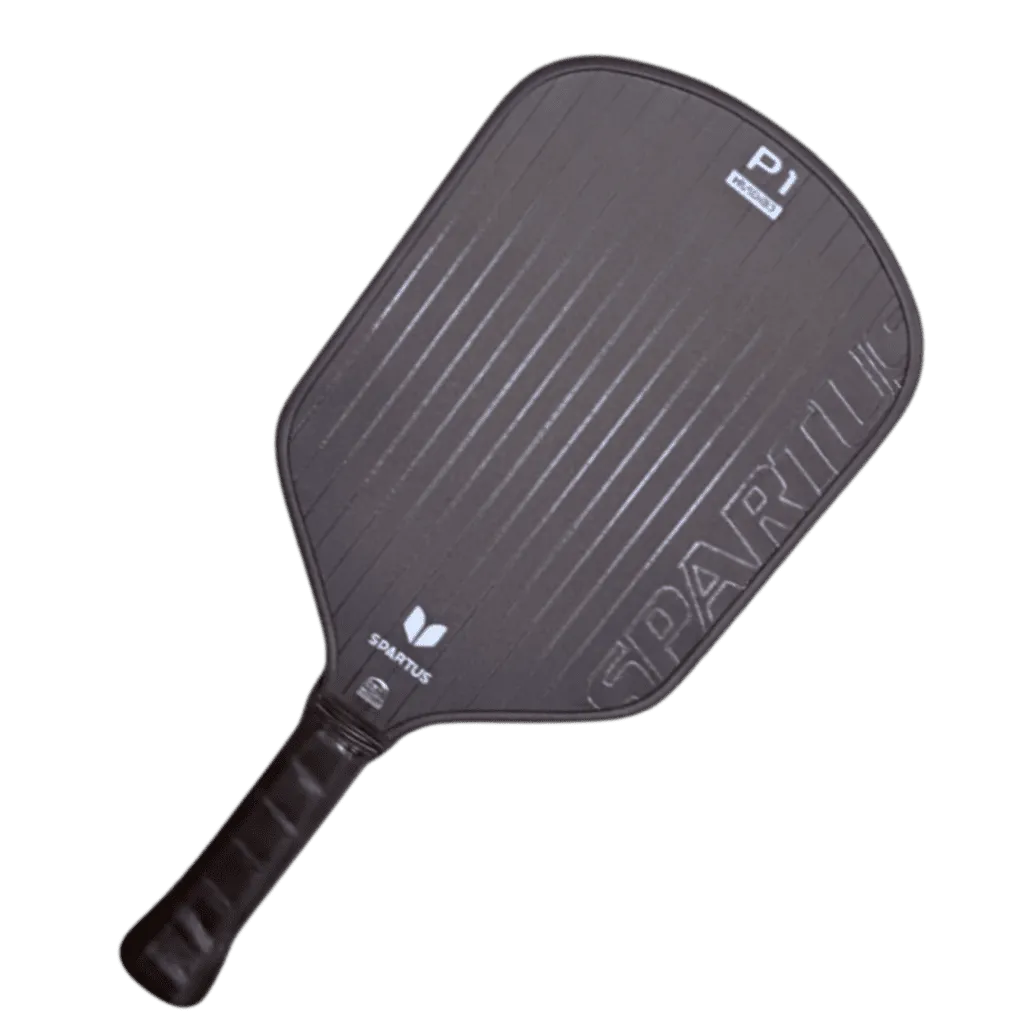
Best for: Players who play often enough that face decay is a real, recurring cost.
Raw carbon fiber loses grit over time as the surface wears smooth. Spartus built its Permagrit surface, a ceramic-hybrid texture applied domestically, specifically to resist that decay, and early testing shows a smaller RPM drop than standard raw carbon over a comparable number of games.
Best Value: ProXR Raw Carbon
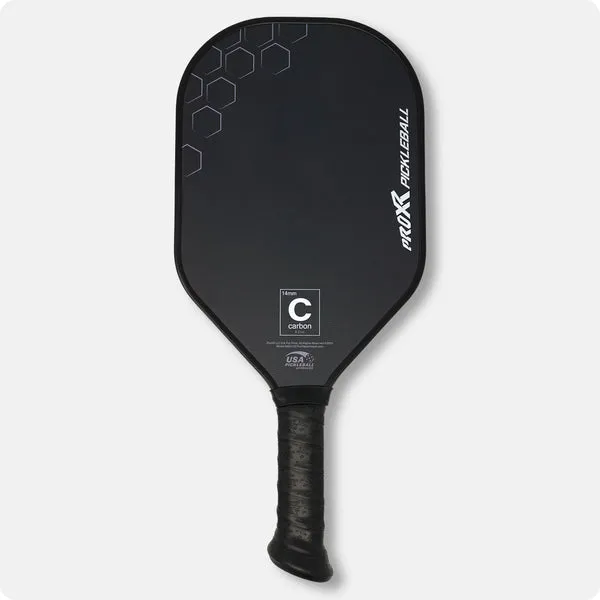
Best for: Control-oriented players adding a spin-focused paddle to their bag for the first time.
Built around T700 raw carbon fiber, this paddle leans into spin and control together rather than chasing outright power. It's a strong entry point for a player who wants a genuine spin-first paddle without flagship pricing.
The Face Loses Grip Faster Than You Think
Every raw carbon face decays with use, and the drop is measurable. Comparable raw-carbon paddles lose roughly 14 to 20 percent of their peak spin numbers within the first 100 games, along with a similar drop in surface roughness. Budget for a face refresh, whether that means a new paddle or a resurfacing service, once your spin noticeably flattens out.
Ready to add some bite to your game? Shop spin paddles at shop.thepicklebase.com.
Common Questions
Do spin paddles sacrifice power?
Not necessarily. Many modern spin-focused paddles pair a grippy raw face with a medium core that still generates solid pace, so you're rarely choosing spin over power outright.
How do I know when my paddle's spin has worn out?
The clearest sign is your rolls and kick serves flattening out even though your swing hasn't changed. If a ball that used to curve is now going straight, the face has likely lost its texture.
Is a textured or raw carbon face better for spin?
Raw, unpainted carbon fiber generally outperforms painted or smoother textured faces for spin, since the exposed weave grips the ball's felt more directly on contact.