
Running shoes are engineered to solve a forward-motion problem. Their soles curve, their cushioning compresses vertically to absorb repeated forward impact. Their geometry is built around one direction of travel.
Pickleball is the exact opposite of that. A rally involves constant lateral lunges, quick pivots, and sudden stops. A shoe built for straight-line running simply isn't shaped to handle that load safely. Running shoes lack the lateral stability needed for pickleball's quick side-to-side movements.
Lateral Support and Sole Geometry
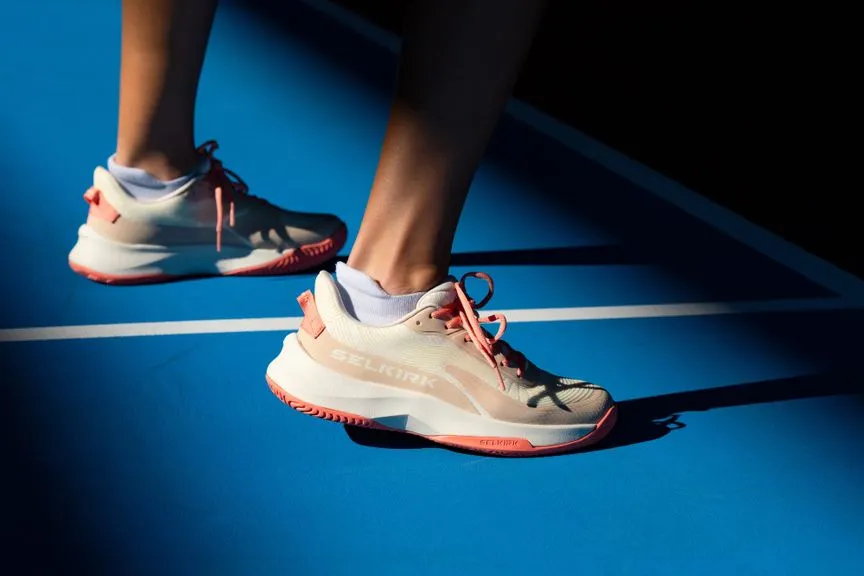
The difference between a running shoe and a pickleball shoe is structural, and it boils down to these fundamentals:
Flat, Wide Outsoles
Court shoes use a flat sole that maximizes ground contact during side-to-side movement. Running shoes, on the other hand, feature a curved geometry that is built to roll smoothly through a forward heel-to-toe stride. That curve is exactly what causes instability the moment you load it sideways.
Low Heel-to-toe Drop
Court shoes typically run a 0 to 4 millimeter drop, keeping your center of mass over your midfoot so you can push off explosively in any direction. Running shoes are built with a higher, more cushioned drop optimized for absorbing forward impact, not lateral push-off.
Reinforced Lateral Sidewalls
Court shoes add structural support along the outer edge of the shoe to resist the foot rolling outward during a hard lateral cut. Running shoes generally don't reinforce this area at all, since it's not a load they're designed to manage.
When playing pickleball in a running shoe, your foot slides inside, reducing the force you generate and increasing the risk of your ankle rolling past its safe range of motion.
Outsole Tread and Non-Marking Rubber
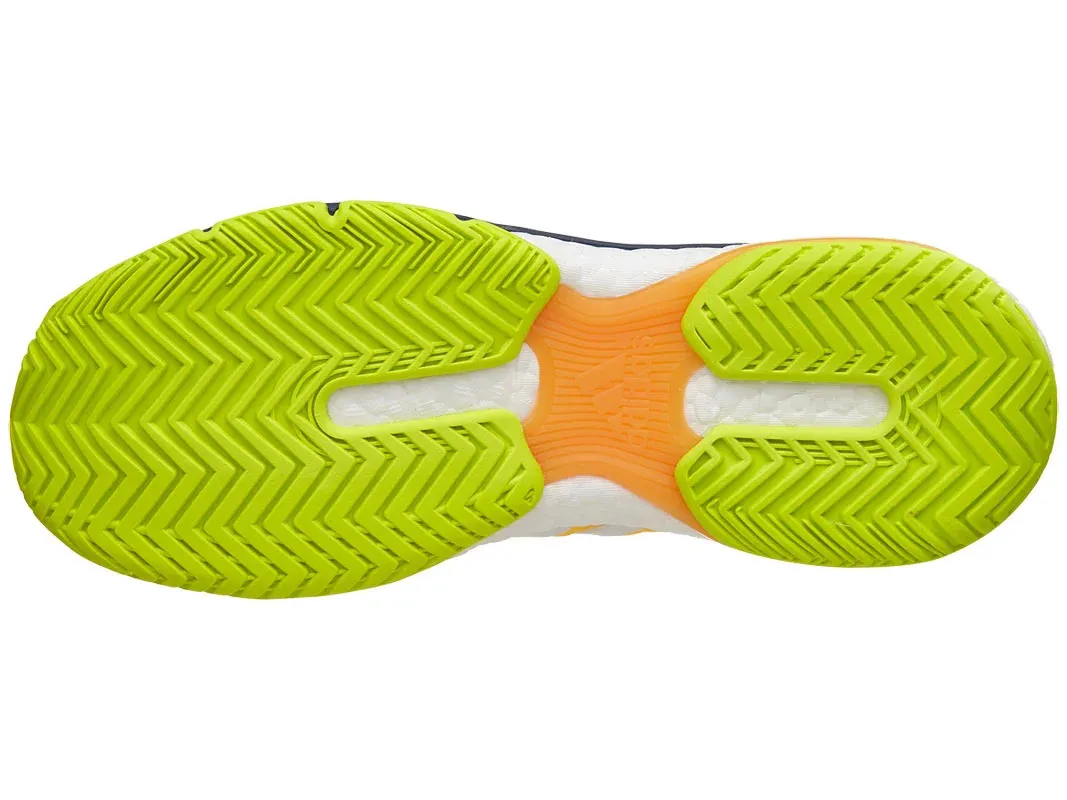
Court shoes also use tread patterns designed specifically for multidirectional grip, typically a herringbone or modified herringbone pattern that bites into hard court surfaces during quick direction changes. Indoor court shoes pair that tread with non-marking rubber soles, which grip gym floors without leaving the black scuff marks that regular outdoor rubber leaves behind.
Pickleball Injuries Are on the Rise
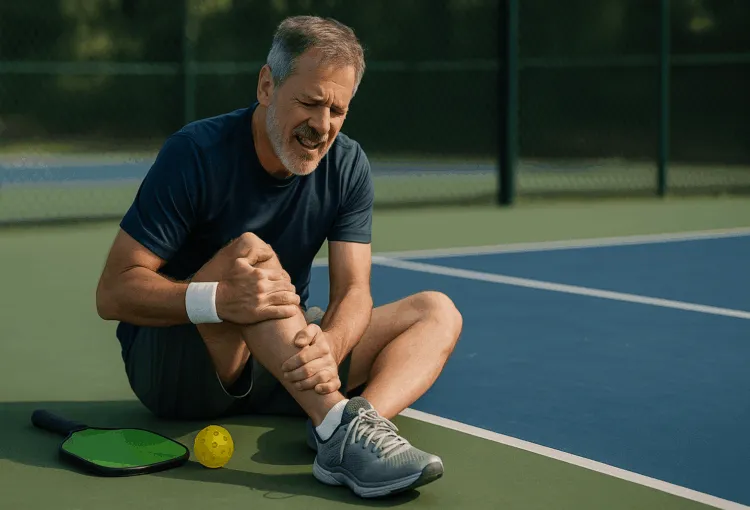
Lower extremity injuries make up a meaningful share of all pickleball-related emergency room visits, and the pattern points squarely at the kind of stress lateral movement puts on the foot and ankle. A 20-year national study of pickleball-related lower extremity injuries found that sprains and strains accounted for 76.3% of cases, with the lower leg, ankle, and knee as the most commonly affected areas, according to research published in Lower Extremity Review.
A separate retrospective study of 166 patients treated for pickleball- and paddleball-related lower extremity injuries found that most injuries were ankle sprains or strains caused by a twisting mechanism during sudden changes in direction, per research published in PMC. A related podiatry review found that sudden changes in direction accounted for 54 percent of lower extremity injuries in the sport, based on analysis in Podiatry Management.
None of these studies isolate footwear as the sole cause, but the injury mechanism they describe, ankle strain from sudden lateral direction changes, is precisely the load that court shoes are engineered to manage and running shoes are not.
Indoor vs. Outdoor Court Shoes
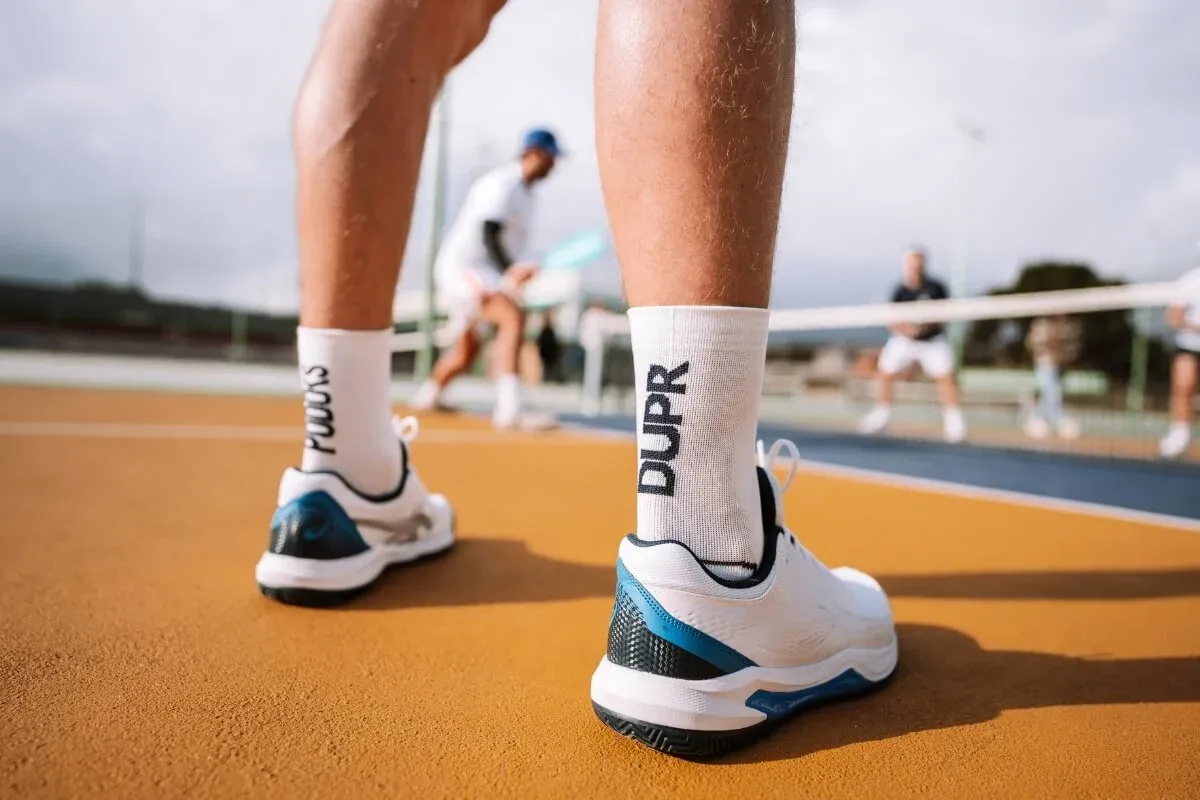
Court shoes themselves aren't one-size-fits-all either. Indoor pickleball shoes use softer, non-marking rubber soles tuned for grip on a gym floor, while outdoor models use tougher, more abrasion-resistant outsoles built to survive concrete and asphalt. Using an indoor shoe outdoors will wear through the softer sole quickly, while an outdoor shoe on a gym floor can feel overly stiff and less responsive on hand exchanges at the kitchen line.
We went in-depth on indoor vs outdoor pickleball shoes in our guide.
You Don't Need to Overspend on Shoes
A dedicated pickleball shoe isn't required by name. Tennis, volleyball, and squash shoes share the same core design principles- flat soles, low drop, reinforced lateral support and can work just as well, particularly if you already own a pair. What actually matters is the category, court shoe versus running shoe, not the specific pickleball branding on the box. See our full pickleball shoe buying guide for model-specific recommendations across budgets.
Playing on Malaysia and Southeast Asia's Outdoor Courts
Most public and club courts across Malaysia, Singapore, and the wider region are outdoor hard courts, which puts the emphasis squarely on durable outdoor tread rather than gym-floor grip. Heat and humidity also break down cheaper outsole rubber faster than in temperate climates, so budget for more frequent sole checks if you're playing several sessions a week outdoors.
Find a court to break in your new shoes at courts.thepicklebase.com, and follow @thepicklebase on Instagram for more gear breakdowns.
Common Questions
Can I use tennis shoes instead of pickleball-specific shoes?
Yes. Tennis shoes share the same flat sole, low drop, and lateral reinforcement that pickleball needs, and they're a completely reasonable substitute.
How do I know when to replace my court shoes?
Check the tread on the top half of the sole, from the toe edge inward, since that's the area worn down first by pickleball's constant lateral dragging and pivoting.
Are basketball shoes okay for pickleball?
They're better than running shoes but not ideal. Basketball shoes are built for vertical jumping and landing, with more cushioning and a higher profile than the low, stable platform pickleball rewards.
Do I really need non-marking soles for outdoor play?
No, non-marking requirements are almost always an indoor facility rule tied to protecting gym floors. Outdoor courts don't typically enforce it.