
Your pickleball paddle is your primary tool for playing the game. It's like an extension of yourself that needs to match your skill. Using a gear setup that doesn't match where you are in your development can actively hinder stroke mechanics, cause unforced errors, or even lead to overuse injuries like elbow tendonitis.
For example, giving a beginner a stiff, thin-core "power paddle" often results in sprayed pop-ups and erratic soft games. Conversely, giving an advanced player a soft, low-pop beginner paddle can limit their offense. Selecting a paddle tailored to your current phase lets the paddle assist your weak spots while your technique develops.
You can read our in-depth guide on how to choose a pickleball paddle or check out our article about pickleball specs.
Best Pickleball Paddle for Beginners (DUPR 2.0 – 3.0)
At this stage, the primary goals are developing consistent hit mechanics, mastering soft dinks, and avoiding joint strain. As a beginner, you want a more forgiving paddle instead of raw power. Otherwise, the ball would be harder to control. Our guide on whether expensive paddles are worth it explains why.
Here's what you need to look for in a pickleball paddle as a beginner:
- Shape: Wide-body or Standard. A wide face maximizes the hitting area and offers the largest, most forgiving sweet spot for off-center contact.
- Core Thickness: 16mm Polypropylene Honeycomb. A thicker core absorbs energy, dampening pop so shots don't fly out over the baseline when learning stroke speed.
- Face Material: Fiberglass (Composite) or standard Graphite. Fiberglass gives a slight trampoline effect that helps push the ball over the net with minimal effort.
- Weight: Midweight (7.5 – 7.9 oz). Light enough to prevent elbow fatigue while maintaining enough static mass to remain stable on impact.
Paddles for Beginners
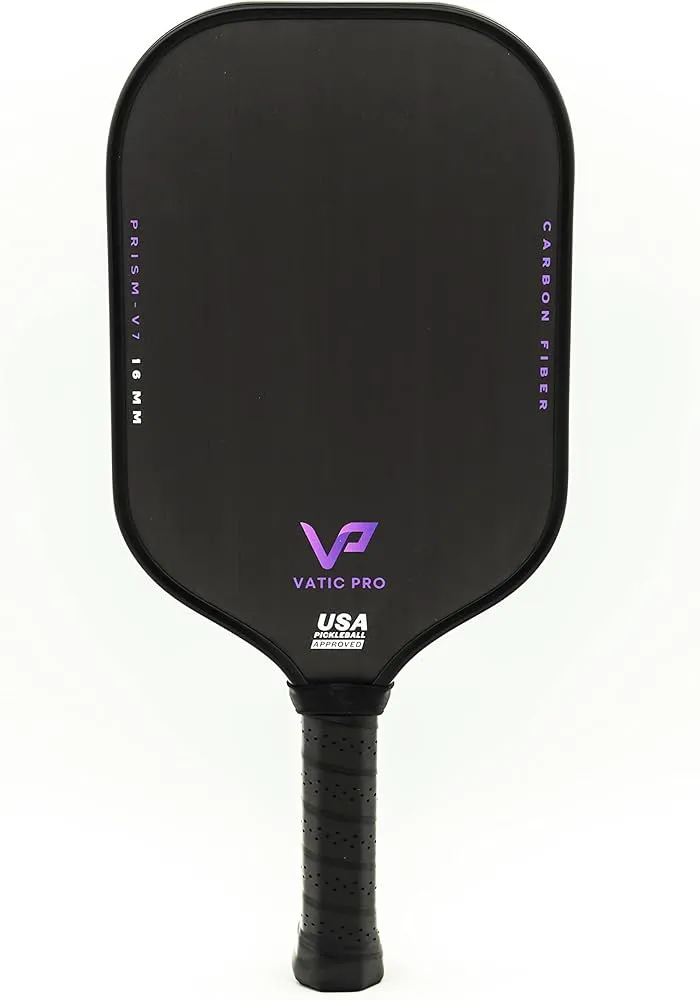
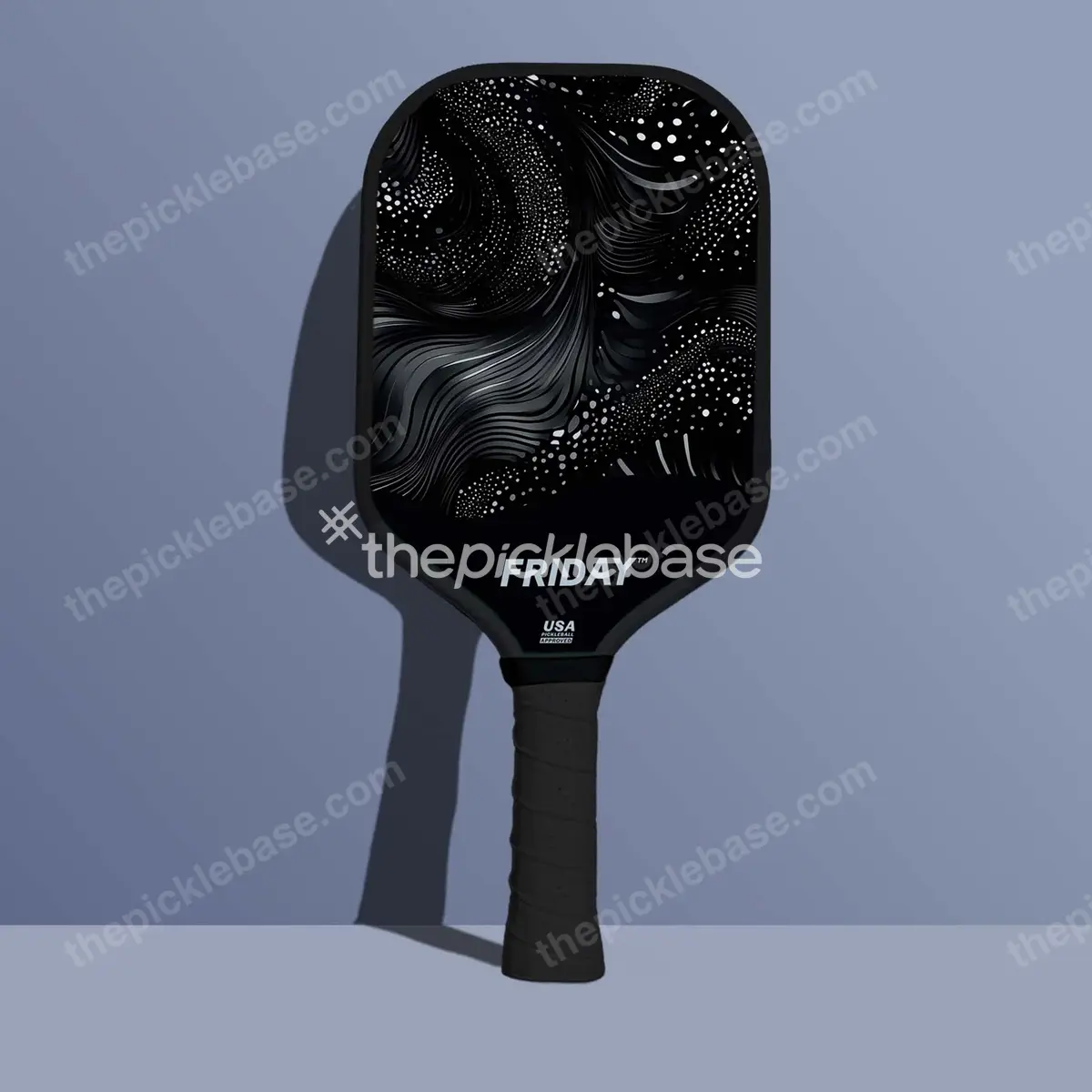
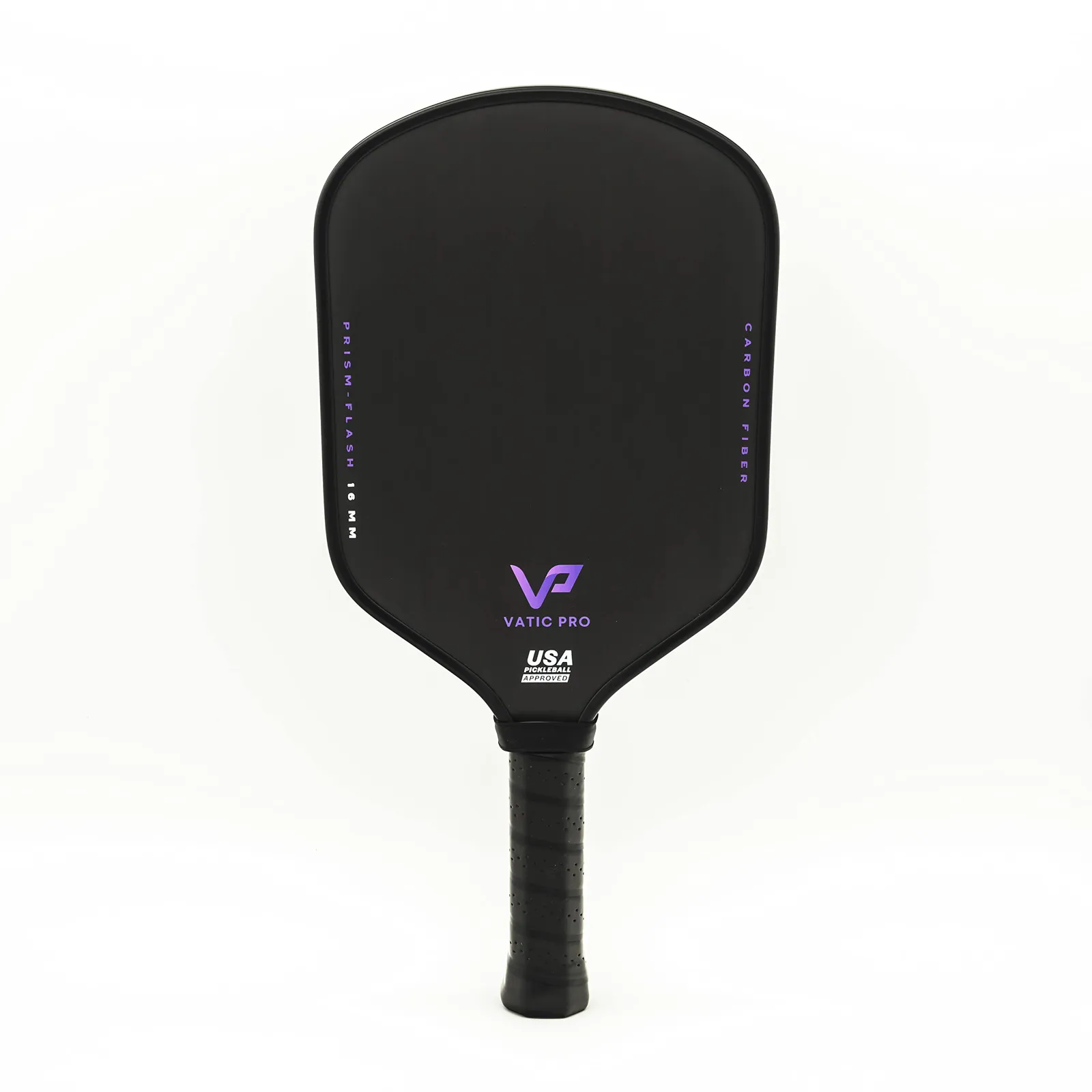
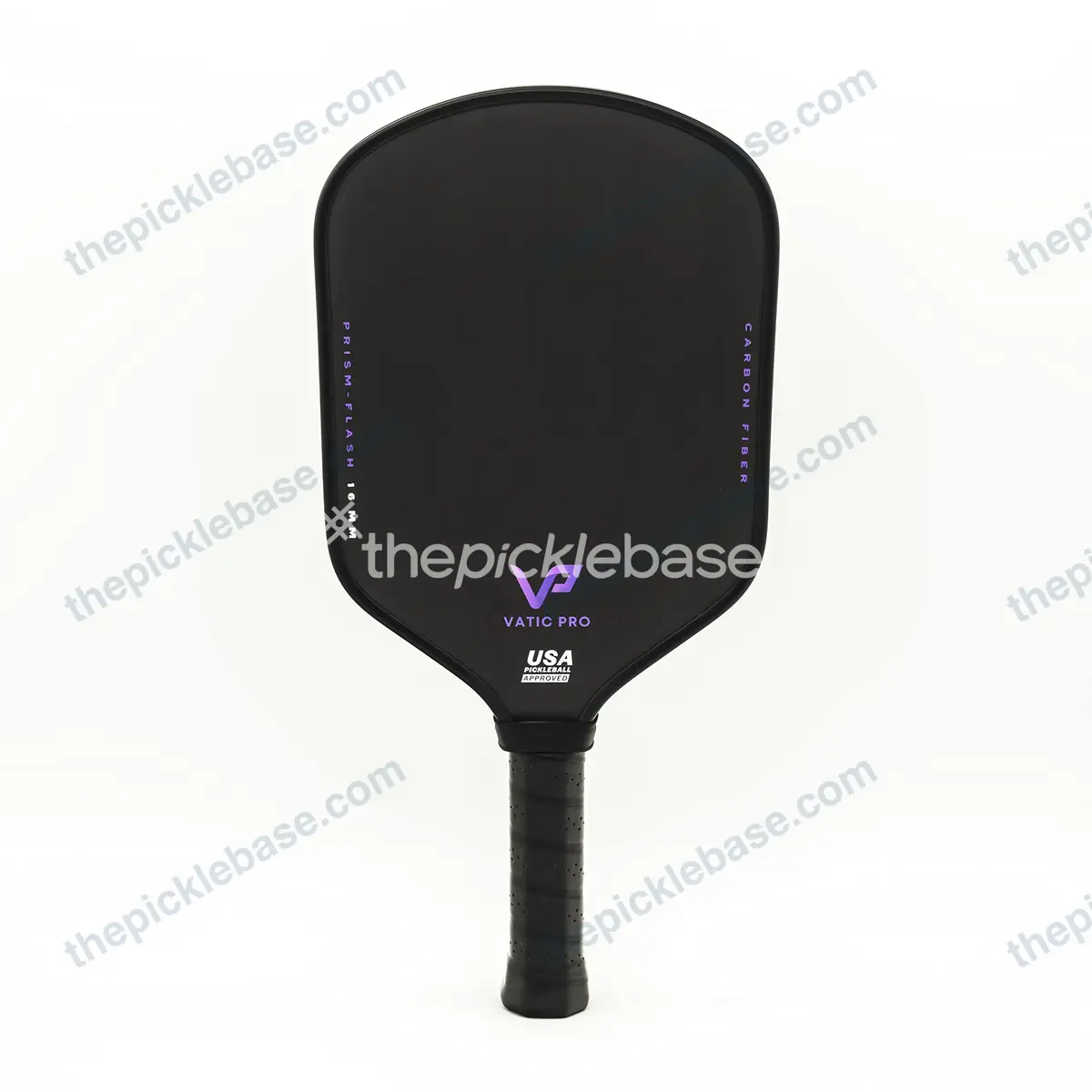
- Vatic Pro Prism Flash (left): Widely regarded as the benchmark control paddle under $100. The non-thermoformed 16mm core and soft foam edge guards deliver unmatched plushness and an exceptionally wide sweet spot to minimize pop-ups.
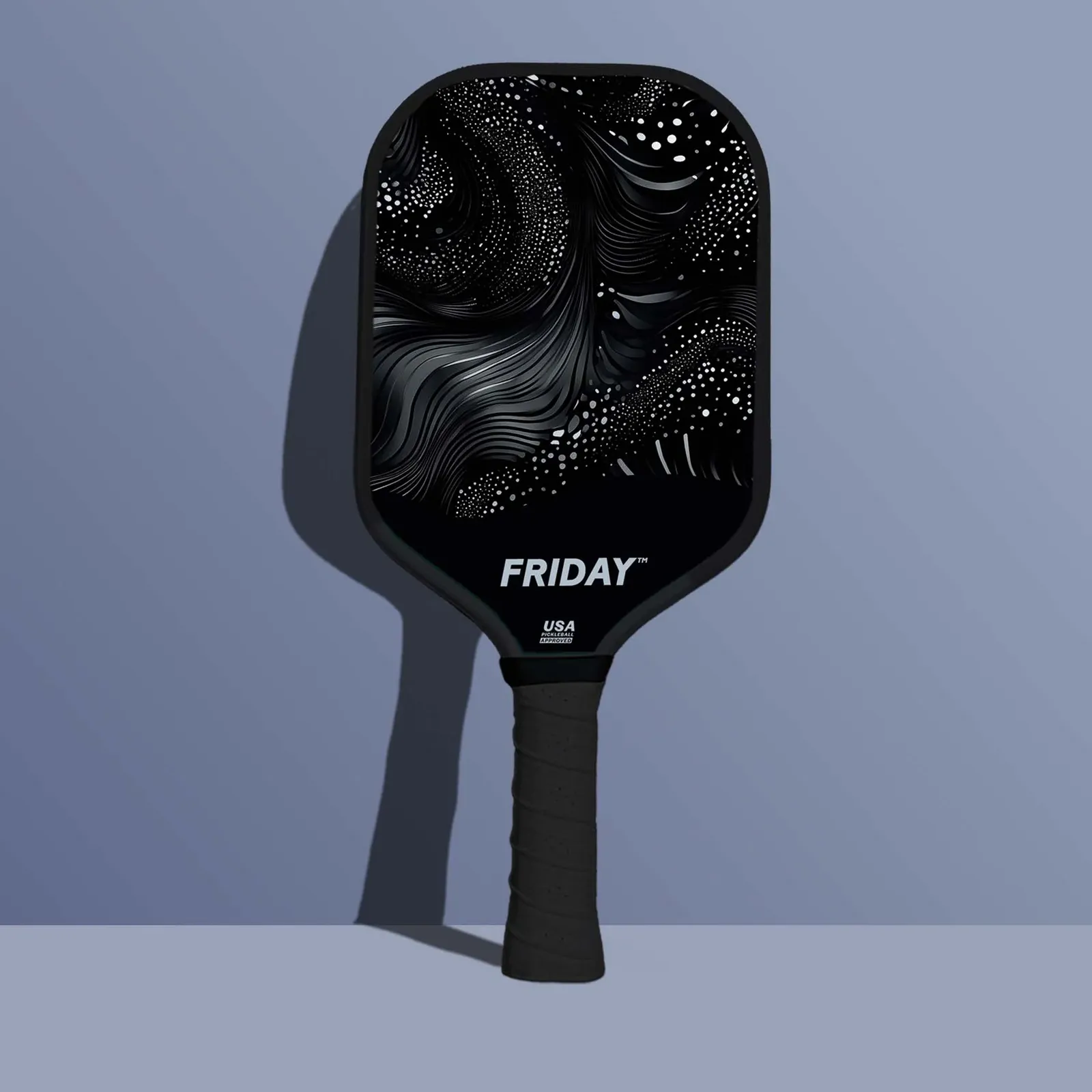
- Friday Original Carbon Fiber (center): Combines a forgiving core density with raw carbon face grip at an entry-level price point. It helps new players build third-shot drops and resets without the ball launching unexpectedly.
- Vatic Pro Prism V7 (right): The elongated alternative in the Prism lineup for beginners who prefer extra court reach on groundstrokes while retaining soft, controlled touch.
Best Pickleball Paddle for Intermediate Players (DUPR 3.5 – 4.0)
For intermediate players, you need a pickleball paddle that has good spin generation, third-shot drop consistency, and controlled pace adjustments to win extended kitchen rallies. This is the sweet spot of the all-court category, hybrid shapes, and paddles with real spin.
As an intermediate player, here's what you would need in a paddle:
- Shape: Hybrid or Standard. Offers a balance between sweet spot width and slight leverage for drives.
- Core Thickness: 14mm to 16mm Thermoformed Core. Thermoforming (unibody foam-injected edges) increases perimeter stability, twist weight, and durability during faster hand battles.
- Face Material: Raw Carbon Fiber (e.g., Toray T700) or Kevlar weaves. The naturally textured surface grips the ball longer (dwell time) to produce heavy topspin and slice.
- Weight: Midweight to Heavy-Midweight (7.8 – 8.2 oz). Gives enough head weight for deep serves and drives without sacrificing kitchen hand speed.
Paddles for Intermediate Players
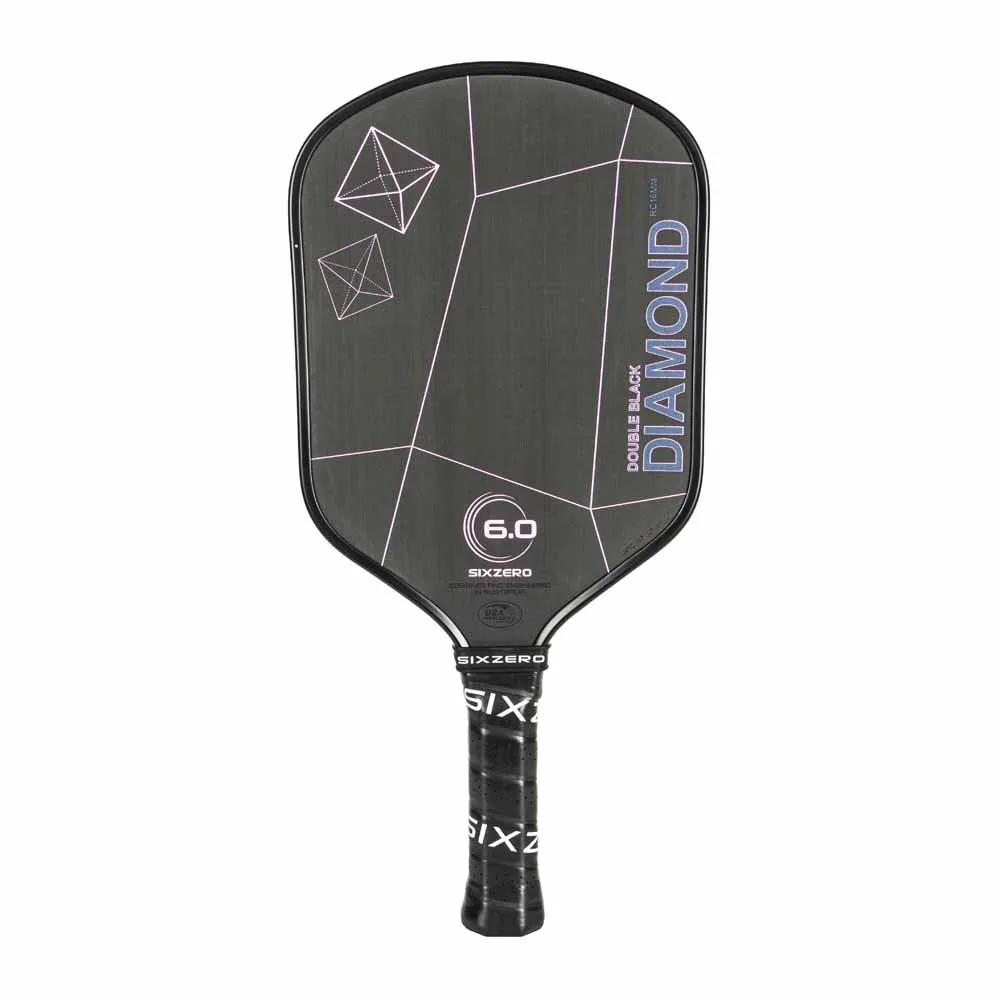
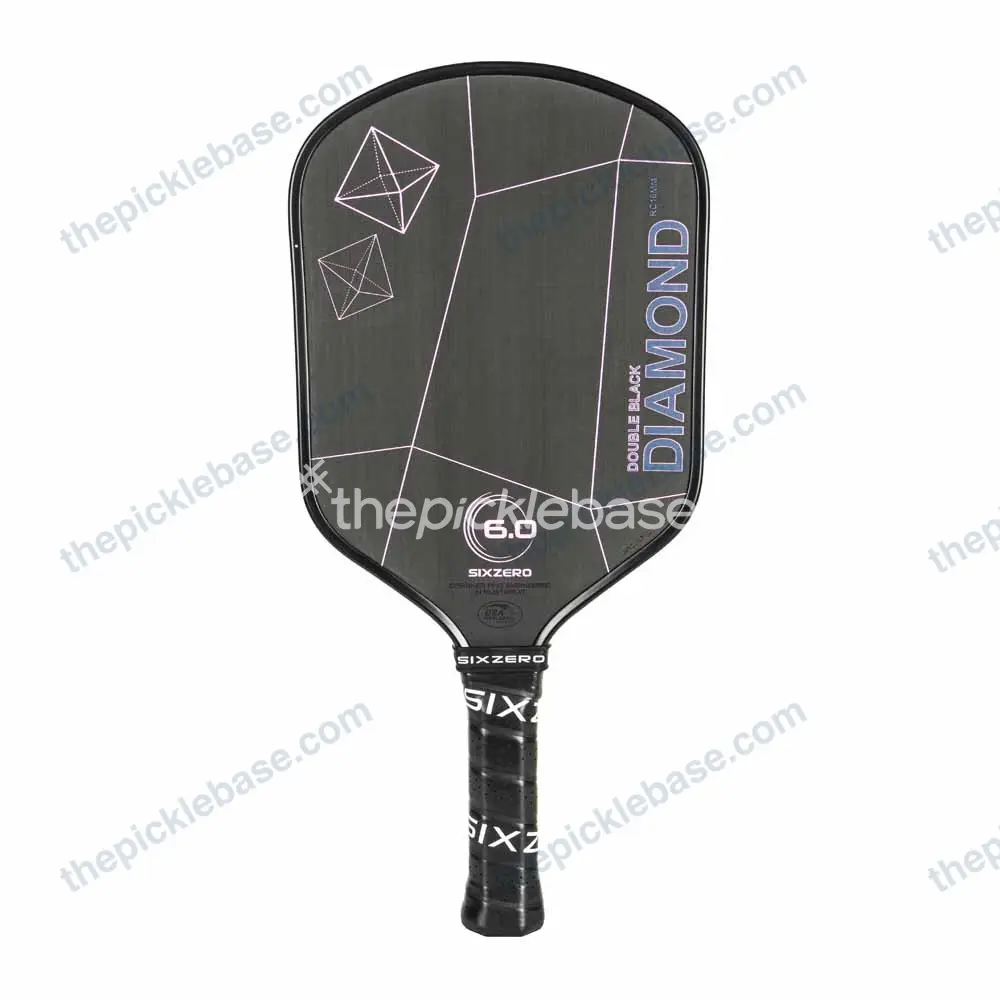
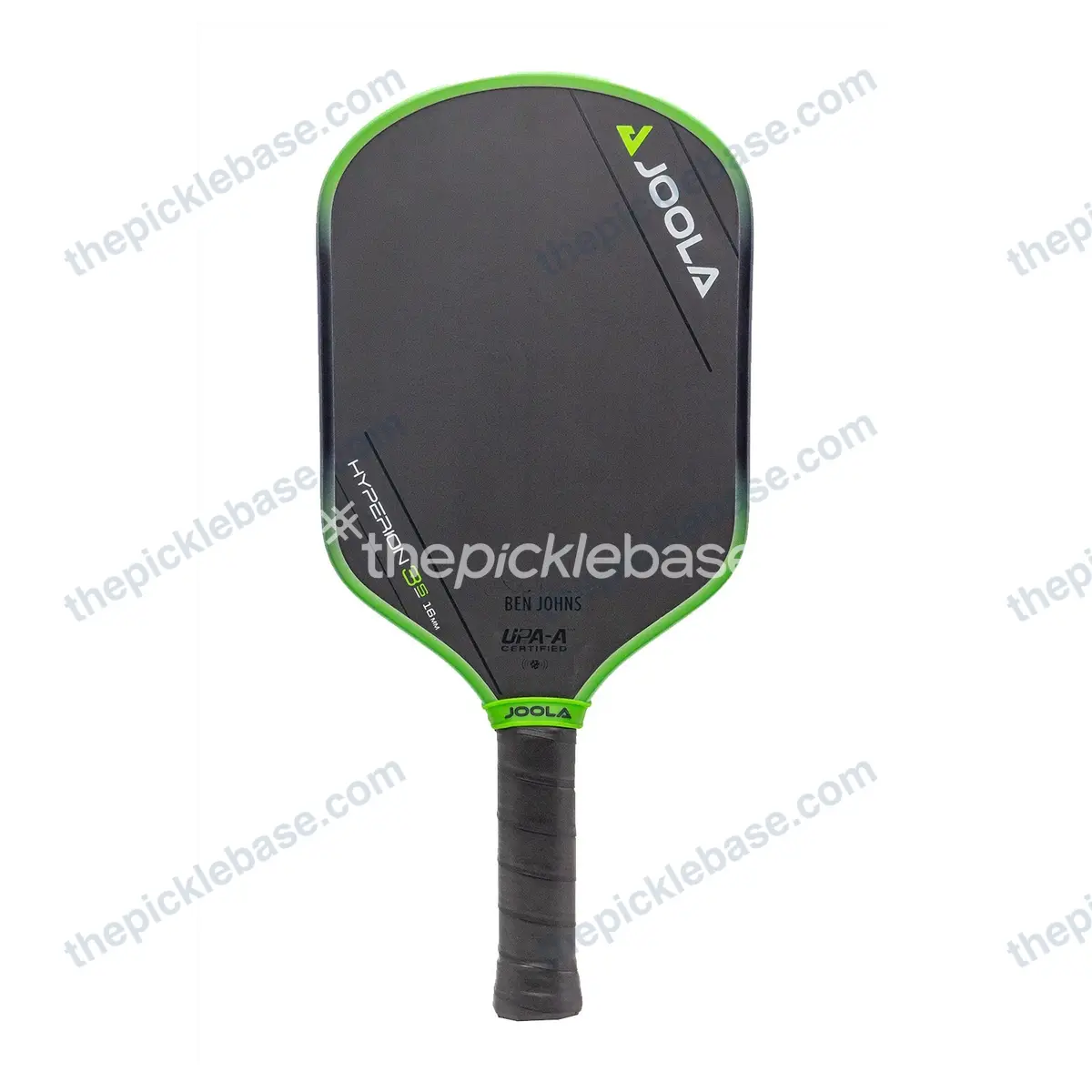
- Six Zero Double Black Diamond 16mm (left): The gold standard for intermediate all-court play. Its slightly flared shape and perimeter foam injection deliver high spin, stability, and control.
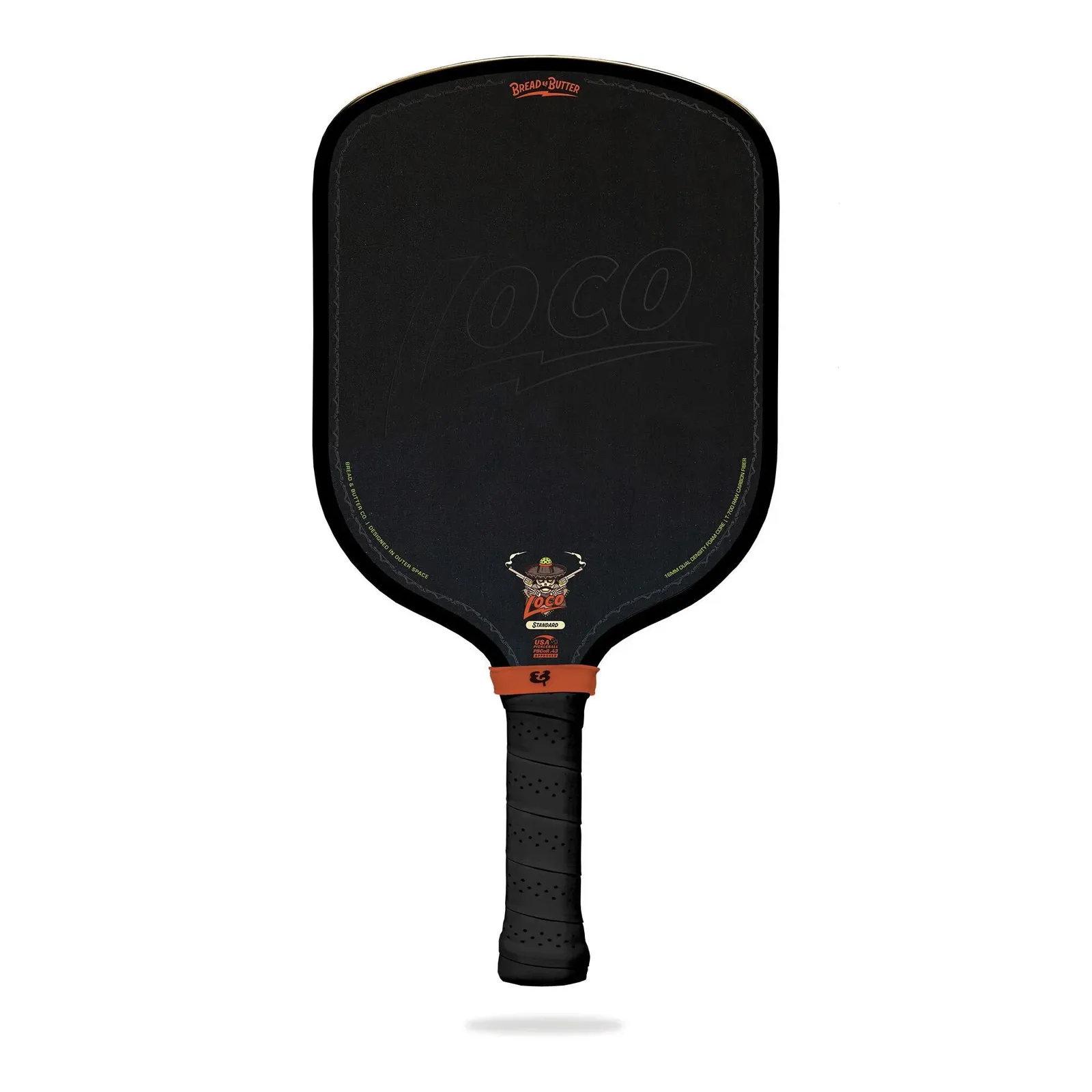
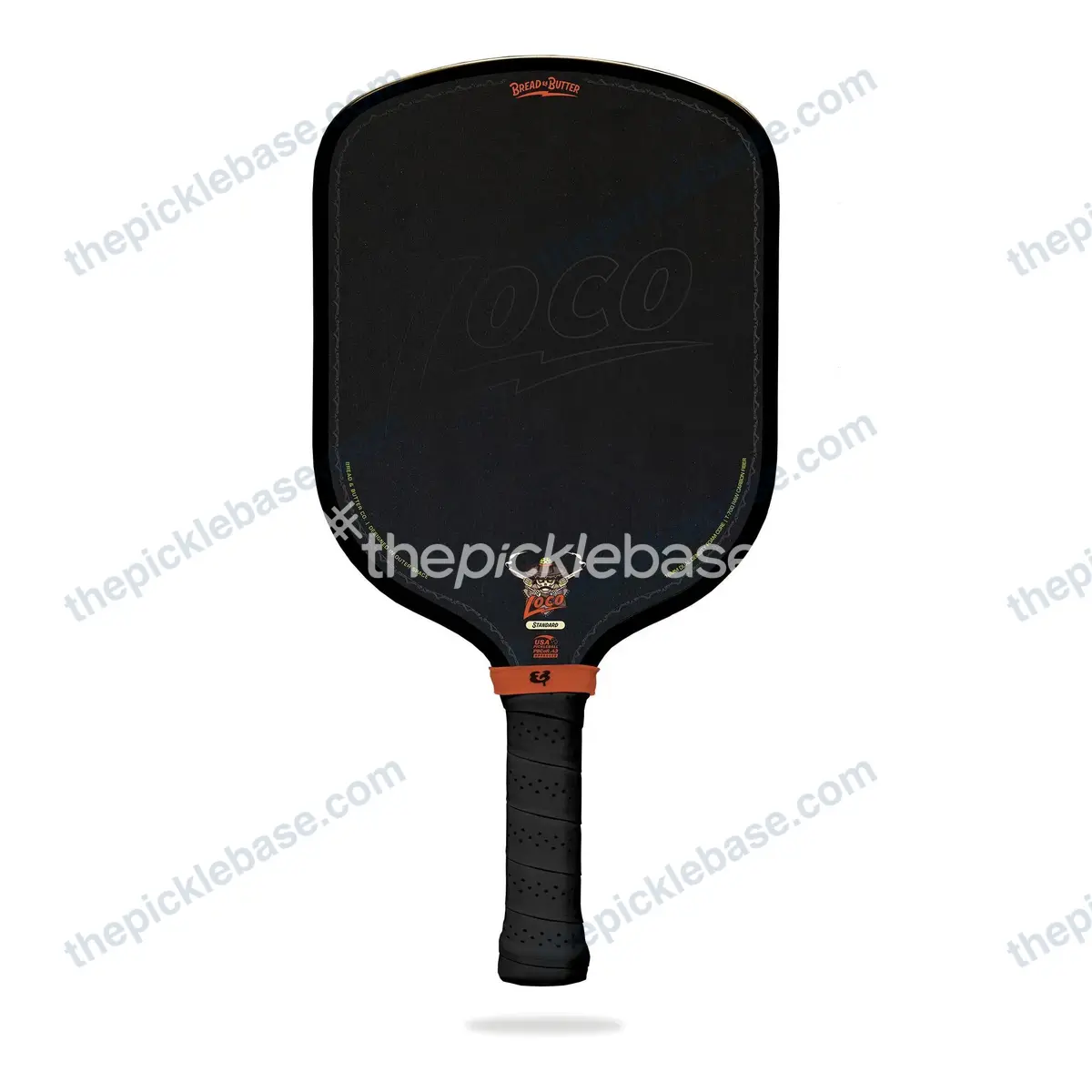
- Bread & Butter Loco (center): A favorite among advancing players looking for a poppy, fast-handling paddle with high-grit carbon that grabs the ball for heavy topspin.
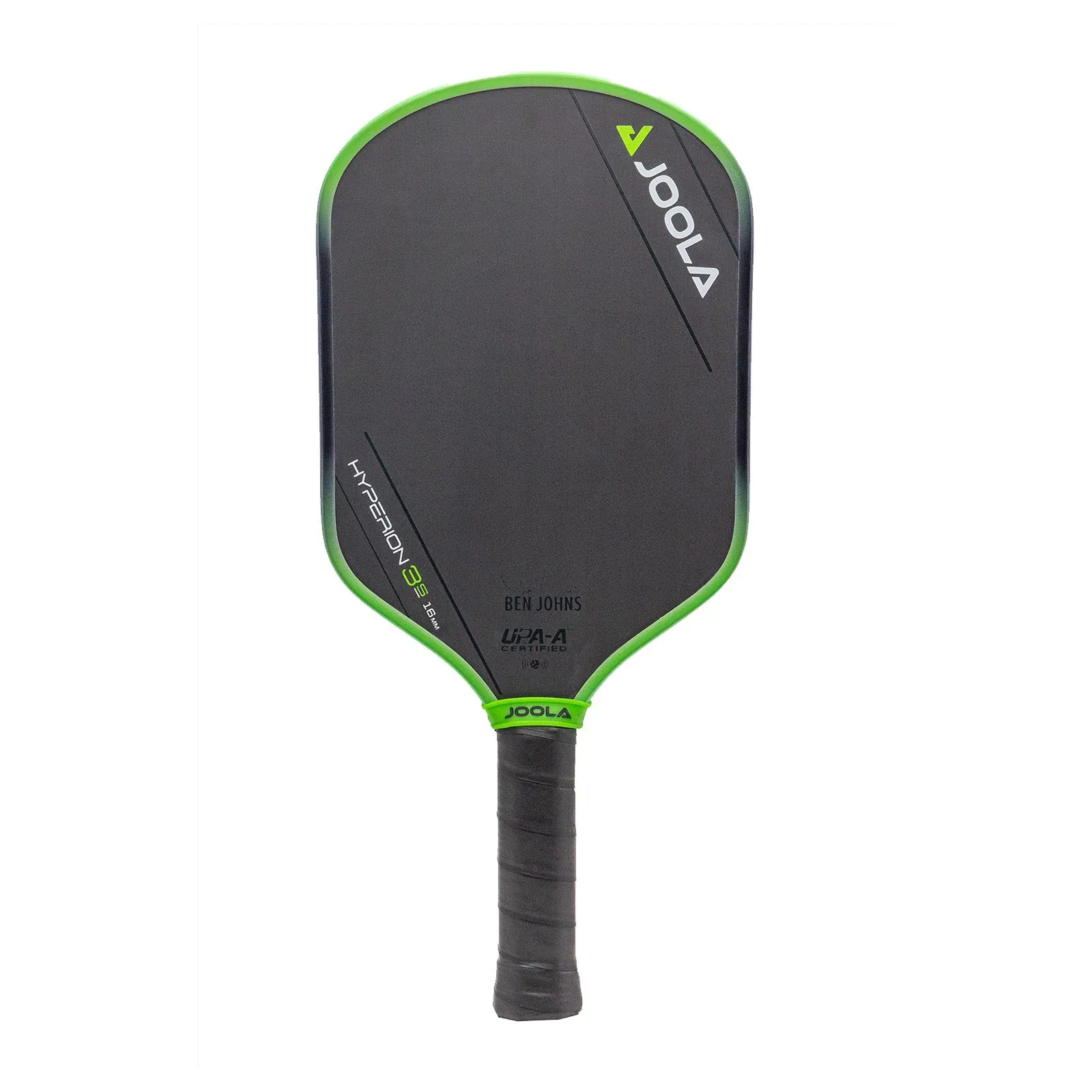
- JOOLA Ben Johns Hyperion 3S 16mm (right): The iconic aero-curved shape offers high dwell time for resetting fast drives, combined with solid plow-through power on serves.
Best Pickleball Paddle for Advanced Players (DUPR 4.5+)
Advanced play requires maximum power output, aggressive roll-dinks, extended reach, and custom tuning. This is Gen-3 and Gen-4 foam territory, often elongated for reach, chasing a high firepower score. However, these paddles are less forgiving, have faster wear, and pose a risk that the paddle drifts over the legal limit and gets delisted.
As an advanced player, here's what you should look for:
- Shape: Elongated (16.5" length, 7.5" width). Yields maximum leverage, higher swing weight, and extra reach at the kitchen line at the expense of a narrower sweet spot.
- Core Thickness: 13mm to 16mm (Player Preference). Elite players who generate their own spin and control often opt for 13mm–14mm cores for explosive counter-attack pop, while control specialists stick with 16mm setups.
- Face Material: Premium Raw Carbon Fiber / Kevlar Hybrids. Built for maximum friction ratings to hit aggressive dip angles on drives and resets.
- Weight & Setup: Tailored (often 8.2 – 8.6+ oz using tungsten or lead tape). Advanced players routinely customize perimeter weight to shift the balance point, boost sweet spot stability, and optimize plow-through power.
Paddles for Advanced Players
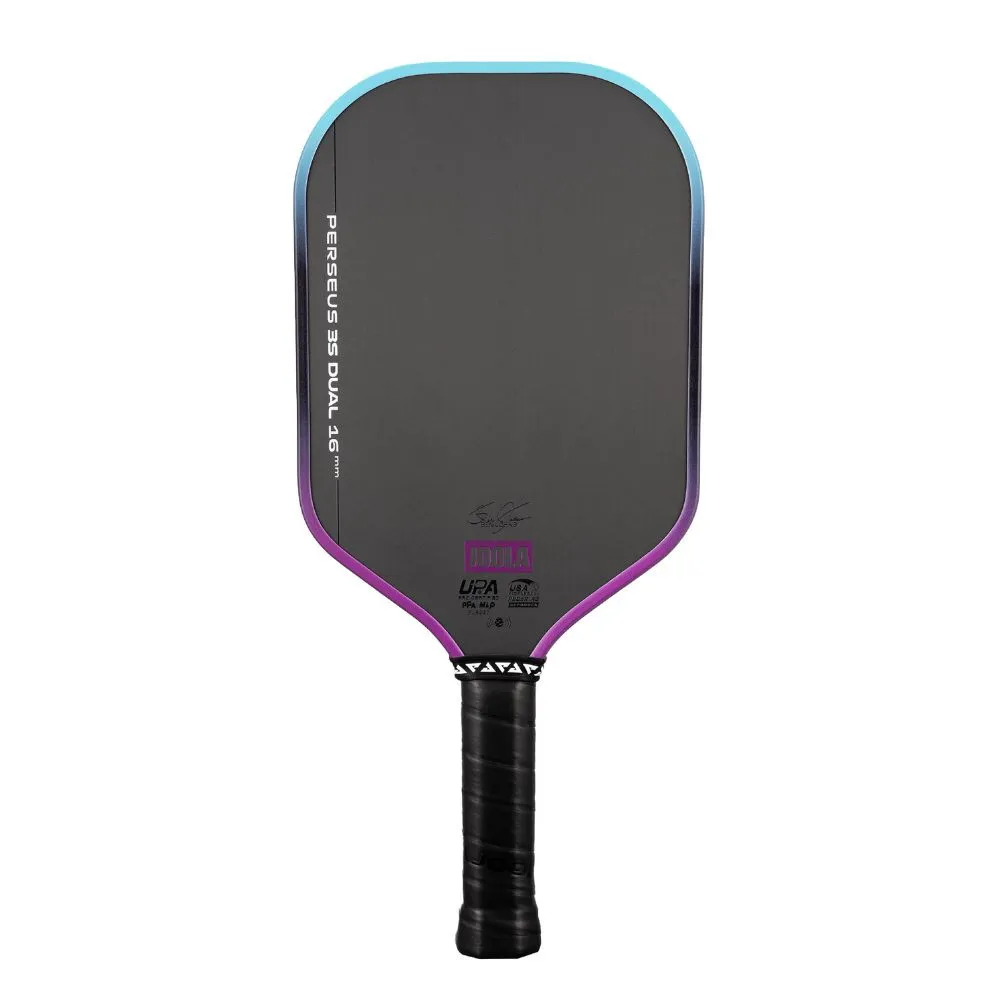
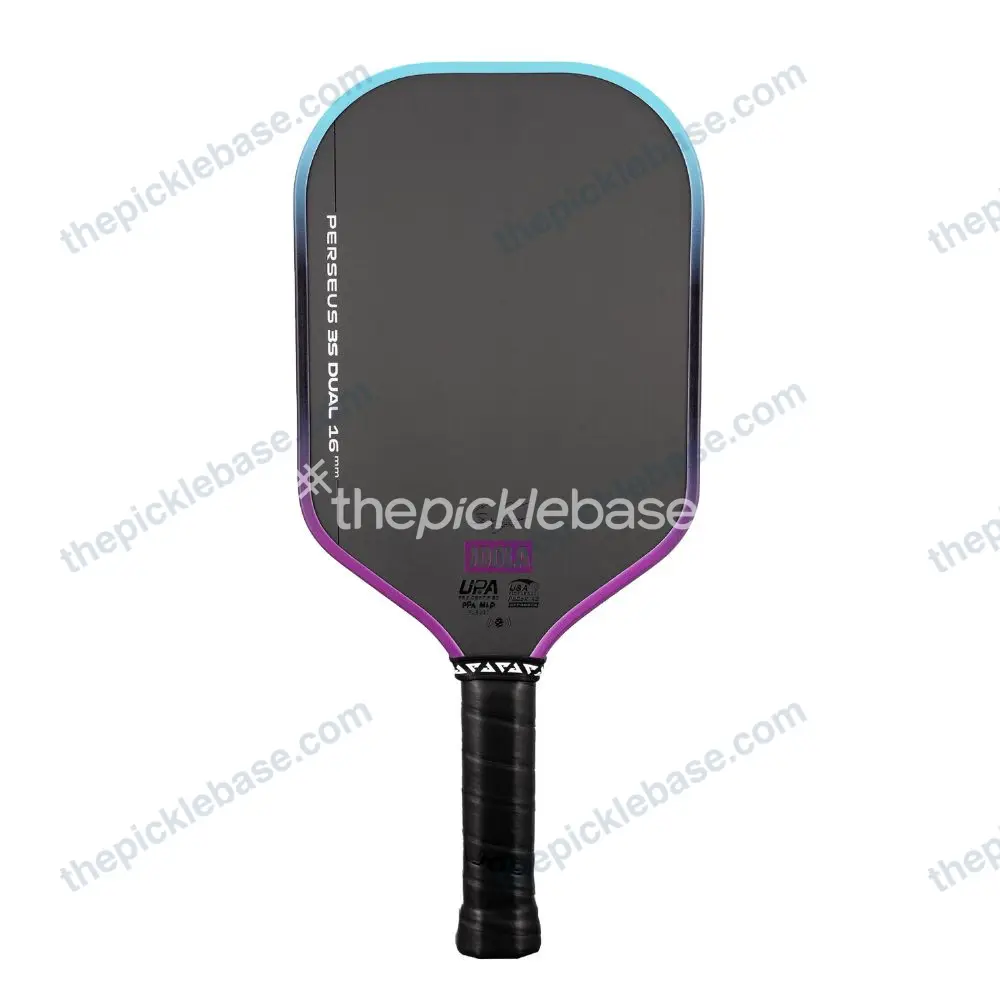
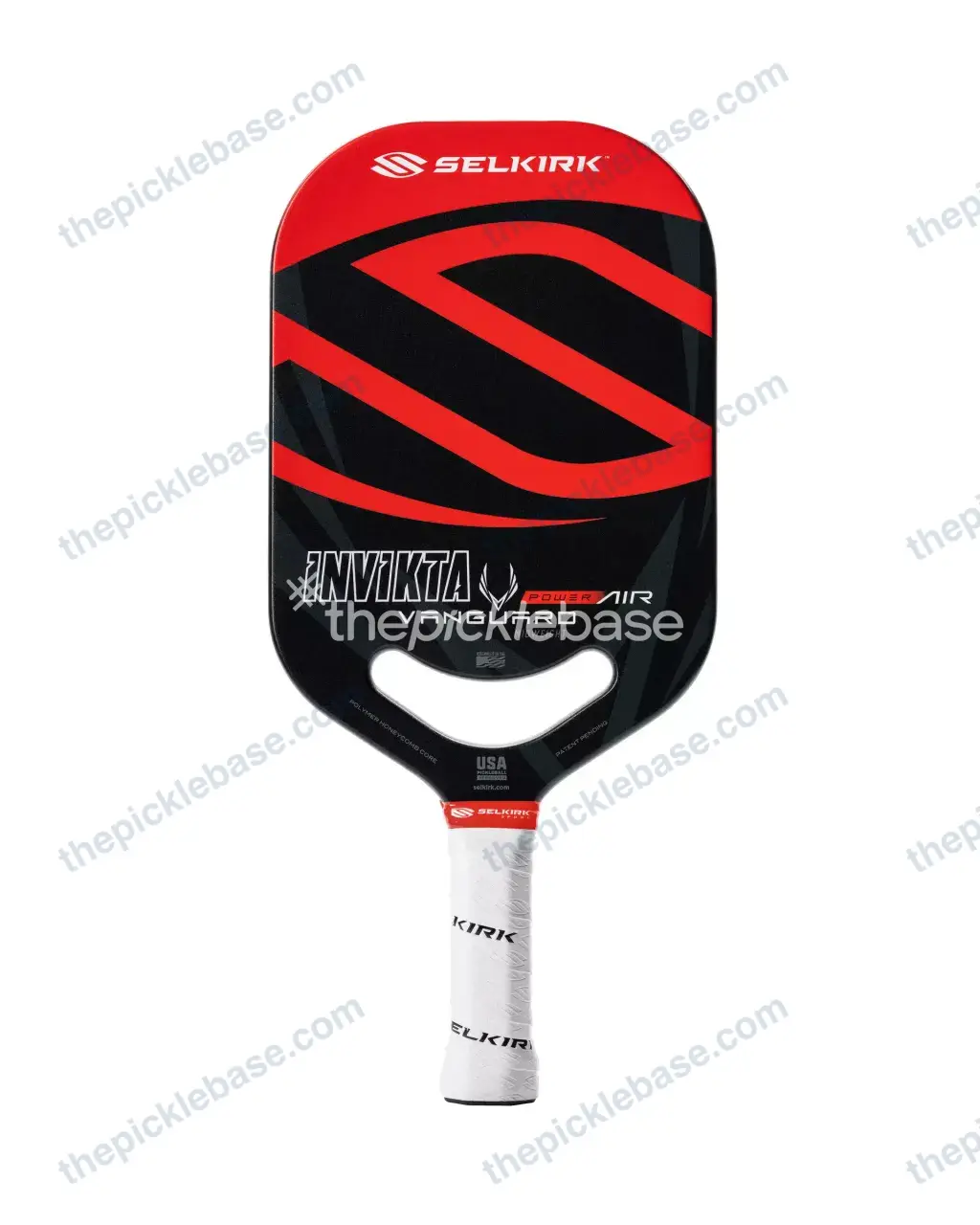
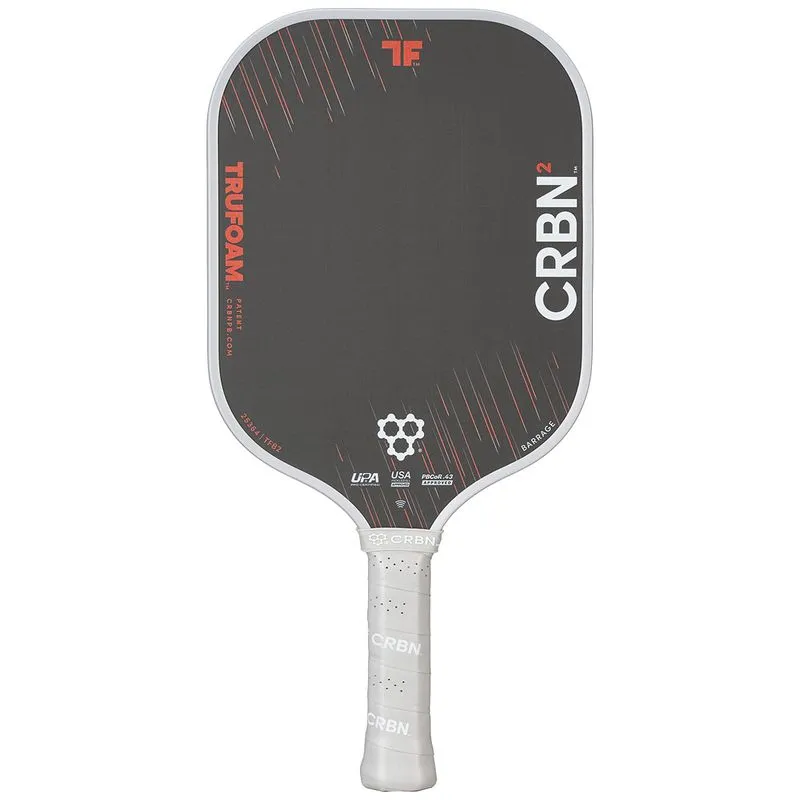
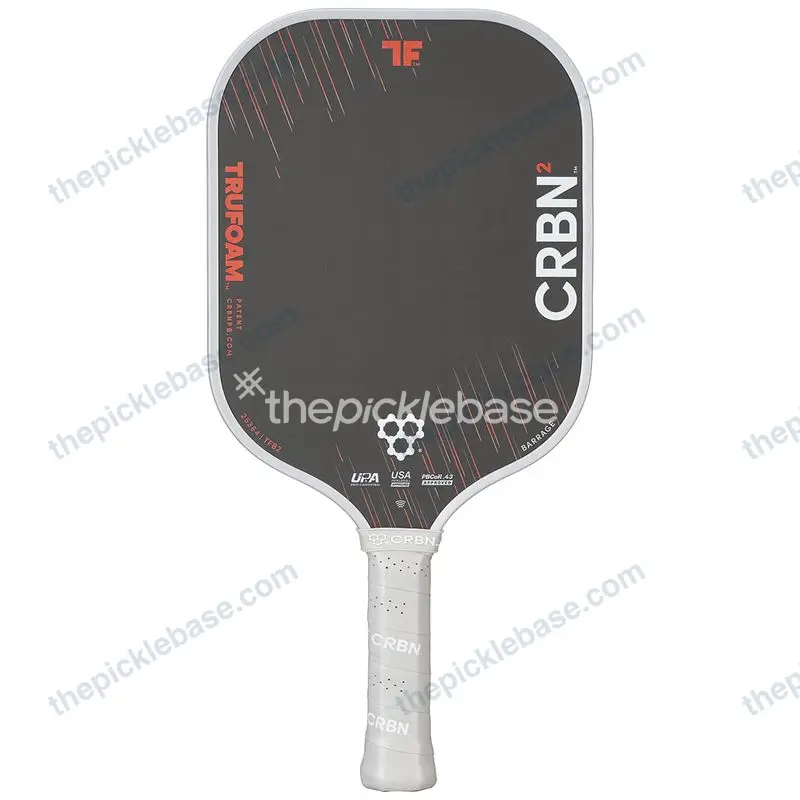
- JOOLA Perseus 3S / Pro (left): Used by top pros like Ben Johns, this paddle features propulsion core tech for elite pop on drives and counters without sacrificing sweet spot stability.
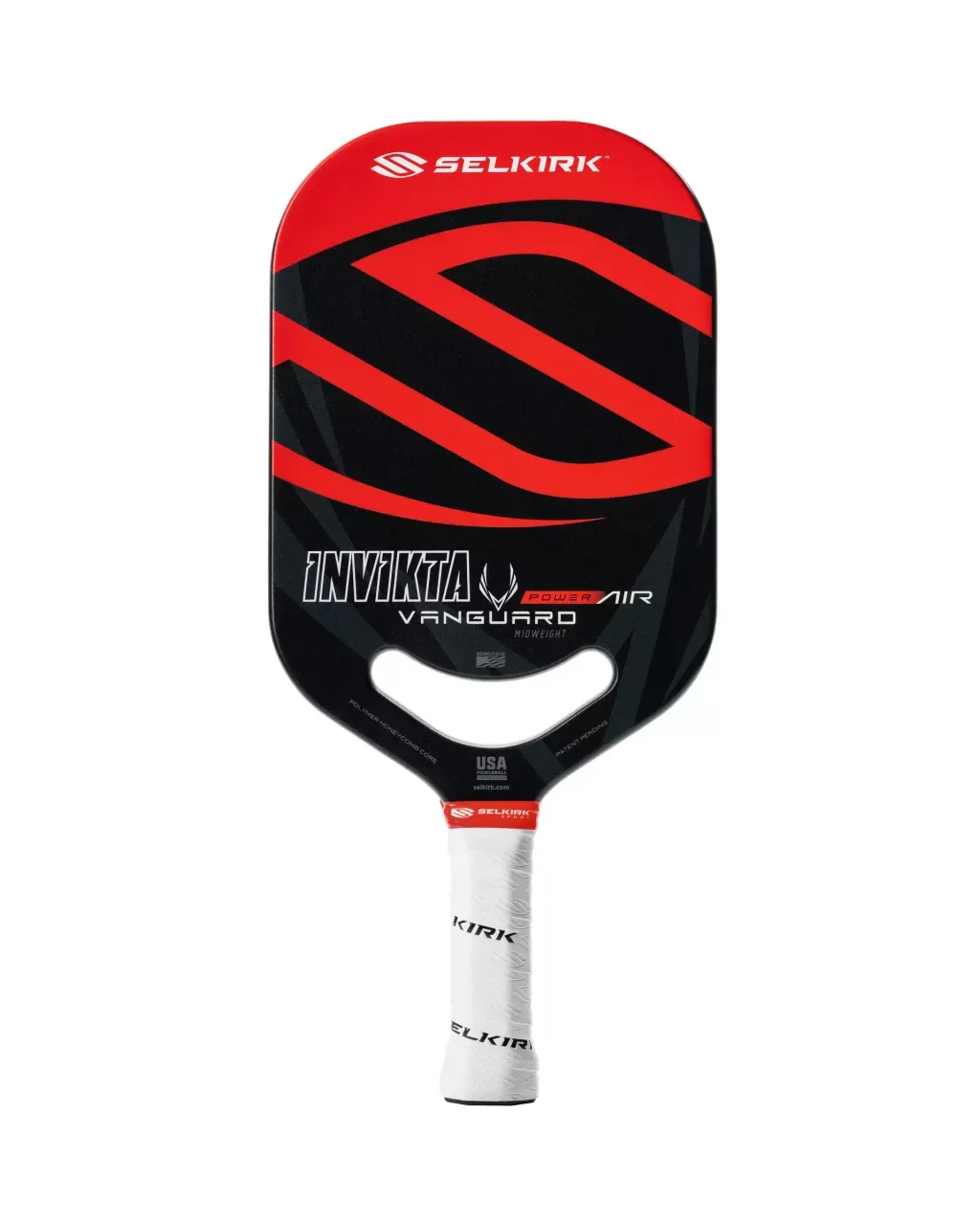
- Selkirk Vanguard Power Air Invikta (center): Features an open throat (Air Dynamic Technology) for ultra-fast hands at the kitchen line and maximum power output for aggressive drives.
- CRBN 1X Power Series or TruFoam Barrage (right): Built for aggressive players who want extreme spin grit paired with high-energy thermoformed foam construction.
How to Buy the Right One
A pick is only useful if you can get the real thing at a fair price. Fakes of the popular brands are common on Shopee and Lazada. You can read how to spot a fake paddle first to avoid these listings online. If you are in Malaysia, we list the authorized shops and real ringgit prices in the best pickleball paddle in Malaysia guide. And to match a paddle to your game rather than a list, see spin vs control vs power.
Buy for your level, not the pros. A beginner on a forgiving 16mm control paddle will improve faster than the same beginner on a $250 power paddle you cannot control.
Common questions
What is the best pickleball paddle for a beginner?
A midweight paddle with a 16mm control core, a high twist weight and a widebody or hybrid shape, in the mid price range. Forgiveness matters more than power. The Six Zero Quartz and 11SIX24 Monarch families are reliable starting points.
What is the best budget pickleball paddle?
Several paddles under RM400 test close to premium models for spin and power. Look at the value brands and Decathlon's Kuikma line, and check a current budget ranking like the one Matt's Pickleball maintains.
Are the paddles pros use good for me?
Usually not. Pros play high-firepower power paddles that punish anything less than elite control. Most players do better with an all-court or control paddle matched to their level.
How often do the best paddles change?
Frequently. Brands release new generations every few months. Recommend by category and specs, and cross-check the current lab rankings before buying rather than trusting a list from a year ago.