
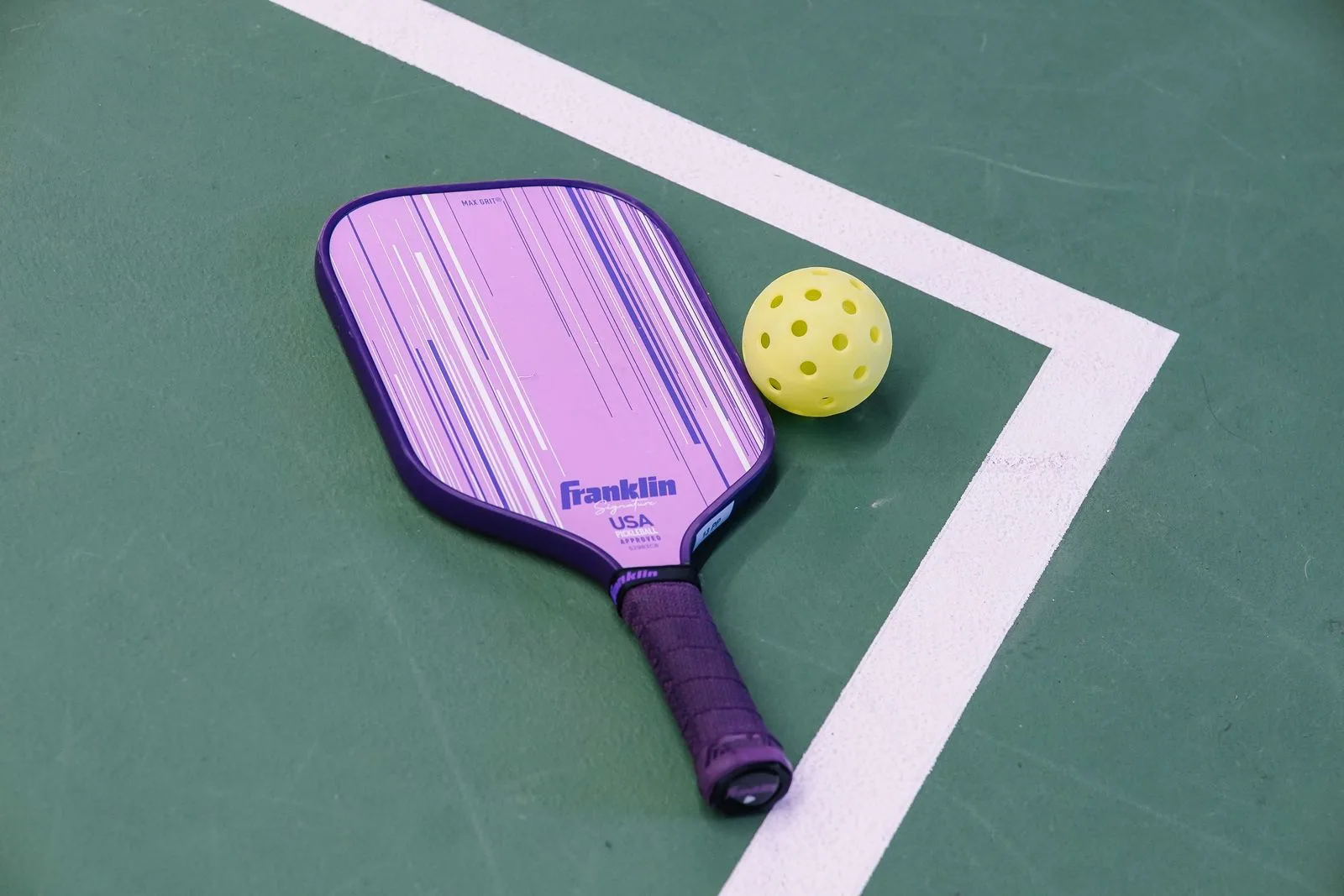
Not all pickleball paddles are tournament legal. In a guide about how to spot a fake pickleball paddle, we touched on the topic of how even real paddles can be disqualified from tournament play. This is because pickleball paddle construction can have massive effects on your win condition during play. For example, some paddles can have excessive "pop" because the rebound is too high or has higher surface roughness, which can influence the ball's spin.
USA Pickleball (USAP) tightened its equipment rules in 2025. Paddles that drift over the new power limit can get delisted. This is crucial for players who enter rated events or tournaments because their paddles would not be allowed on the court.
In this guide, we will explain the changes from USAP and how to check your paddle before you buy. Check our guide on how to choose a pickleball paddle for in-depth information on picking the right paddle for all kinds of play.
The 2025 Crackdown and Delisting
In late 2024, USA Pickleball introduced a new test called PBCoR (Paddle/Ball Coefficient of Restitution). It’s the metric used to measure and limit how much “pop” or trampoline effect a paddle can give the ball after impact.
The higher the PBCoR, the more energy is returned to the ball, and therefore the faster the shots will be with less swing. On the other hand, lower PBCoR means more energy absorbed; therefore, it has a softer feel with less automatic pop.
Paddles that exceed the rebound threshold are delisted, meaning they are no longer legal for sanctioned play. In 2026, the organisation also began on-site field testing at tournaments, checking paddles in minutes for surface friction, deflection, and weight.
This can be a real risk for buyers for two reasons:
- A paddle that was legal in 2024 can be off the list now.
- Some high-power paddles get faster as they break in, so a paddle can drift over the limit after you have owned it for a while.
What USA Pickleball Approval Means
Your paddle must be on the USAP approved list (which now hinges on passing PBCoR) to be legal in sanctioned tournaments. Even a previously legal paddle can become “too hot” with heavy use or damage, so on‑site testing can disqualify it mid‑event.
At USA Pickleball Golden Ticket events in early 2026, organizers ran on‑site paddle testing. Of 2,000+ paddles tested, about 6% failed current standards. Many of those failures were attributed to core crush/degradation and delamination. This pushed paddles over the power limits even though they were originally legal models.
For brands, a paddle has to pass several checks such as dimension, surface texture, structural limits, and PBCoR. If a model fails, brands can redesign (e.g., adjust core density, face layup, foam amount) and resubmit. Each submission can take 4-6 weeks, though there is an expedited 3-8 day process.
Approved paddles are legal for tournaments and most rated events. The catch is that the list is not fixed. Paddles get added, and paddles get removed.
How to Check if Your Paddle is Legal?
- Search the official list. Look up the exact model and generation on the USA Pickleball approved equipment list. If it is not there, or a different spec is listed, treat it as not approved.
- Match the exact model. Brands sell several versions of a paddle. Approval is per model and often per generation, so confirm the precise one you are buying.
- Beware counterfeits. A fake will never match the approved spec, so it is automatically illegal for rated play. If a premium paddle is heavily discounted on a marketplace, check our guide to spotting a fake.
A Subtler Issue: Production Drift
Even genuine paddles are not always identical to the sample a brand submitted for approval. Production runs can vary, and a retail paddle can differ from the tested one, which is part of why some models get pulled. This is why independent testers like John Kew, who test retail paddles rather than press samples, are useful. They catch when what is on the shelf does not match what was approved.
Does it matter for casual play?
If you only ever play social open play with friends, an unapproved or delisted paddle will not get you thrown off the court. In fact, plenty of rec players use them. But the moment you enter a DUPR-rated event or a sanctioned tournament, the paddle has to be on the list.
In the same Golden Ticket event, USA Pickleball and equipment partners began issuing RFID “pass” stickers to paddles that cleared on‑site checks, specifically to track and prevent players from swapping in other (or degraded) paddles between matches. This system was created in response to repeated on‑site failures.
Since ratings increasingly gate events, and since you may want to compete eventually, buying an approved paddle is the safe default. If you are building toward rated play, our guide to how DUPR works explains why.
What are Key Takeaways for Buyers?
Before you buy, check the model on the approved list, and lean toward current paddles from brands with a good track record rather than last year's power paddle that may already be delisted. It is one more reason not to overspend on the newest, hottest paddle, a point we make in are expensive paddles worth it.
Approved is not permanent. Check the exact model on the USA Pickleball list before you buy, and remember that the highest-power paddles are the ones most likely to get delisted.
Common questions
How do I know if my pickleball paddle is USA Pickleball approved?
Search the exact model and generation on the official USA Pickleball approved equipment list. If it is not listed, or the listed spec differs from what you have, it is not approved for sanctioned play.
Why do pickleball paddles get delisted?
Since July 2025, USA Pickleball has enforced a PBCoR power limit. Paddles that trampoline the ball too much are removed from the approved list, and some paddles drift over the limit as they break in.
Can I use a non-approved paddle?
For casual social play, usually yes. For DUPR-rated events and sanctioned tournaments, no. The paddle must be on the approved list, so an unapproved or delisted paddle, or any counterfeit, is not allowed.
Do rec games follow USA Pickleball paddle rules?
Casual open play generally does not enforce the list, but rated and sanctioned events do. If you plan to compete, buy an approved paddle from the start.