
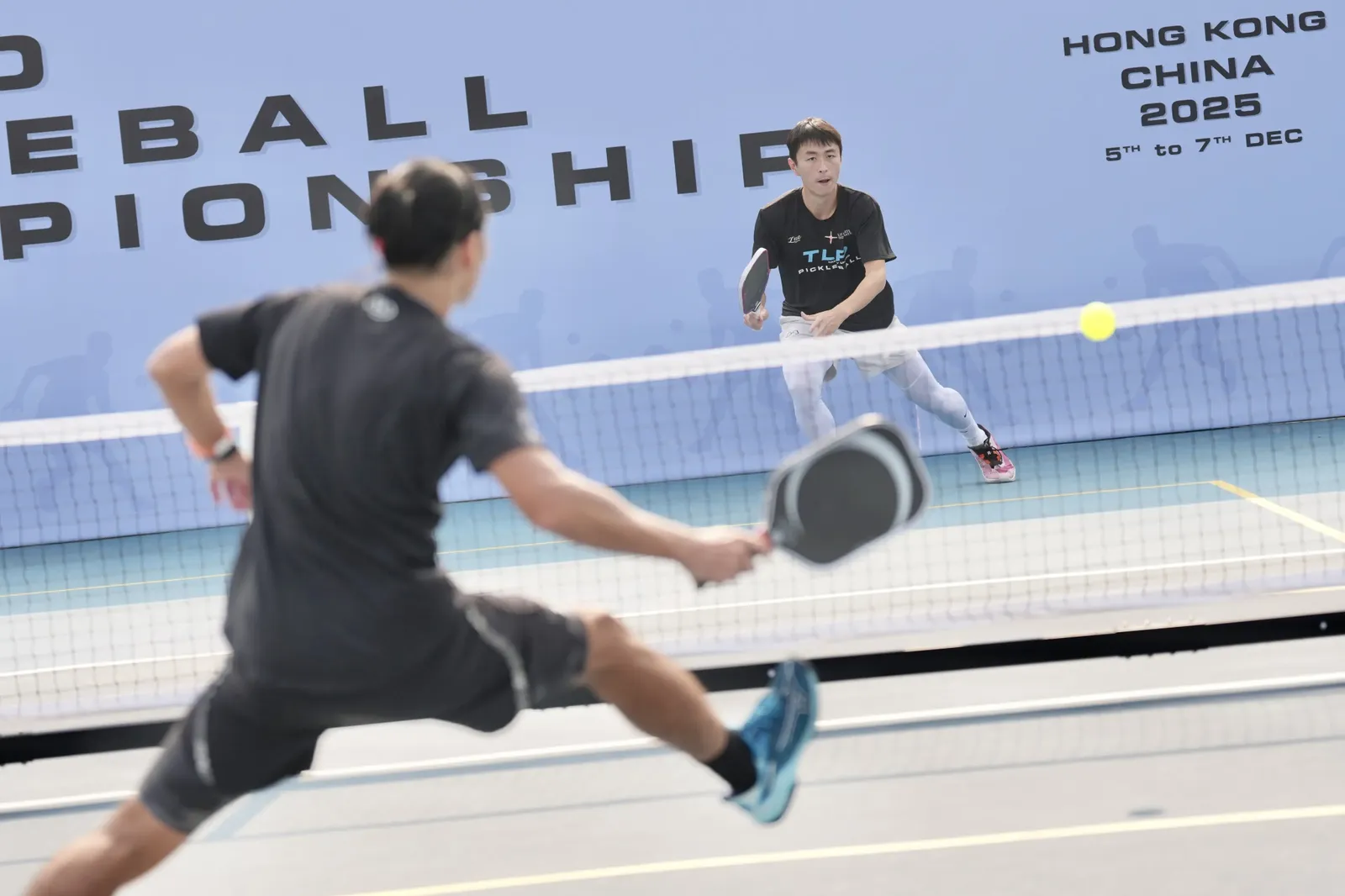
Recreational pickleball players often watch top-tier pros like Ben Johns or Anna Bright and try to replicate their flashy highlight-reel shots. However, pro pickleball is essentially a different sport than intermediate rec play. Pros possess elite reaction times, thousands of hours of muscle memory, and partners who cover the court with telepathic anticipation.
Highlights Are Edited to Show the Rarest Shots
Pro broadcasts show the rarest shots played by the best players in the world, then edit out the 20 or more patient shots that set each one up. Copying the visible part while skipping the invisible part gives you the risk without the setup.
In a typical pro doubles game, the overwhelming majority of shots are dinks, drops, resets, and deep returns. Spectacular shots appear only a handful of times per game. You have to remember that the unglamorous shots are the game and the highlights are the exception.
This matters because players practice what they remember. Unfortunately, memory favours the exception rather than the usual.
The Five Pro Habits That Cost Rec Players the Most
Attempting to copy pro strategy step-for-step usually leads to rapid unforced errors rather than wins. Here is why blindly copying the pros backfires for rec players:
1. Pros Attack Low Balls Because of Hand Speed
A pro can speed up a ball from below the net tape because their wrist action creates massive top-spin, and their recovery reaction time is under 200 milliseconds. When a rec player speeds up a low ball, it either hits the net or comes high over the tape, making them an easy target for a smash.
As a rec player, you should dink patiently until the ball sits above the net. This gives you a downward trajectory to attack safely. Patient, unglamorous dinking keeps your opponents off-balance without handing them an easy smash.
2. Pros Use Drives to Set Up Fifth-shot Drops
Pros rarely drive a third shot expecting to win the point outright. They drive to force a weak return so they can drop the fifth shot and transition to the kitchen. Rec players often copy the third-shot drive but skip the fifth-shot drop, driving ball after ball until they hit the net or blast it out.
Instead of focusing on third-shot drives, you should focus on third-shot drops. Drives keep you trapped at the baseline against teams with good hands. A high-margin third-shot drop landing gently in the kitchen neutralizes the serving team's disadvantage, giving both you and your partner the time needed to take the kitchen line.
3. Flick and Roll Resets Under Pressure
High-margin play beats high-risk play at the rec level. At the pro level, margins are so thin that players must take calculated, high-risk shots (like low-clearance ATPs, flick resets, or sharp-angle dinks) to win points. In rec play, the team that simply keeps the ball in play and reduces unforced errors wins the vast majority of matches.
You should focus on holding your kitchen position and target cross-court depth instead of forcing ATPs and Ernes. Flashy trick shots require precise angles that open up massive court exposure when missed. Holding your ground at the non-volley zone line and pushing deep crosscourt dinks forces low-margin errors from your opponents without risking your own positioning.
4. Swinging Hard on Counter Attacks
When a hard-driven ball comes your way, trying to counter-attack with a full swing usually backfires. At the recreational level, swinging hard on an already fast ball drastically reduces your reaction time and paddle control, leading to late contact, unforced errors in the net, or spraying the ball far out of bounds.
Instead, use a punch volley or compact block reset with minimal backswing:
- Shorten your stroke: Keep your paddle face in front of your chest with almost zero backswing. Push forward slightly through the ball rather than winding up.
- Absorb and redirect: Let your opponent's pace do the heavy lifting. Angle your paddle face slightly upward to absorb the energy and drop the ball softly into their kitchen.
- Aim at their feet: If you do choose to push back with pace, aim low at their feet or non-dominant hip where they can't take a full swing back.
A compact block takes away your opponent's time while giving you maximum paddle control. Absorbing the pace neutralizes their attack immediately, forcing them to hit upward on the next shot and resetting the point back to neutral on your terms.
5. Pro Positioning Relies on Perfect Partner Trust
Pros take extreme court positioning (e.g., poaching heavily or stacking) because they trust their partner to cover the open court behind them instantly. In rec play without a long-time partner, taking pro-level aggressive positioning leaves massive gaps that opponents easily exploit.
Gear Copying Is the Expensive Version of This Mistake
Pro players use thermoformed carbon-face paddles, often with lead tape added at 3 and 9 o'clock to shift the swing weight. Many of those paddles retail well above RM800 in Malaysia.
Buying a pro's paddle does not transfer the game they use it for.
Elite players choose high-power, low-forgiveness paddles because they make clean contact almost every time. A smaller sweet spot costs them nothing. However, it can literally cost you a lot as a rec player.
Most improving players are better served by a control-oriented paddle with a larger effective sweet spot and a softer feel, typically in the RM400 to RM650 range. The reset is easier to learn on one, and the reset is what you need.
Sponsorship also shapes what you see. A pro's paddle reflects a contract as much as a preference.
Read more about why it's never worth buying an expensive pickleball paddle in our guide.
Advanced shots work better sequenced than copied. Find a coach to build that plan at coach.thepicklebase.com, and follow @thepicklebase for tour-stop breakdowns.
Common questions
So should I never try advanced shots?
Try them in practice, not in games that matter. The rule is simple. New shots belong in drills and social sessions, not in a match you want to win.
At what level does an Erne become worth learning?
Most coaches put it around 4.5, once your cross-court dink is consistent enough to make the opponent predictable. Before that it is a coin flip.
Is it wrong to copy a pro's serve?
Serves are the safest thing to copy, since the ball is stationary and you have time. Just keep it legal, below the waist and with an upward motion.
My coach teaches shots I see pros use. Is that bad?
No. A coach is sequencing those shots for your level and watching your setup. The problem is copying from a screen with no feedback, not learning advanced shots with guidance.