
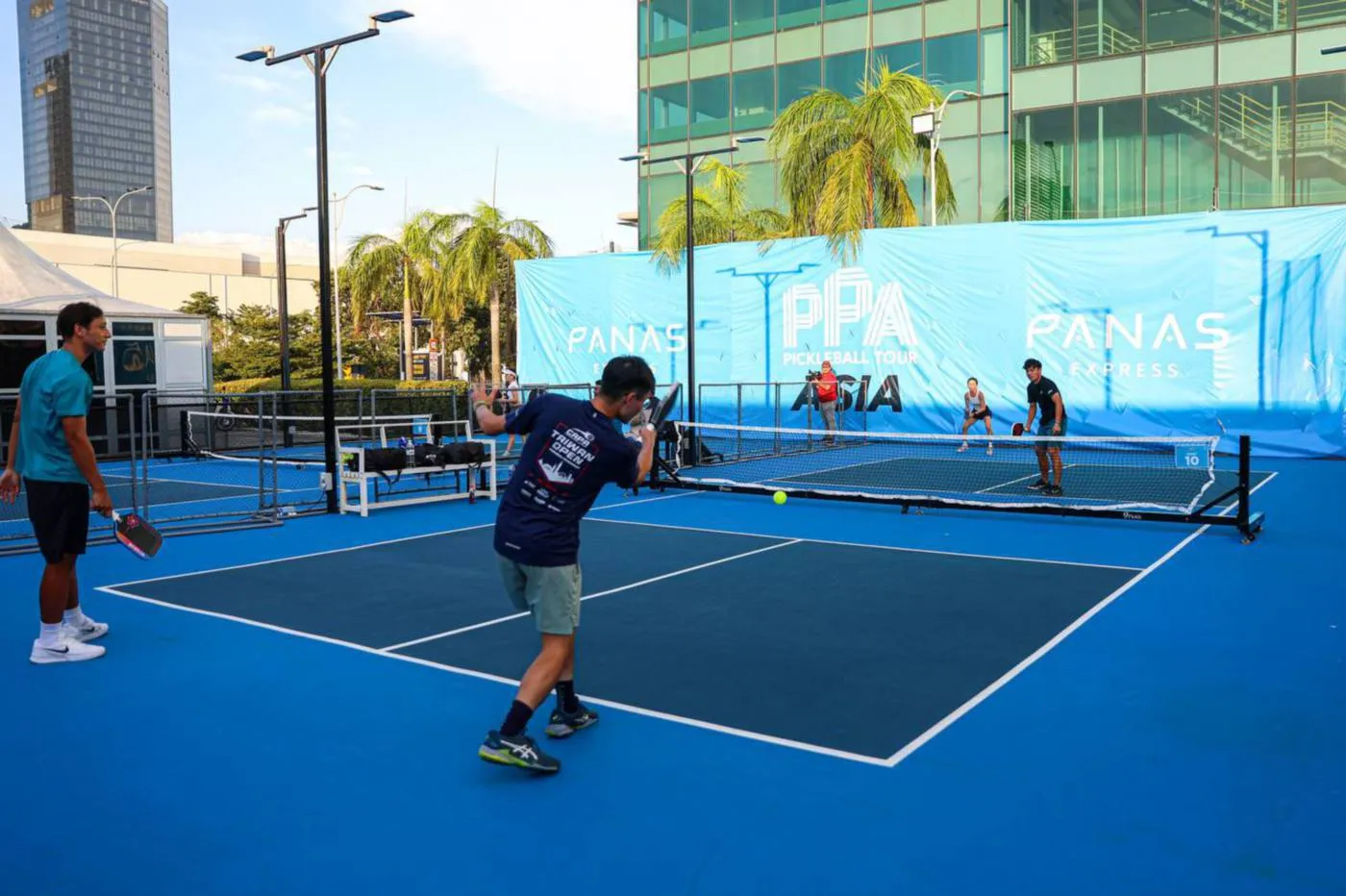
Competitive pickleball (e.g. sanctioned tournaments, leagues, or rated ladder play) is a completely different game than your casual Tuesday rec session. As we discussed in our article comparing rec and pro play, both share the same rules, court, and equipment. The only difference is the consistency of the technique and positioning of players.
Tournament play strips away your best shots and exposes your worst ones. Nerves shorten your swing, unfamiliar courts change the bounce, and an unfamiliar scoring format adds cognitive load. Your opponent will not adjust to your level the way a social group does.
When Do You Know You're Ready?
Here are the key signs you're ready to step into competitive play:
1. Skill Consistency Under Pressure
- Reliable Serve and Return: You hit 90%+ of your serves and deep returns into court without unforced errors. You no longer view the serve as just a warm-up, but as a tactical advantage.
- Controlled Dinking: You can sustain unhurried dink rallies of 10–15+ shots without popping the ball up or getting impatient.
- Consistent Third-Shot Drop: You know when to drop and when to drive from the baseline, and your drop lands reliably in the kitchen, letting you and your partner move up.
- Resetting Hard Hits: When opponents drive the ball at you, you instinctively soft-block or reset into the kitchen rather than panic-swat it back fast.
2. Tactical and Rule Mastery
- Automatic Rule Application: You know kitchen non-volley zone (NVZ) rules, serving sequences, and stacking positions cold without needing to pause or ask for score clarification.
- Targeting and Exploitation: You actively notice weak links (e.g., an opponent's weak backhand or bad positioning) and target them intentionally rather than just hitting back to the middle.
- Partner Synchronization: You communicate non-verbally and verbally ("Mine," "Yours," "Switch"), cover middle gaps, and move together like a connected tandem on a string.
3. Physical and Mental Readiness
- Bouncing Back from Unforced Errors: When you make a mistake, you reset instantly instead of letting frustration snowball into a series of lost points.
- Patience Over Power: You wait for the right ball to attack rather than trying to speed up low, unattackable balls out of boredom or anxiety.
- Dominating Open Play: You consistently win or hold your own against the strongest players at your local courts or local 3.5+ open play sessions.
Four Signs You Should Wait
While knowing when to step into competitive play is crucial, recognizing when to hold back can save you from unnecessary frustration, injuries, or an artificially inflated high-loss record.
Here are four major signs that you should stick to recreational open play a bit longer before entering tournaments or rated leagues:
1. High Rate of Unforced Errors on Serves and Returns
If you routinely lose points on your own serve or miss baseline returns into the net or out of bounds, competitive play will be brutal. In a tournament environment, opponents exploit free points instantly. You should comfortably hit at least 9 out of 10 serves and deep returns under pressure before paying tournament entry fees.
2. Impatience at the Kitchen Line
If you find yourself speeding up low, below-the-net dinks because you get bored or anxious during longer rallies, you aren't ready yet. In competitive brackets (3.5+), players have quick hands and will punish unattackable speed-ups. Wait until your default instinct is patience, such as waiting for the ball to sit above net level before initiating an attack.
3. Inability to Soft-Reset Hard Drives
When opponents hit hard drives at your chest or feet, do you panic-block the ball out, pop it high into the air, or pull your paddle back? If you cannot consistently soft-reset a hard-driven ball into the kitchen to neutralize the point, competitive opponents will simply drive the ball at you repeatedly until the match is over.
4. Frustration Snowballing During Matches
If missing a couple of shots causes you to tilt, argue over line calls, or lose focus for the next 3-4 points, competitive play will be overwhelming. Tournament play involves high pressure, unfamiliar opponents, and strict refereeing or self-calling dynamics. If your mental game falters after errors, focus on building composure in low-stakes recreational games first.
Based on your DUPR Rating
Your DUPR Rating is also a great gauge to know if you're ready for competitive pickleball. The main focus for using DUPR rating as a benchmark is the accuracy of your rating and how it compares to your opponents.
1. Your Reliability Score Is Above 60%
Reliability score tells you how confident the DUPR algorithm is in your rating. For example, a player who just started rated matches will have a lower reliability score and will often fluctuate. Meanwhile, players who consistently play matches will have a more stable and consistent reliability score.
Ideally, you are ready to play competitively if you have a reliability score of 60% or higher. With this rating, you can trust that signing up for a specific bracket matches your real abilities rather than an accidental spike or drop.
2. You Consistently Outperform Expectations Against Rated Opponents
DUPR is not a traditional win-loss algorithm. Instead, it factors in margin of victory relative to the expected outcome. If you regularly cover or exceed the point spread when playing higher-rated opponents in local DUPR open plays (e.g., losing a close 11–9 match against a pair of 3.8s when you're a 3.3), your rating is trending upward.
Consistent positive rating adjustments (even small ones like +0.02 to +0.05 per session) signal that your floor has risen enough to compete in structured brackets.
3. Your DUPR Sits Near the Top of a Specific Skill Bracket
Tournament brackets are typically organized in 0.5 increments (e.g., 3.0–3.49, 3.5–3.99). If you are at the bottom of a bracket, (e.g., 3.01 in a 3.0–3.5 event), you will likely face players at the top of that threshold (3.45+), making your first competitive entry tough.
Meanwhile, if you are sitting on mid-to-high end of the bracket (e.g., 3.35–3.45), You are in the optimal "sweet spot" to enter a 3.0–3.5 division. You have enough skill cushion to withstand tournament nerves while staying competitive against the top seeds.
4. You Have Played Beyond Your Local "Echo Chamber"
DUPR ratings can become artificially inflated if you only log matches against the same small group of friends or local open-play regulars.
You know you're ready when your rating holds steady after logging games against unfamiliar players outside your usual facility or club. Connecting your DUPR network to diverse player pools ensures your rating isn't a localized illusion.
Quick DUPR Bracket Guide
Your situation | What to do |
No DUPR yet | Enter an unrated or beginner bracket; your first results establish a baseline |
Under 3.0 | Look for 2.5 or beginner-friendly social events, not open brackets |
3.0 to 3.5 | The sweet spot for a first tournament; most local events have a strong bracket here |
3.5 to 4.0 | You are ready for standard age-group or skill-bracket competition |
Provisional rating | Play a few more rated matches before reading too much into the number |
The Key is Consistency
Tournament entry does not require a threshold level of skill. It requires a threshold level of reliability.
A 3.0 player who hits the same mediocre return 40 times in a row will beat a 3.5 player who hits eight brilliant shots and twelve errors. Tournaments reward the smaller error count, not the higher ceiling.
Reliability is also faster to build than skill. Six to eight weeks of focused play moves it substantially, and most of that gain comes from removing low-percentage shots. We listed those in why you shouldn't copy everything you see in pro pickleball.
The other half of readiness is exposure. A first tournament teaches more than three months of rec play, regardless of the result.
When you are close to ready, a few sessions with a coach sharpens the last 10 percent. Find one at coach.thepicklebase.com and follow @thepicklebase for upcoming regional events.
Common questions
How long should I play before my first tournament?
Most players are ready somewhere between six months and two years of regular play. The range is wide because frequency matters more than elapsed time.
Should my first tournament be singles or doubles?
Doubles. Singles is far more physically demanding and exposes movement gaps that doubles partially covers.
What if I lose every match?
That is a common and survivable outcome. You will leave with a clear list of what to work on, which is worth more than a trophy at this stage.
Do I need a coach before competing?
No, but a few sessions before your first event pays off. A coach can identify the one habit most likely to break under pressure.
How much does a local tournament cost to enter?
Entry fees for club and regional events in Malaysia typically run in the low hundreds of ringgit, varying by event size and prize structure. Check the specific event listing.