
If you have played a handful of games and started hearing players talk about their "3.2" or their "4.0," you have already run into DUPR. It shows up on court signs at local clubs, in tournament brackets, and in casual conversations between players sizing each other up before a game. For someone new to the sport, it can feel like a secret language.
This guide breaks down what DUPR actually is, how it calculates your number, and what that number means for your game. We will also discuss how you can get your own rating to gauge how much you have improved in your pickleball journey.
What Does 'DUPR' Mean?
DUPR stands for Dynamic Universal Pickleball Rating. It is a global rating system that measures a player's skill level using real match results instead of self-assessment or gut feeling. Every player (from a weekend beginner to a touring professional) sits somewhere on the same 2.000 to 8.000 scale.
The system was built by pickleball enthusiasts, including Major League Pickleball founder Steve Kuhn to standardize a player's level regardless of location. Before DUPR, there was no consistent way to know if a "3.5 player" in one city played at the same level as a "3.5 player" in another. DUPR set out to create one number that means the same thing everywhere, whether you are playing a Tuesday morning rec session or a sanctioned tournament.
Today, DUPR has become the standard rating system across the sport. It is used by USA Pickleball, the PPA Tour, Major League Pickleball, and a growing list of federations and event organizers across Asia.
How DUPR Calculates Your Rating
DUPR uses a modified version of the Elo rating system, the same family of algorithms used in chess. Instead of a static number based on how many matches you have won, DUPR looks at four main factors every time a match result is logged.
- Opponent strength: Every match has an expected outcome based on the ratings of the players involved going in. Beat a player rated higher than you, and your rating rises more than if you beat someone rated below you. Lose a close match to a stronger opponent, and your rating can still improve.
- Score margin. A dominant win says more than a narrow one. Winning 11-3 signals a bigger performance gap than squeaking by 11-9, and DUPR's algorithm accounts for that difference.
- Match type: Verified matches from clubs, leagues, and tournaments carry more weight than a casual score you log yourself after a backyard game. DUPR Verified Events in particular count more heavily toward your rating.
- Recency: Your most recent matches matter more than results from months ago. This keeps your rating dynamic. This means your rating moves with your current form rather than locking in a number from your first few weeks on the court.
DUPR tracks singles and doubles separately, since the two formats demand different skills. In doubles, your team's combined rating is used to calculate the expected result of a match. Afterwards, each partner's individual rating shifts based on how the match played out and their own match history.
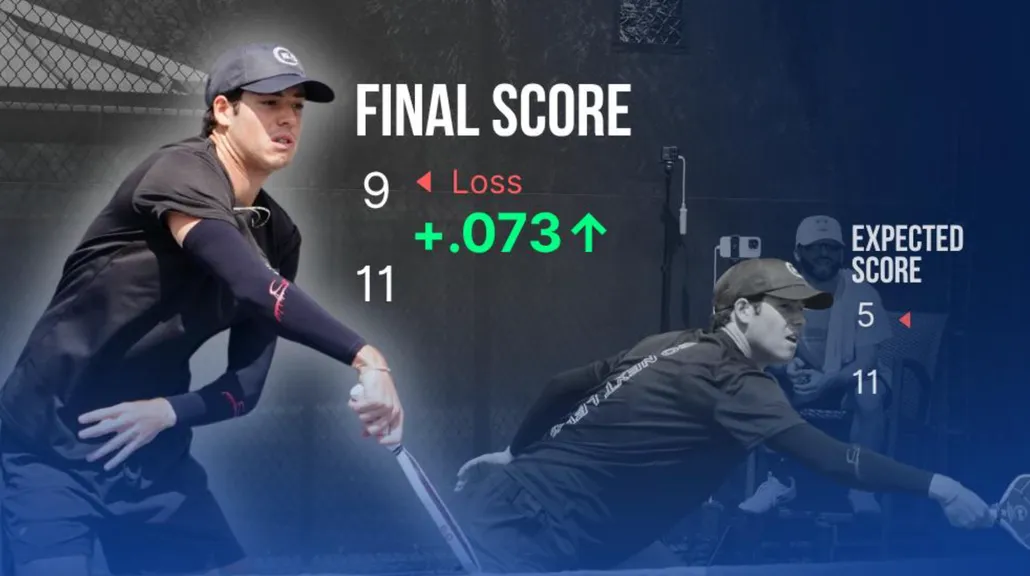
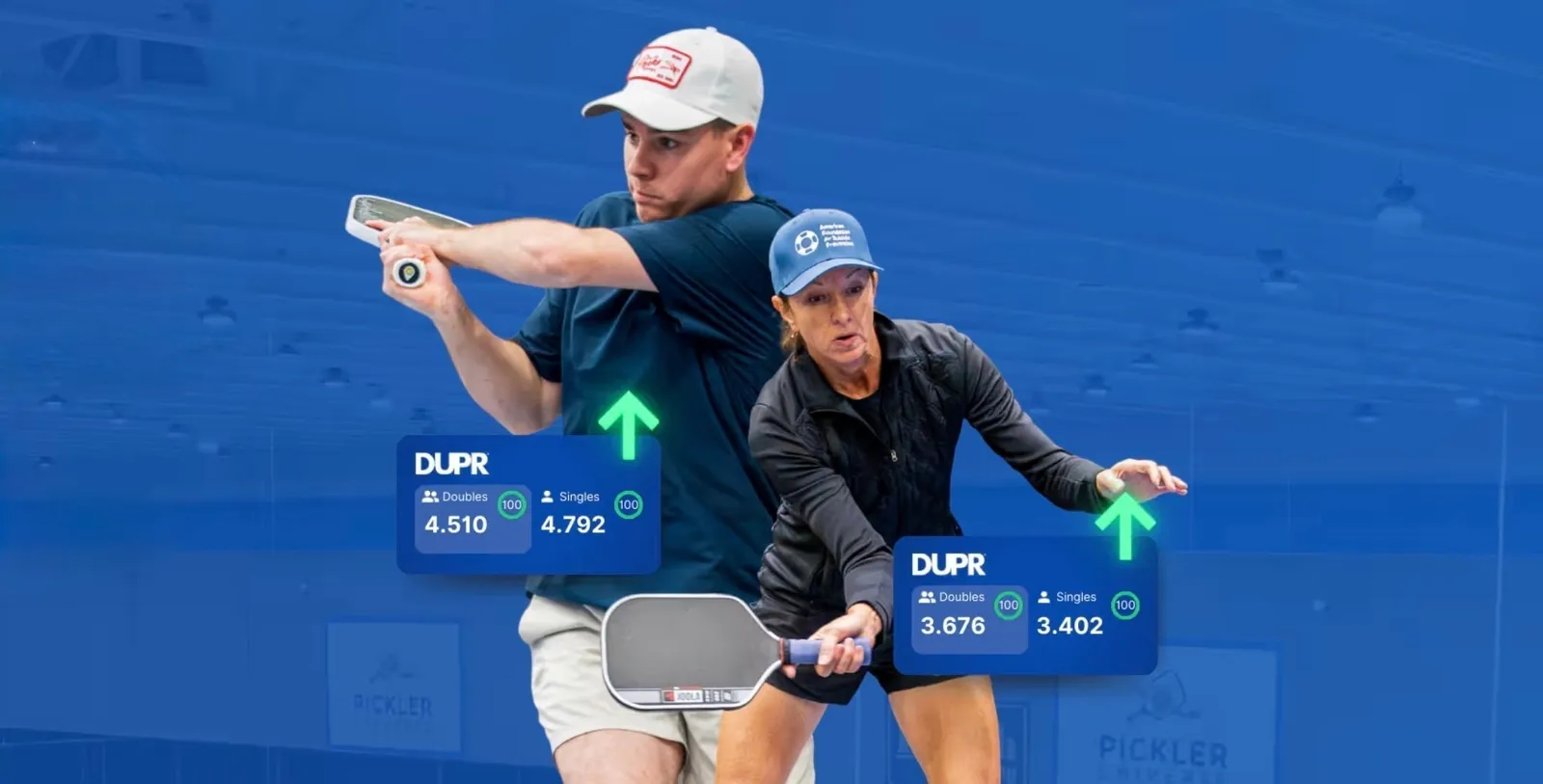
Alongside your rating, DUPR also shows a Reliability Score, which reflects how confident the system is in your number based on how much recent, verified match data it has for you. A newer player with only a few logged games will have a lower reliability score than someone with a long, consistent match history.
Do I need a paddle sponsor or club membership to get rated? DUPR is free to sign up for and open to any player, from someone borrowing a paddle at a community court to a touring pro. |
Understanding the DUPR rating scale
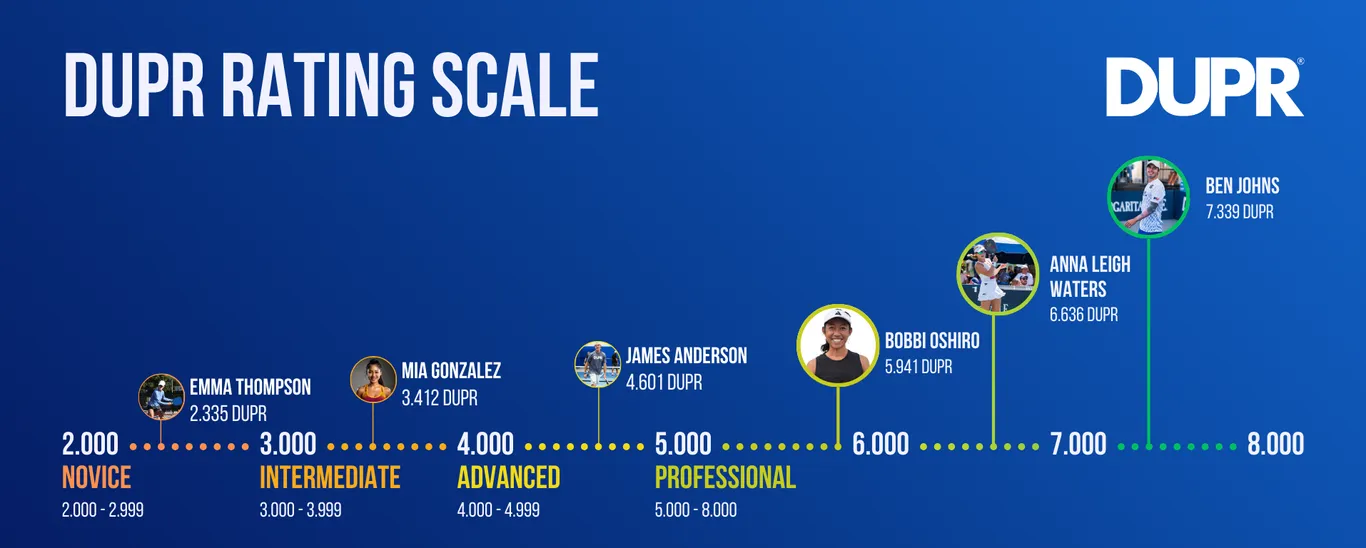
Every player starts as NR or Not Rated until their first match result is submitted. From there, ratings move along a 2.000 to 8.000 scale. Here is roughly what each range looks like on court.
DUPR Rating | Skill Level | What It Typically Looks Like |
2.000 to 2.999 | Beginner | Learning basic rules, positioning, and scoring. Rallies are short and inconsistent. |
3.000 to 3.499 | Advanced Beginner | Understands the game, can sustain a short rally, still developing consistency and shot selection. |
3.500 to 3.999 | Intermediate | Reliable serves and returns, developing dinks and third shot drops, fewer unforced errors. |
4.000 to 4.499 | Advanced Intermediate | Strong shot placement, consistent kitchen play, starting to control pace and strategy. |
4.500 to 4.999 | Advanced | Strong all-around game, plays with intention, competitive at open tournament level. |
5.000 and above | Elite / Pro | Tournament level and professional players competing at the highest tier of the sport. |
These ranges are a general guide rather than a strict rulebook. Two players with the same rating can have very different playing styles, and your number will shift as you log more matches. Treat it as a living snapshot rather than a permanent label.
Does my rating only go up? DUPR moves in both directions. A string of losses, especially against lower-rated opponents, can bring your number down just as a string of strong wins can raise it. This is part of what makes it dynamic rather than a fixed ranking. |
How to Get Your First DUPR Rating
Getting rated is simpler than most beginners expect. There is no test, application, or fee involved.
- Create a free profile: Sign up on the DUPR website or download the app. This alone does not give you a rating, but it sets up your player profile so matches can be logged against your name.
- Play and log a match: Once you play a game with at least one other DUPR user and the result is submitted, your first rating appears. Your opponent will be prompted to verify the score, and once confirmed, your rating updates.
- Get rated during a coaching session: Many DUPR coaches and clubs offer rating sessions where a certified coach observes your play and helps establish an initial number. This is a good option if you do not yet have a regular group to log matches with.
- Keep playing to stabilize your number: Most players need somewhere between 5 and 15 logged matches before their rating settles close to their true skill level. Sporadic play gives the algorithm less to work with, so consistency matters more than any single result.
- Recreational matches count too: You do not need to enter a tournament to build a rating. Casual games with friends, as long as they are logged and verified, contribute to your number just like structured league or club matches.
Can I just estimate my own rating? You can, but self-rating tends to run high or low depending on how confident a player is. DUPR's strength is that it is based entirely on actual match outcomes, not personal judgment, which makes it a more accurate reflection of where you really stand. |
How Does Climbing in DUPR Rating Look Like?
To illustrate how DUPR rating works, let's meet Farah, a new player starting at a local club. She signs up for DUPR and logs her first result.
Match | Opponent Rating | Score | Match Type | What Happened to Farah's DUPR |
1 | NR vs NR | Won 11-7 | Self-reported rec game | Farah and her opponent both receive their first rating. She starts around 2.400. |
2 | 2.600 (slightly higher) | Lost 9-11 | Self-reported rec game | A close loss to a stronger player barely moves her rating down, since the result was close to expected. |
3 | 2.300 (slightly lower) | Won 11-4 | Club open play | A dominant score margin against a lower-rated opponent gives a small bump, since winning big was somewhat expected, but the size of the margin still helps. |
4 | 3.100 (notably higher) | Won 11-8 | Verified club league | This is the biggest jump so far. Beating a player rated well above her, in a verified match, outperforms expectation by a wide margin. |
5 | 2.900 (higher) | Lost 8-11, close | Verified tournament | Even in a loss, playing a tight match against a higher-rated opponent in a tournament setting holds her rating steady rather than dropping it much. |
6 | 2.750 (similar level) | Won 11-6 | Verified club league | A solid, expected-range win against a similarly rated opponent nudges her up slightly and adds stability to her number. |
After six logged matches, Farah's rating has moved from an opening 2.400 to somewhere in the high 2.800s. Her ratings climbed, not because she won every game but because of how each result is compared to the expectation.
Match 4 illustrates opponent strength and match type together, since a verified win over a clearly stronger player counts far more than a lopsided win over a weaker one. Match 5 shows why score margin matters even in a loss. A close scoreline against a tough opponent protects a rating far better than a blowout loss would. And because DUPR weighs recent results more heavily, her rating after match 6 reflects her current form rather than the 2.400 she started with.
This is the same logic that plays out at every level of the sport. Pros like Anna Leigh Waters and Federico Staksrud reached the top of the DUPR scale the same way recreational players do. They consistently outperform expectations against strong, verified competition over hundreds of matches, not by racking up lopsided wins against weaker fields.
Why You Should Care About Your Rating as a Beginner
It is easy to assume a rating only matters once you start entering tournaments, but there are a few reasons it is worth paying attention to early.
- Fairer, more enjoyable matches: Once your rating settles, you can find hitting partners and open play groups that actually match your level. A 2.5 player stuck rallying against 4.0s learns far less than one playing consistently against similarly rated opponents.
- Track real progress: Improvement in pickleball can feel slow and hard to measure day to day. Your DUPR number gives you an objective marker of growth over weeks and months, separate from how any single match felt.
- Access to events and communities: Many organized leagues, clinics, and tournaments now ask for a DUPR rating before you register, since it helps organizers build fair brackets. Having a rating early means you are ready when you decide to compete.
- A shared language with other players: Once you know your number, conversations about skill level, partner matching, and finding the right open play session become much easier, whether you are chatting in a WhatsApp group or signing up for a local event.
DUPR continues to evolve. Features like the DUPR Reset now give players a way to prove an improved skill level using a defined recent window of matches, and the system keeps refining how it measures reliability and match quality. As DUPR adoption grows across Asia, understanding your rating early puts you in a better position to make the most of local leagues, open play sessions, and tournaments as they roll out.
For now, if you are ready to put your rating to use, browse verified courts near you at courts.thepicklebase.com to find your next open play session, or follow @thepicklebase for the latest tournament news and beginner tips across Southeast Asia. If you are still playing with a borrowed paddle, our guide to choosing a pickleball paddle covers buying your first one for rated play.
More DUPR guides
Go deeper on any part of the rating with the rest of our DUPR series: