
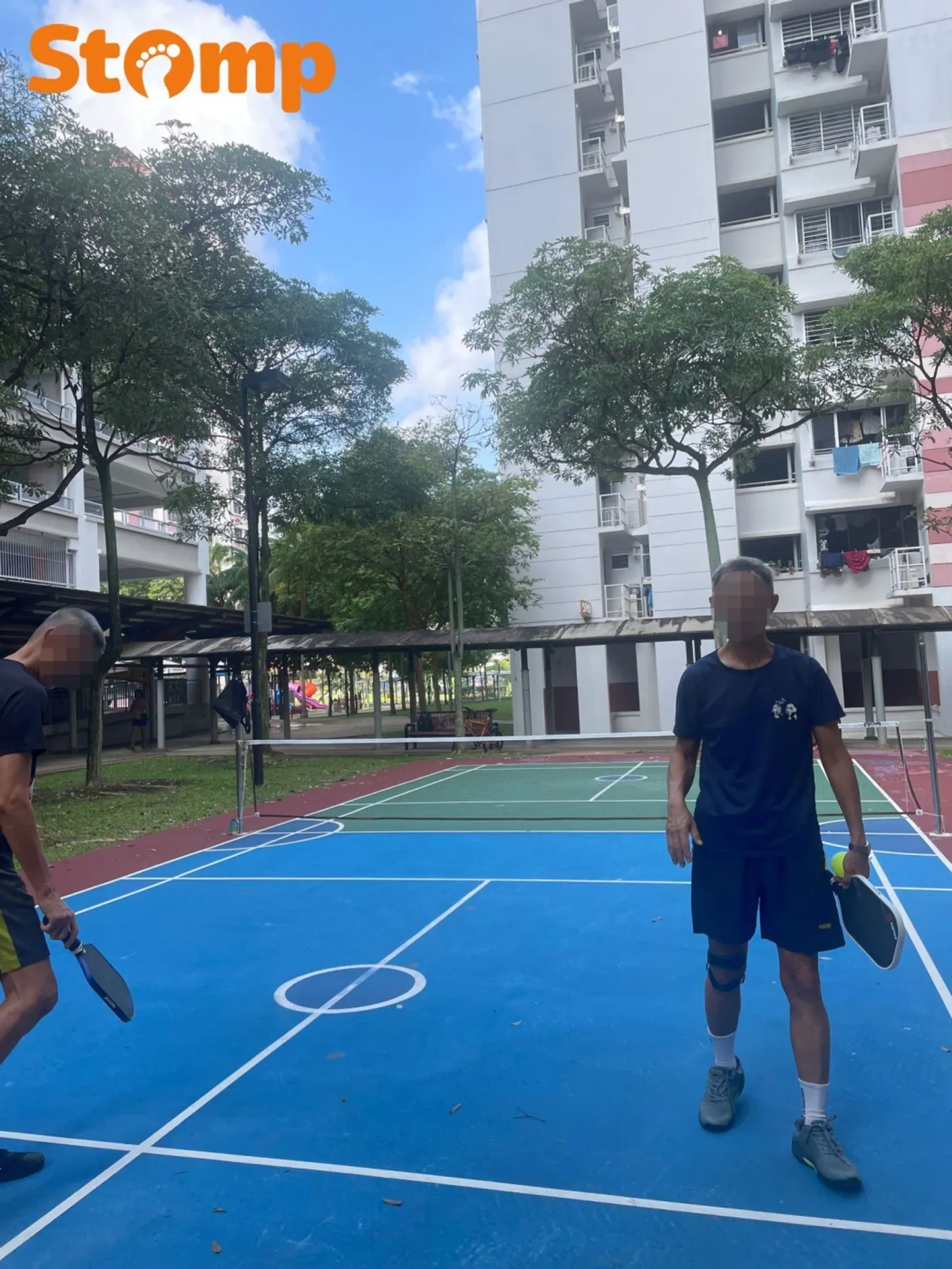
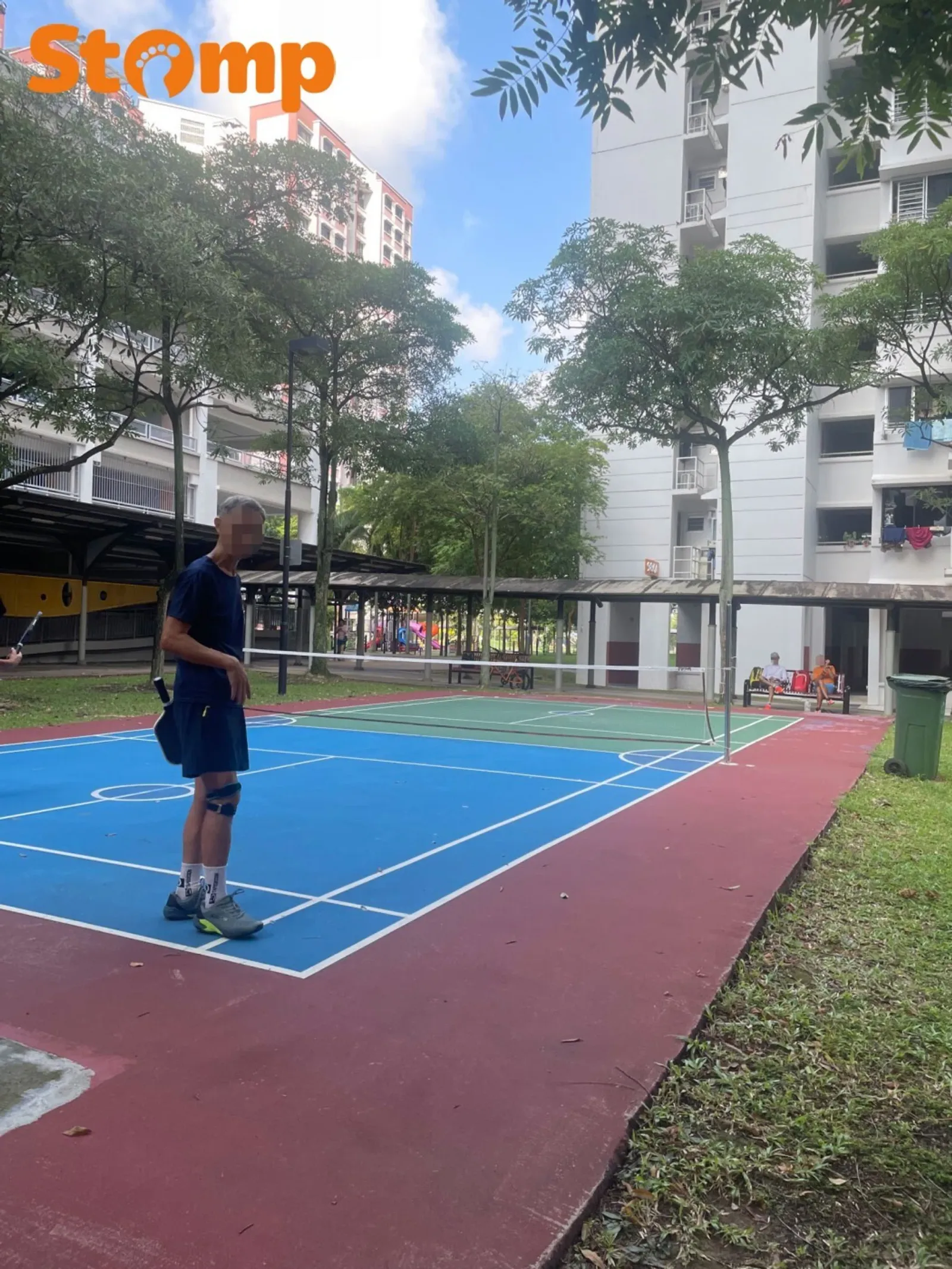
Singapore's pickleball noise debate is back in the headlines. This time, the flashpoint is a hard court near Block 984B, Buangkok Link, where a resident's confrontation with a group of players has prompted a town council to act.
The Incident
According to a report by STOMP, a resident named Ang came across four older men playing pickleball at the Buangkok court on the morning of July 29. She said the court was only supposed to open at 10:00 am, but the group was already playing at around 9:00 am.
Ang told the players twice that they had started too early. One of them pushed back, asking her where it said play could only start at 10:00 am. She showed him information on her phone, but he reportedly told her to get a town council member to speak to him instead. The other players later apologized after she asked for one.
Her bigger concern was the noise so early in the day. She suggested the group switch to softer foam balls to reduce the popping sound, and said this was not the first time she had seen people playing at the court in the morning. She has since filed feedback with Ang Mo Kio Town Council.
The town council clarified that the court is actually open from 9:00 am to 9:00 pm, not 10:00 am as Ang believed. Still, it confirmed it will install an educational banner at the site reminding users of the permitted hours and encouraging consideration for nearby residents. Lights at the court will also be switched off daily after 9:00 pm to discourage late play.
Part of a Bigger Pattern
Buangkok is not an isolated case. Just weeks earlier, a midnight pickleball dispute went viral in Malaysia, where a noise complaint near a residential condominium escalated into a shouting match and a physical altercation. That incident reignited a nationwide conversation about how late courts near homes should stay open.
The same tension is playing out across the region. Hanoi has seen petitions over courts running from before sunrise to well past midnight. Singapore itself has already adjusted operating hours at several community courts after residents reported hearing games from floors above. The pattern is consistent. Pickleball thrives in dense, urban courts, and those are exactly the spaces where sound carries furthest, and patience wears thinnest after dark.
The Noise Problem Has a Known Fix
What makes disputes like this frustrating is that the core issue, the sharp "pop" of a hard plastic ball hitting a paddle, is well understood and largely solvable. That sound can hit 70 to 80 decibels on an open court, comparable to a lawnmower running nearby.
Foam balls absorb that impact instead of amplifying it. Measurements from Mountbatten's community trial in Singapore showed foam balls bringing gameplay noise down to around 60 decibels, roughly the level of normal conversation. Mountbatten Town Council has since mandated foam-ball-only play during set morning and evening windows, one of the first formal policies of its kind in the region.
Foam balls are not the only option. Quieter paddles built around honeycomb cores, acoustic windscreens on court fencing, and simply keeping loud rallies away from early mornings and late nights can all reduce friction between players and residents. None of these require shutting courts down. They just require a bit more thought about when and how the game gets played near homes.
We broke this down in more detail in our guide on how foam balls are reducing pickleball noise, including how they play differently from standard balls and where they make the most sense.
Playing It Forward
Buangkok's banner and Ang Mo Kio Town Council's clarified hours are a small fix, but they point to a bigger question every court operator in Singapore will eventually face. As courts fill up across HDB estates and condominiums, the ones that last will be the ones that plan for their neighbours, not just their players.
Looking for a court to play at in Singapore? Browse listings, hours, and surfaces on courts.thepicklebase.com/singapore.