
You have played a few open sessions, borrowed a paddle from a friend, and now you are hooked. Now, you want to have your own paddle, but it seems there are too many buzzwords when you try to do your research online. Options like "carbon fiber raw surface", "elongated hybrid", and "thermoformed core" are often thrown around by many reviewers or guides.
Choosing your first paddle does not need to be complicated. A handful of factors actually matter for a new player, and once you understand them, narrowing down your options becomes easy. When you are ready for the full method, including paddle types and current prices across Southeast Asia, see our complete guide to choosing a pickleball paddle.
Why Your First Paddle Shouldn't Be an Afterthought
A lot of beginners grab whatever paddle is cheapest or whatever their friend recommends without checking if it fits their hand, their strength, or their playing style. That works fine for your first few games, but the wrong paddle can slow down how quickly you improve. In some cases, it can contribute to arm and wrist strain while you are still building proper technique.
The goal for a first paddle is to find one that's forgiving and allows you to build consistency while you learn the game. Here are some factors you should consider:
1. Weight
Paddle weight affects almost everything else, including your swing speed, your control at the kitchen line, and how tired your arm feels after a long session. Paddles generally fall into three weight ranges.
Weight Class | Range | Best For |
Light | Under 206 g (7.3 oz) | Players who want maneuverability and quick hands at the net |
Mid-weight | 206 g to 227 g (7.3 oz to 8.0 oz) | Most beginners, since it balances power and control |
Heavy | Over 227 g (8.0 oz) | Players who want more pop on drives and are comfortable with a slower swing |
If you are just starting, a mid-weight paddle is the safest choice. It gives you enough pop to hit a drive without making your hands feel too slow to react to fast exchanges at the net. You can always add lead tape later if you decide you want more power once your game develops.
2. Core Material Shapes How the Paddle Feels
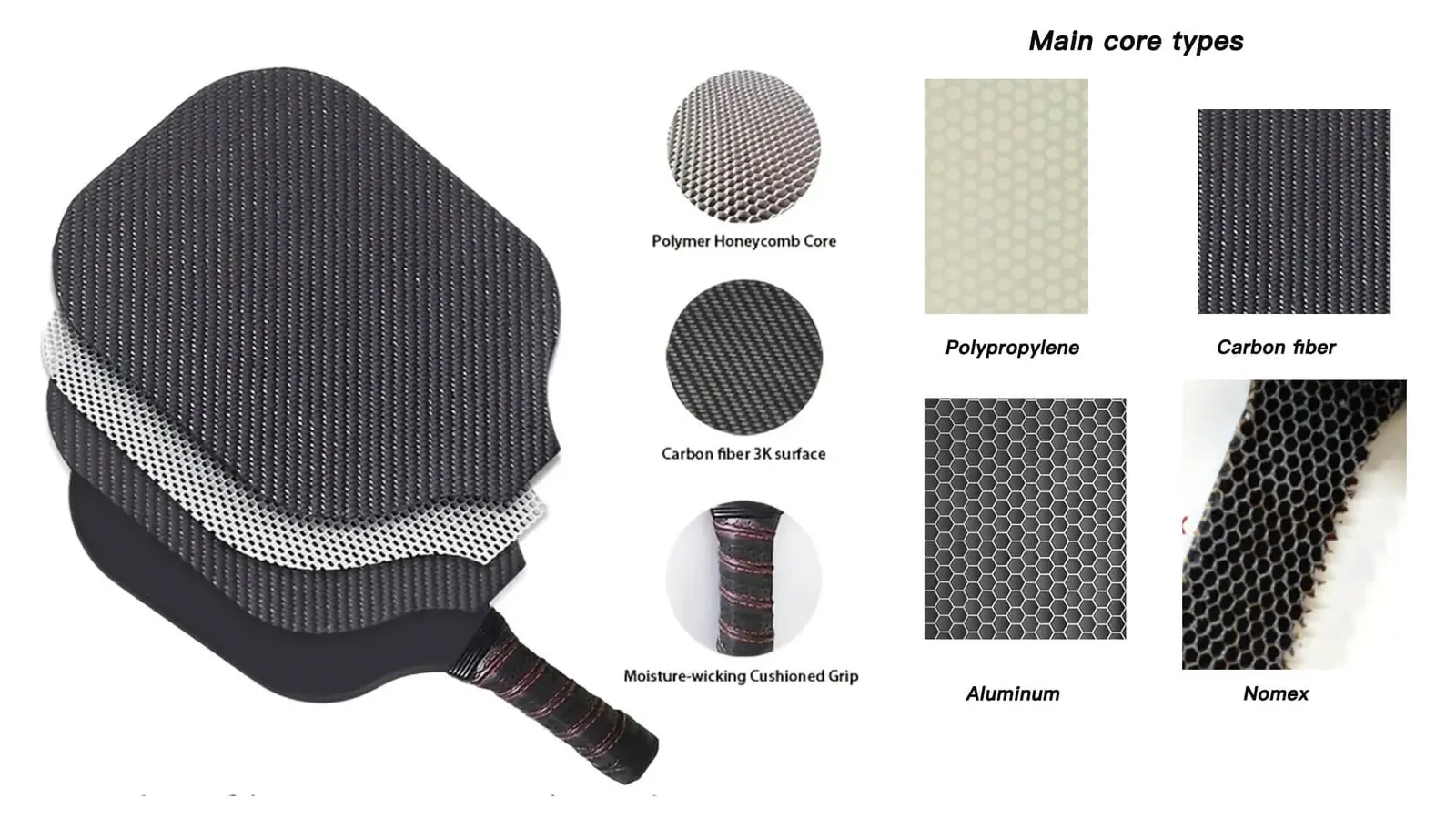
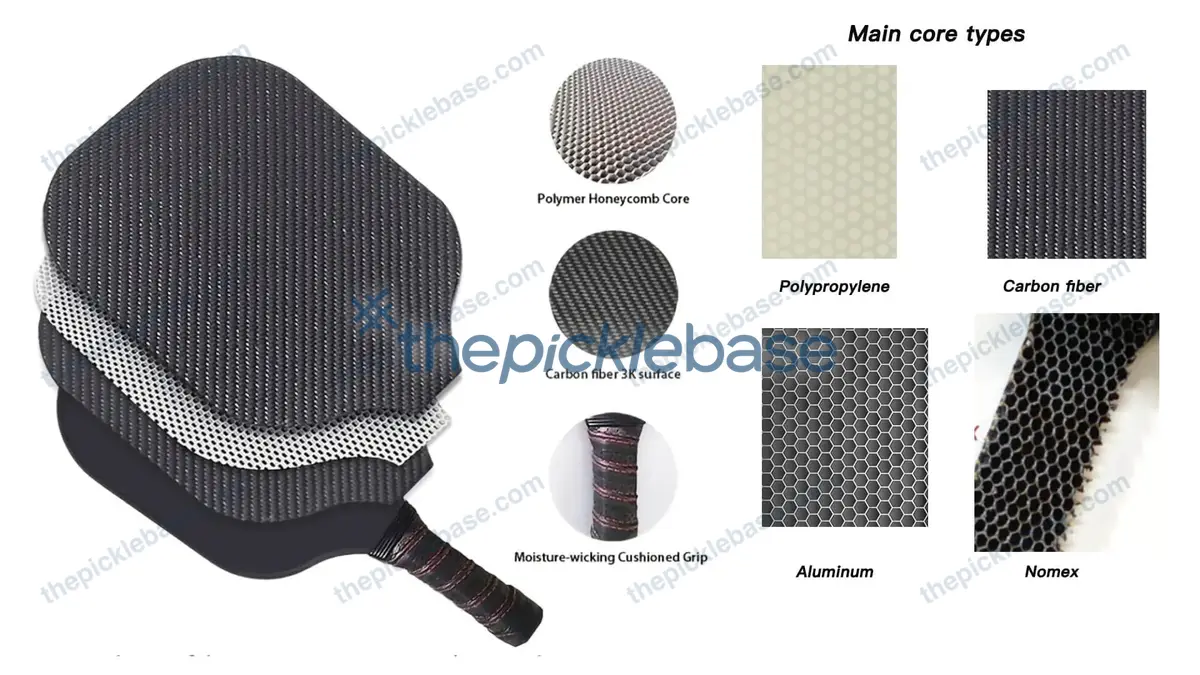
The core is the biggest reason two paddles that look almost identical can feel completely different in your hand. It affects how much power you get without swinging harder, how much noise the paddle makes on contact, and how forgiving it feels when you catch the ball off center.
The core sits between the two paddle faces and is the biggest factor in how a shot feels off the paddle:
- Polymer: This is the most common core in modern paddles, and the one most beginners should start with. It is quiet, absorbs vibration well, and gives a soft, controlled feel that is forgiving on mishits.
- Nomex: A honeycomb material originally used in aerospace applications. Nomex cores are stiffer and louder, and they tend to generate more power. They are less common today and usually better suited to players who already know they want a hard-hitting game.
- Aluminum: Lightweight and control-oriented, but less common in current paddle lineups. Worth trying if you come across it, but not something you need to search for specifically.
For a first paddle, stick with polymer. It is the most beginner-friendly core on the market and the easiest to find across all price points.
3. Face Material Affects Spin and Durability
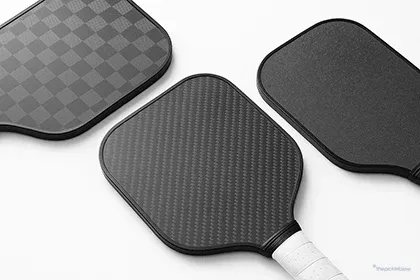
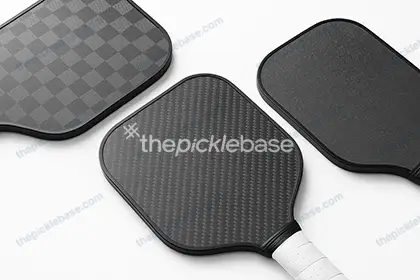
The face is the outer surface that actually contacts the ball. The three common options are fiberglass, graphite, and carbon fiber.
Fiberglass faces tend to have more give, which translates to a softer feel and slightly more power on contact. Graphite and carbon fiber faces are stiffer, lighter, and generally offer more control along with better spin potential thanks to the textured surface many of these paddles use. Carbon fiber also tends to hold up well over time, which matters if you plan to play often.
None of these will make or break your first few months on the court. If you find two paddles you like at a similar price and weight, the face material is a reasonable tiebreaker rather than a starting filter.
4. Shape and Sweet Spot
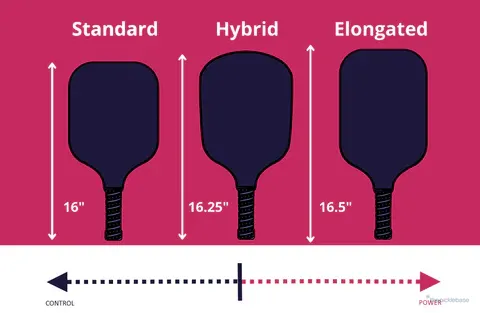
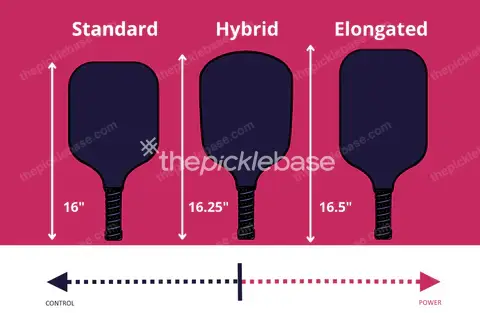
The sweet spot is the area on the paddle face that gives you the cleanest contact and the most control. If you hit outside the sweet spot, the ball can fly long, fall short, or twist of at an odd angle. As a beginner you will miss that sweet spot often while you are still learning where the ball meets the paddle, so the shape you choose has a direct effect on how forgiving those mishits feel.
Paddles generally come in three shapes:
- Standard or widebody paddles have a shorter, wider face. This gives you the largest sweet spot, which means more forgiveness when the ball does not hit dead center. This is usually the best shape for a first paddle.
- Elongated paddles are longer and narrower. They offer more reach and can generate more power on drives, but the sweet spot is smaller and less forgiving for a player still learning where to make contact.
- Hybrid shapes sit between the two, offering a bit more reach than a standard paddle without giving up too much forgiveness.
Unless you already have a strong reason to want extra reach, a standard or hybrid shape gives you the most room for error while you are learning.
5. Grip Size Matters More Than People Expect
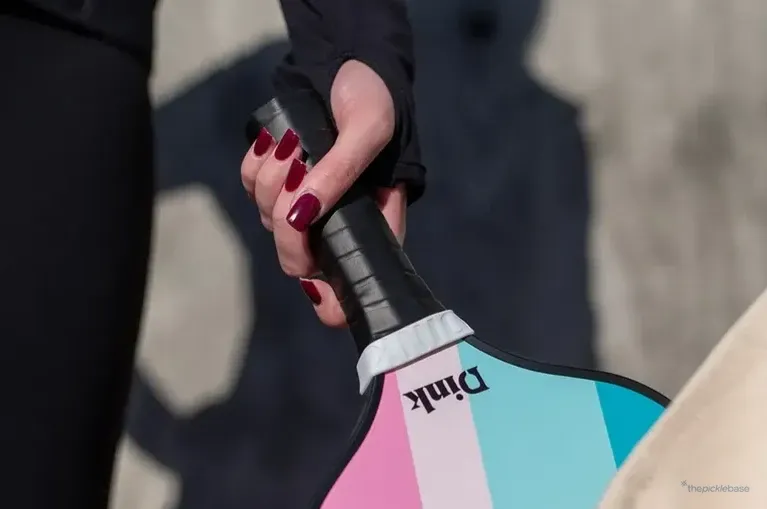
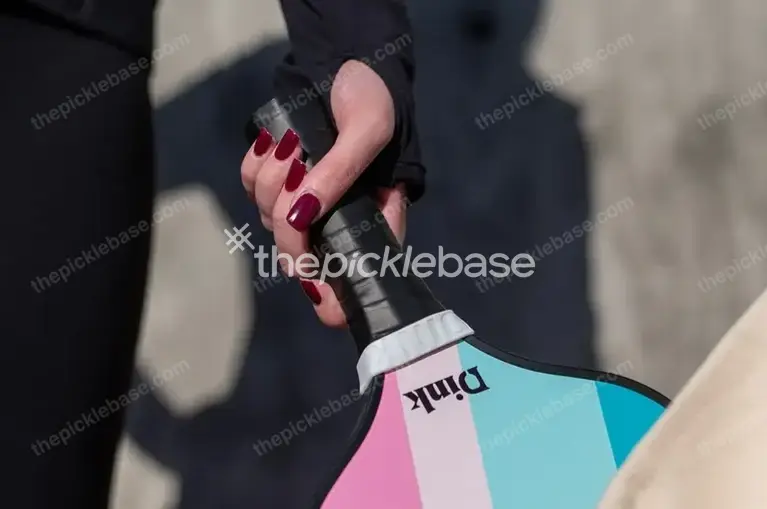
If your grip is too big or too small, this can be uncomfortable and cause strain over time. A simple way to check your fit is to hold the paddle with your normal grip and look at the gap between your fingertips and your palm. You want roughly the width of your index finger's space. No gap usually means the grip is too small, and a gap wider than that usually means it is too big.
Most adult grips range from 4 inches to 4.5 inches (about 10.2 cm to 11.4 cm) in circumference. If you are between sizes, sizing down and adding an overgrip is usually easier than sizing up, since overgrips are cheap and simple to add.
6. Thickness and How It Plays
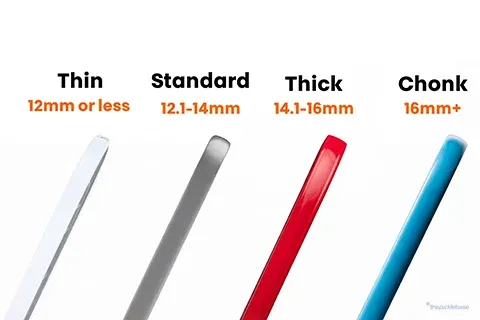
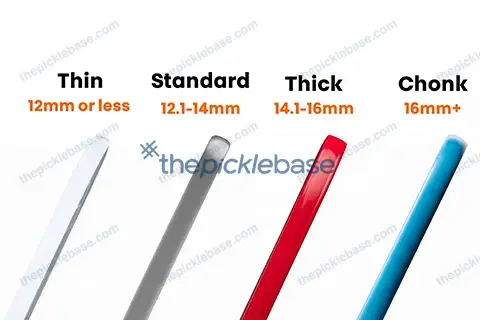
Paddle thickness usually falls between 11 mm and 16 mm. Thinner paddles tend to generate more power and a louder pop-off contact, while thicker paddles absorb more shock and give you a softer, more controlled feel, especially useful for dinks and resets at the net.
For a first paddle, something in the 13 mm to 16 mm range tends to be the safer choice. It gives you a more forgiving, controlled feel while you are still learning to judge pace and placement.
7. Set a Budget You're Comfortable With
You do not need to spend a lot of money to get a paddle that will serve you well while you learn. A solid beginner paddle with a fiberglass or composite face typically runs from RM150 to RM400 (roughly USD 35 to USD 90). That price range is more than enough for your first year of play.
Save the premium paddles, the ones with thermoformed edges and proprietary foam injection technology, for later. Those upgrades matter more once you have developed a consistent swing and a clear sense of your own playing style. Buying a high-end paddle before you know what you actually need is one of the most common overspends new players make. We test whether they are worth the money in are expensive paddles worth it.
Trying Out Your New Paddle
Getting these basics right will not turn you into an advanced player overnight, but it removes one of the most common reasons beginners feel stuck or uncomfortable early on. Focus on time on court and steady technique, and let your paddle support that instead of getting in the way.
Ready to put your new paddle to the test? Find courts near you at courts.thepicklebase.com, or follow us on Instagram @thepicklebase for more gear tips and beginner guides.