
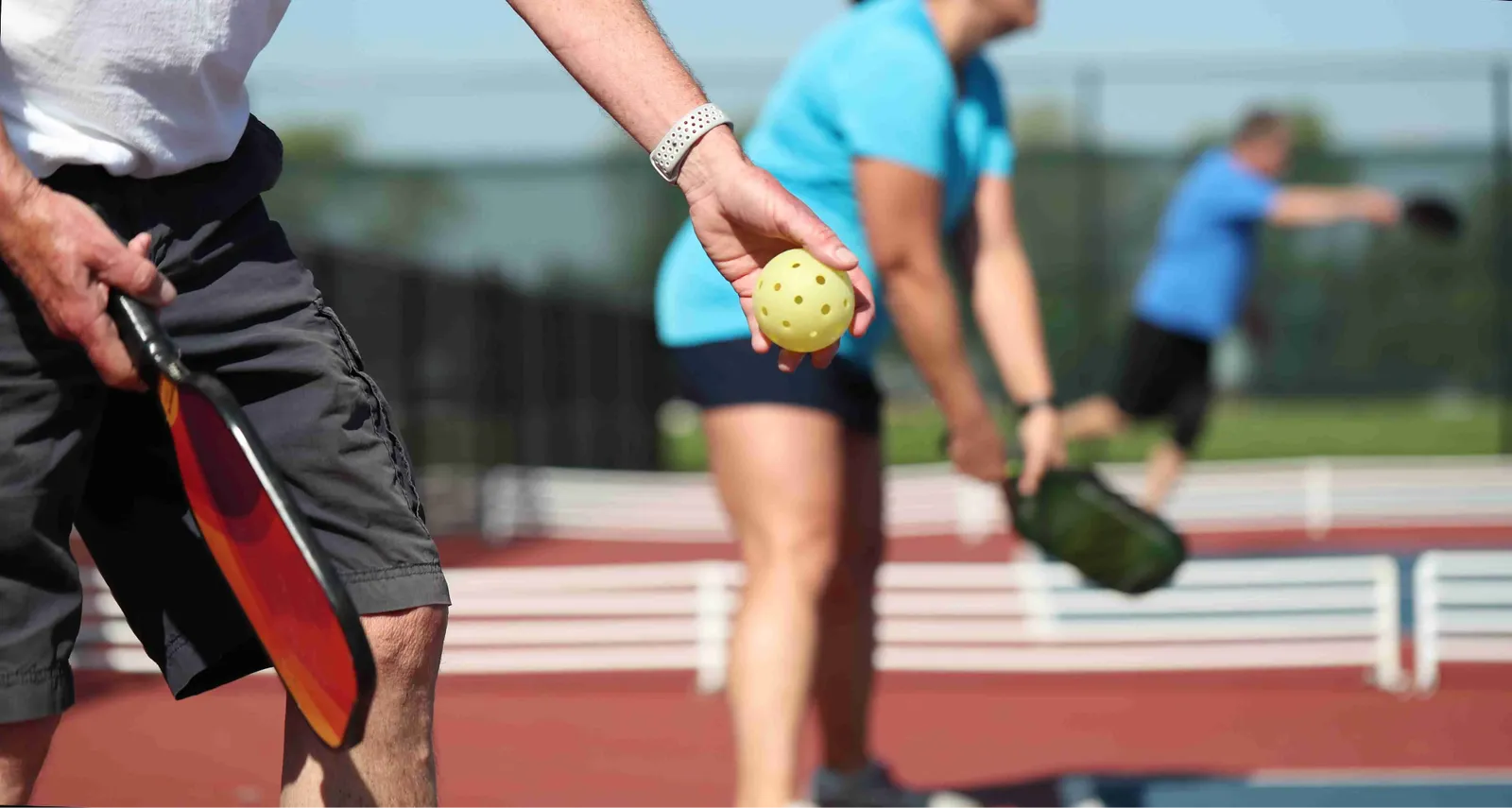
Before the dinks, the third shot drops, and the kitchen line battles, someone has to put the ball in play. That first shot is the serve, and it is the one shot in the entire game that you have complete control over. No opponent is rushing you, no ball is coming at an odd angle, and there is no excuse for rushing it.
For a beginner, that makes the serve the fastest place to gain an edge. You cannot control how well your opponent returns the ball, but you can absolutely control how well you serve it.
Why Your Serve Matters More Than You Think
A deep, well-placed serve pushes your opponent back from the net and away from their strongest position on the court. That forces a weaker return, which sets up an easier third shot for you or your partner. A short or predictable serve does the opposite. It hands your opponent an easy ball to attack, and now you are playing defense before the point has even really begun.
You will not win most points outright on the serve. What a good serve does is set the tone. It tells your opponent that every free point they might have expected is going to have to be earned instead.
Legal Serve Rules for Beginners
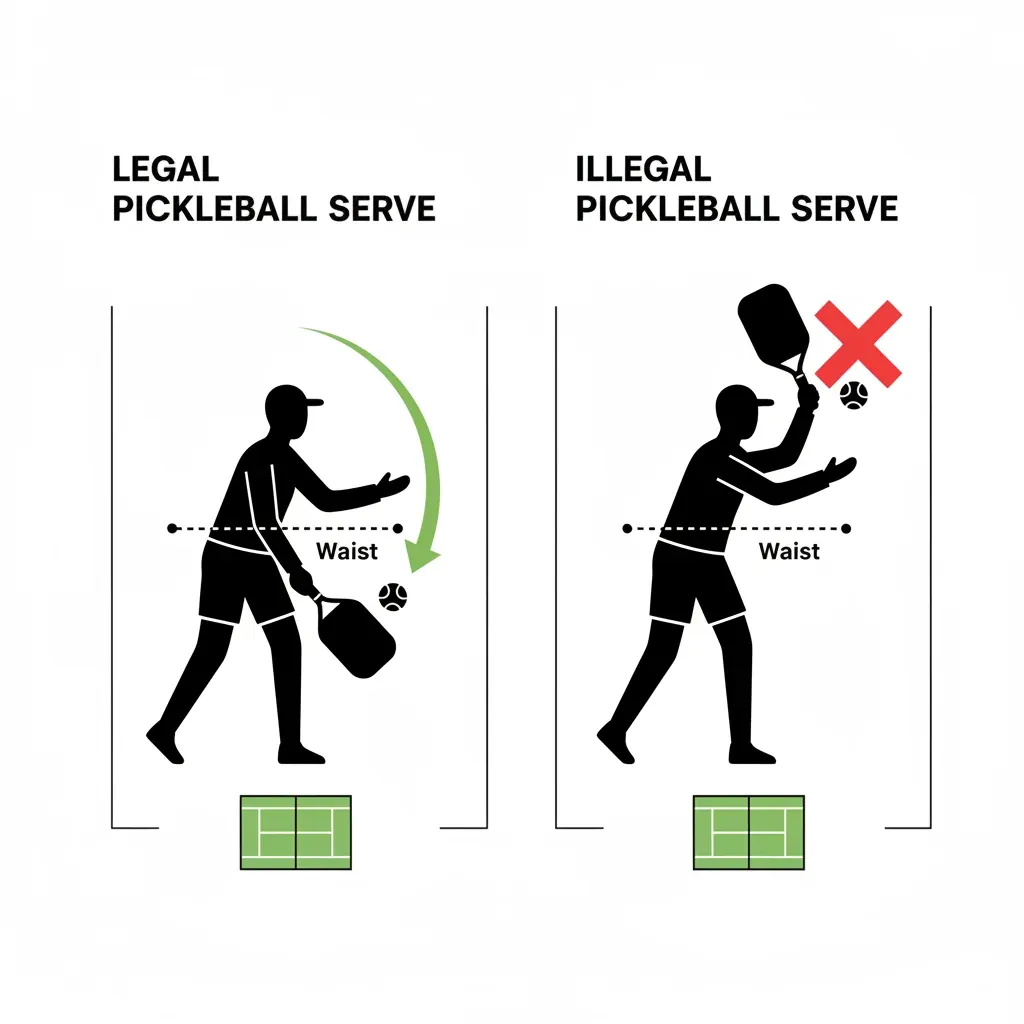
Before working on technique, you need to make sure you understand the rules. Keep in mind that a technically great serve that breaks a rule is still a fault.
- The paddle must contact the ball below your waist (specifically below your navel).
- Your arm must be swinging upward when you make contact.
- The paddle head cannot be above your wrist at the moment of contact.
- Both feet must stay behind the baseline and within the imaginary lines extending from the sideline and centerline until after you strike the ball.
- You only get one attempt. Unlike tennis, there is no second serve.
- Call the score out loud before you begin your serve motion, not during it.
There is one exception to the arm and paddle rules above. If you use a drop serve, none of those specific swing requirements apply, since the ball is dropped rather than tossed. More on that below.
Volley Serve vs Drop Serve
Pickleball allows two types of legal serves. As a beginner, you get to choose which one suits your play/
The volley serve is the traditional method. You strike the ball out of the air before it bounces, using an underhand swing that moves from low to high. This is the serve most players eventually settle into once their motion is dialed in.
The drop serve is newer to the rulebook and has become the go-to option for beginners and intermediate players. You release the ball from your hand, without adding any downward force, let it bounce once, then strike it. Because you are hitting off a bounce instead of timing a moving ball out of the air, the drop serve removes one of the harder parts of serving: contact timing.
If you are brand new to the sport, start with the drop serve. It is more forgiving, it builds consistency faster, and plenty of high-level players use it by choice, not just as a beginner crutch.
Building a Serve Motion You Can Repeat
A serve you can only hit well once in a while is not useful. The goal is a motion so consistent that you barely think about it. That comes down to four things:
- Stance: Stand with a semi-closed stance rather than facing the net head-on. Your non-paddle side foot should sit slightly ahead, with your feet roughly shoulder-width apart and your weight balanced. An open stance invites too much rotation, which throws off your aim before you even swing.
- Contact point: Whether you are hitting a drop serve or a volley serve, meet the ball out in front of your body, not off to the side and not too close in. Keep the point of contact low, around knee height, and let your paddle travel in a clean upward arc through the ball.
- Swing: Swing from your shoulder like a pendulum, keeping your wrist relatively still. A stiff, wrist-driven swing is where most beginners lose both power and control. Let your arm and shoulder do the work, and use your legs and core for added power rather than trying to muscle the ball with your arm alone.
- Follow-through: This is the step most beginners skip, and it matters more than it looks like it should. Finish your swing high, extending your paddle arm toward your target rather than stopping short at contact. A common training trick is to finish with your non-paddle hand catching the paddle above your opposite shoulder. If you are cutting your follow-through short, you are almost certainly decelerating into contact, which costs you both depth and control.
Don't cut the follow-through short: An abrupt stop after contact usually means you decelerated before hitting the ball, which weakens both depth and pace. |
Where Do You Aim Your Serve?
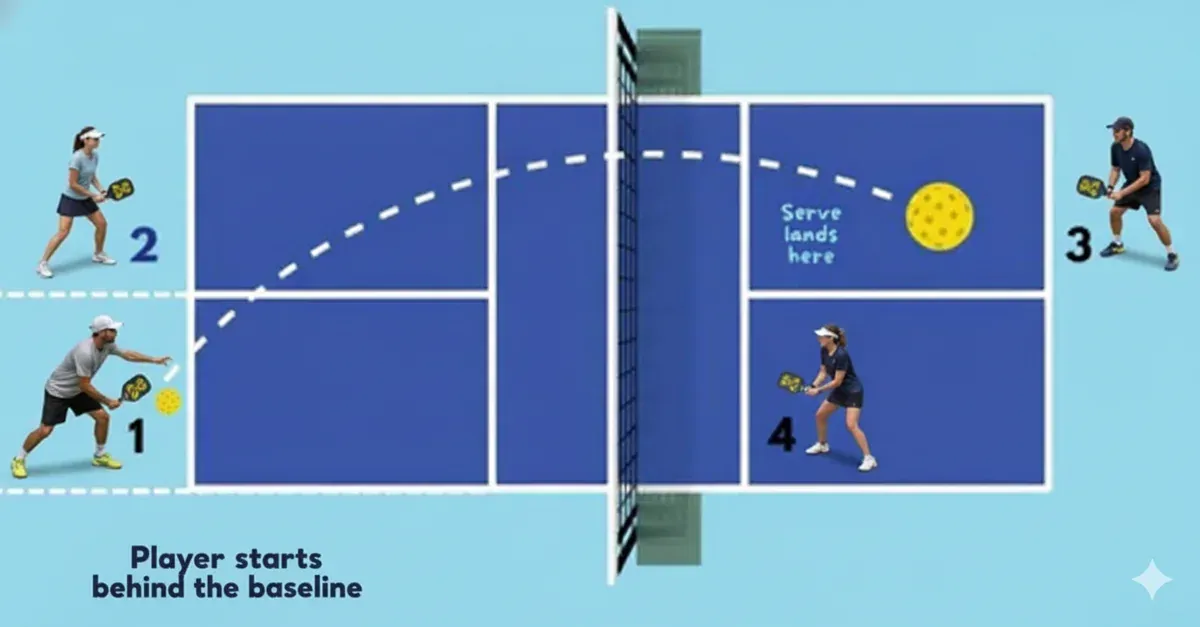
For a beginner, depth matters far more than power. A deep serve (landing close to your opponent's baseline) pushes them backward and buys you time before the return comes back. As a target, aim to land your serve within about 0.6m to 0.9m (2 to 3 feet) of the baseline. Aiming for the exact back line is risky, since a slightly long serve becomes an easy fault.
Two placement options worth building early:
- Middle of the court. A serve down the centerline reduces your opponent's angles and often creates confusion between doubles partners about who takes the ball.
- Opponent's backhand. Most players are weaker on the backhand side. A deep serve aimed there tends to produce a shorter, easier return for you to attack.
You do not need trick serves yet. A consistent, deep serve to the middle or the backhand will beat a flashy, inconsistent one every time at the beginner level.
Don't Serve too short: A serve that lands near the net gives your opponent an easy, aggressive return. If your serves keep landing short, the fix is almost always more legs and core in the swing rather than more arm. |
Drills to Build Consistency
Technique only sticks with repetition. A few simple ways to build serve consistency without needing a full match:
- Ten in a row: Before adding any variation or spin, aim to hit ten flat, in-bounds serves in a row. Do not move on until you can do this comfortably.
- Three-target drill: Set up three targets on the court, such as the middle, backhand corner, and a spot 0.6m (2 feet) inside the baseline. Rotate through them while keeping your pre-serve motion identical every time, so your opponent cannot read where the ball is going by watching your setup.
- Slow-motion reps: Practice your full motion at half speed, focusing purely on stance, contact point, and follow-through. This helps you feel where your mechanics break down without the pressure of live play.
Skip spin serves entirely until your flat serve is reliable under mild pressure. Spin only amplifies whatever inconsistency already exists in your base motion.
Avoid flicking your wrist: This adds unpredictable spin and reduces control. Keep your wrist firm and let your shoulder generate the motion instead. |
If you think drilling is a waste of time, Anna Bright specifically mentions that drilling should be a priority to up your pickleball game.
Serve Variations to Explore as You Progress
Once your basic serve is dependable, you can start layering in variety to keep opponents guessing. A few worth knowing about for later:
- Lob serve: A high, soft serve that arcs deep into the court, useful against opponents who crowd the baseline.
- Kitchen corner serve: A softer, angled serve landing just past the non-volley zone on the outside corner, designed to pull opponents out of position.
- Centerline serve: Aimed at the corner where the centerline meets the baseline, forcing movement and hesitation between doubles partners.
- Power serve: A faster, flatter serve used sparingly to break an opponent's rhythm once your placement is already reliable.
None of these are worth practicing until your basic deep serve is consistent. Placement beats power at every level of this game, and that is doubly true when you are just starting.
Serving well is one of the fastest ways to level up your game, and it is entirely within your control to practice. If you want more structured help building it into muscle memory, a certified coach can spot mechanical issues far faster than trial and error on your own. Browse instructors near you at coach.thepicklebase.com, or follow @thepicklebase on Instagram for more tips as you build out the rest of your game.