
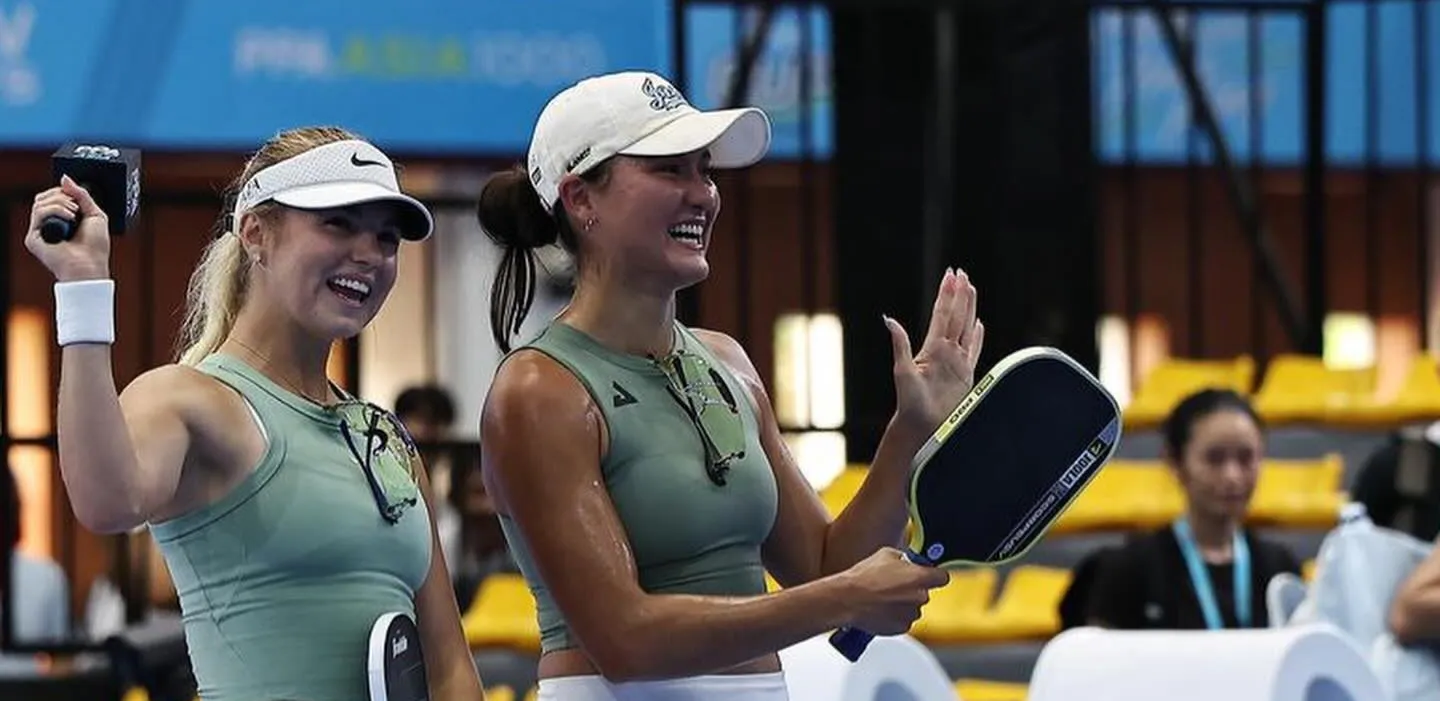
Professional pickleball has officially gone global. Anna Bright, currently ranked #2 in the world, recently traveled to Hanoi, Vietnam, for the MB Hanoi Cup. While the trip provided plenty of content for her vlogs, it also offered a masterclass in how playing conditions and regional cultures are reshaping the professional game.
Here is a breakdown of what "The Pros" are used to in the West versus the unique challenges and excitement found in Southeast Asia.
The Environment: Heat, Humidity, and "Perspiratory Issues"
In the United States, most major tournaments are held in highly controlled environments or outdoor venues with specific airflow standards. In Hanoi, the experience was far more intense.
While the My Dinh Indoor Athletics Arena had AC, Bright noted it didn't match American "standards of coolness." With thousands of fans in the stadium and high-intensity court lighting, body heat became a significant factor.
Bright described "ringing out her shirt" after matches. Hydration became a scientific endeavor, with pros "pounding electrolytes" and coconut water just to avoid cramping.
The Equipment: "Mushy" vs. "Hard"
Perhaps the most technical revelation was the choice of ball. The ball is the soul of the game, and in Asia, it’s a different beast entirely. The US pro circuit typically uses the Lifetime ball, which is one of the hardest and fastest balls available. The tournament used JOOLA ball that reacted uniquely to the Vietnamese climate.
In the tropical humidity, the JOOLA ball became "mushy" and heavy. As Bright noted:
"This thing was playing like pretty mushy... and I do not think it was the optimal ball for these hot and muggy conditions. I think in a colder climate I would love to try this ball out... but this thing was playing so soft, and it was getting soft fast, and it was getting really, really heavy just because of how humid it was."
This effectively neutralized the power games that many US pros rely on. Bright observed that it was much harder to "finish" points, leading to extended firefights reminiscent of "2022 pickleball" where paddles had less pop and grit.
Style of Play: Power vs. Placement
Because the balls were moving slower and bouncing lower on the temporary court surfaces, the "calculus" of the game shifted.
US pros often rely on "linear" power hitting through the court. In Vietnam, Bright found herself swinging through transitions and countering more than resetting. She mentions:
"In the US... there are a lot of balls that I would reset because I can make that reset 98% of the time... but in Vietnam with this ball... it was like, why not just counter? It was better to just counter because no one can get enough power to finish a point anyway."
In Southeast Asia, there is a pronounced tendency toward "pancake" shots and sitting on the forehand. This style helps get the ball down in muggy conditions where driving through the air is less effective.
Bright noted that raw hand speed mattered less because the ball was moving slower, giving opponents more time to react. This favored "sluggers" who could endure long, physical rallies.
The "Us vs. Them" Dynamic
One of the most exciting takeaways for Bright wasn't the sport itself, but the atmosphere. For the first time, US-based pros felt like "outsiders" in a sports-centric way.
During Federico Staksrud’s semi-final against Vietnam’s Hen Trong, thousands of fans were "going crazy" for their countryman. This created a unique bond among the visiting pros. Bright found herself cheering for US-based players she wouldn't normally follow closely, simply out of a sense of regional solidarity.
This "Continent vs. Continent" energy suggests a massive future for international team competitions. As Bright expressed in the video:
"That was so exciting and got me really excited for, you know, when we can have proper like international competitions... when you can do country versus country type of things... USA versus World, you know, whatever you want to do. Tennis has some really cool formats that I think can be drawn from as inspiration. It was just so fun."
"Sunshine" in Hanoi
Beyond the court's lines, the hospitality of the Vietnamese people left a lasting impression. Bright was given the Vietnamese name "An", which translates to "Sunshine."
Despite some social media controversies over refereeing and line calls, Bright defended the local officials, noting their passion and the language barrier. Her takeaway was clear: the international community is "earnest and nice," and their love for the sport is undeniable.
From Hanoi to the World
For pros like Anna Bright, Vietnam was a masterclass in regional nuance, proving that the game demands a unique tactical identity depending on where it’s played. As the sport expands further into Asia, the players who can adapt their equipment, their hydration, and their mental game to these specific regional conditions will be the ones who truly dominate the world stage.
Check out the full video on Anna Bright's Youtube Channel or check out @thepicklebase for more pickle-news!