
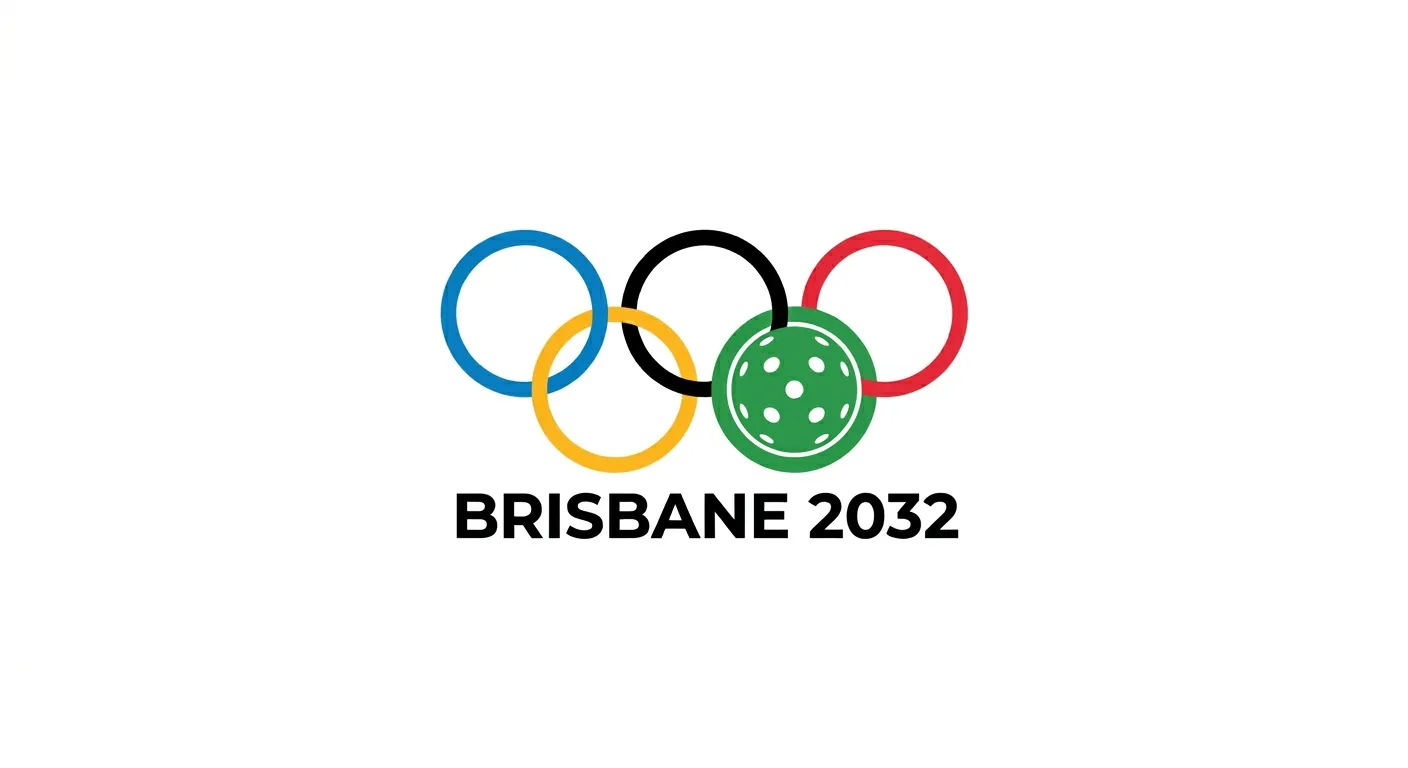
Pickleball is no longer just "that game with the funny name" played in retirement communities. It has transformed into a global phenomenon, shattering participation records and sparking a sophisticated international debate: Is it time for the "kitchen" to move to the Olympic village?
The Meteoric Rise of Pickleball
The statistical case for pickleball is staggering. In the United States alone, participation increased by an incredible 223.5% between 2020 and 2023. By early 2024, the sport was expected to reach nearly 20 million active players. This momentum is rapidly crossing borders, with vibrant communities emerging across South Korea, Australia, and Europe as the sport establishes itself as a truly international pursuit.
Nowhere is this expansion more evident than in Asia, which has become a primary engine for the sport's global reach. In countries like India, Vietnam, Singapore, and Malaysia, pickleball is experiencing a surge in professional investment and court construction.
Southeast Asia, in particular, has seen a proliferation of regional tournaments, with major cities repurposing tennis courts to meet the explosive demand. In Malaysia, JOOLA made history by hosting the highest pickleball match held at 500 meters at Merdeka 118 in Kuala Lumpur. China is also emerging as a key player, with growing grassroots interest that could provide the massive scale needed to push the sport toward permanent Olympic recognition.
This Asian expansion ensures that pickleball is no longer viewed as a North American niche, but as a diverse, multi-continental movement.
Why Wasn’t Pickleball in Paris 2024 or LA 2028?
Although the sport has been growing since 2020 and experienced explosive growth, pickleball was absent from the Paris 2024 Olympics. Though it is 2 years away, we won't be seeing pickleball on the Los Angeles 2028 games either. This is primarily due to three factors:
- The Seven-Year Rule: The International Olympic Committee (IOC) typically finalizes the core Olympic program seven years in advance. While pickleball began its viral surge around 2020, the planning cycles for Paris (set in 2017) and Los Angeles were already largely locked in.
- Crowded Competition: For the 2028 Games, host organizers had limited slots. Pickleball was competing against sports with deeper international professional histories, such as cricket, squash, and flag football.
- Organizational Unity: Until recently, the sport lacked a single, unified global governing body. The IOC requires a "one sport, one federation" model to manage global standards.
The third factor is perhaps the biggest for pickleball to enter the Olympics. Major organizations like the International Pickleball Federation (IPF) and the World Pickleball Federation (WPF) have historically competed for influence in global pickleball.
For example, both organizations sanctioned two separate "World Championships" in overlapping timeframes in 2024. The IPF World Pickleball Championships in Bali and the WPF World Pickleball Games in Taiwan. This forced national teams to choose sides and created a fragmented landscape necessary for IOC recognition.
So, What Does it take for Pickleball to enter the Olympics?
Although we may never get a shot to see pickleball in the LA Olympics in 2028, there is a chance to see the sport debut in Brisbane in 2032. For pickleball to be in the Olympics, it needs to meet a rigorous and multi-layered set of criteria established by the IOC to ensure global standardized competition and commercial viability.
- Global Governance and Recognition: The sport must be governed by an International Federation (IF) that is formally recognized by the IOC. This requires a demonstrated commitment to the Olympic Charter, including the implementation of strict World Anti-Doping Agency (WADA) protocols and ethical governance standards.
- Universal Participation: Historically, a sport needed to be practiced across at least 75 countries on four continents for men, and 40 countries on three continents for women. Under modern reforms, the IOC seeks global reach to ensure that the sport isn't just popular in one region but also has a competitive infrastructure that spans the globe.
- Technical and Professional Standards: The IOC evaluates the "technical level" of the sport, which includes standardized international rules, a reliable world ranking system, and a history of successful World Championships.
- The "New Norm" and Value Add: Beyond logistics, the IOC considers how a sport adds value to the Olympic "brand." This includes its appeal to younger audiences, its gender equality balance, its environmental footprint, and its potential for high television and digital media engagement.
- Host City Proposals: Under the "New Norm" flexibility, host cities (like Brisbane 2032) have the power to propose optional sports that reflect local popularity and youth trends, providing a vital entry point for emerging sports.
Australia has seen a massive uptick in club affiliations, and the sport is thriving across Queensland. With the "New Norm" reforms, the Brisbane host committee has the perfect opportunity to showcase a sport that is already a local favorite.
Pickleball in the Olympics (in 6 Years)
The inclusion of pickleball in Brisbane 2032 would be a victory for the everyman athlete. It represents a shift toward sports that prioritize community, longevity, and mental health alongside raw physical prowess. Research indicates that the sport significantly improves personal well-being and life satisfaction, making it a perfect cultural fit for the modern Olympic movement.
Imagine the atmosphere: the rhythmic "pop" of the paddle, the high-intensity "firefights" at the net, and the sight of world-class athletes dinking with surgical precision. Whether it happens in 2032 or beyond, pickleball’s Olympic journey is a testament to a sport that has captured the world's heart by making competition feel like a community.
Leave a comment below if you're excited to see pickleball in the Olympics. You can also follow us on Instagram @thepicklebase or leave your email and subscribe to our newsletter.