
In a landmark moment for the sport, pickleball has been officially recognized as a full medal sport at Indonesia’s National Sports Week (Pekan Olahraga Nasional, or PON). This makes Indonesia the first country in Southeast Asia to include pickleball as an official medal discipline in a national multi-sport event.
The announcement marks the culmination of years of grassroots growth, international competition results, and determined lobbying by the Indonesia Pickleball Federation (IPF). Pickleball will officially compete for medals at PON XXII 2028, co-hosted by West Nusa Tenggara (NTB) and East Nusa Tenggara (NTT).
From Exhibition to the Medal Stand
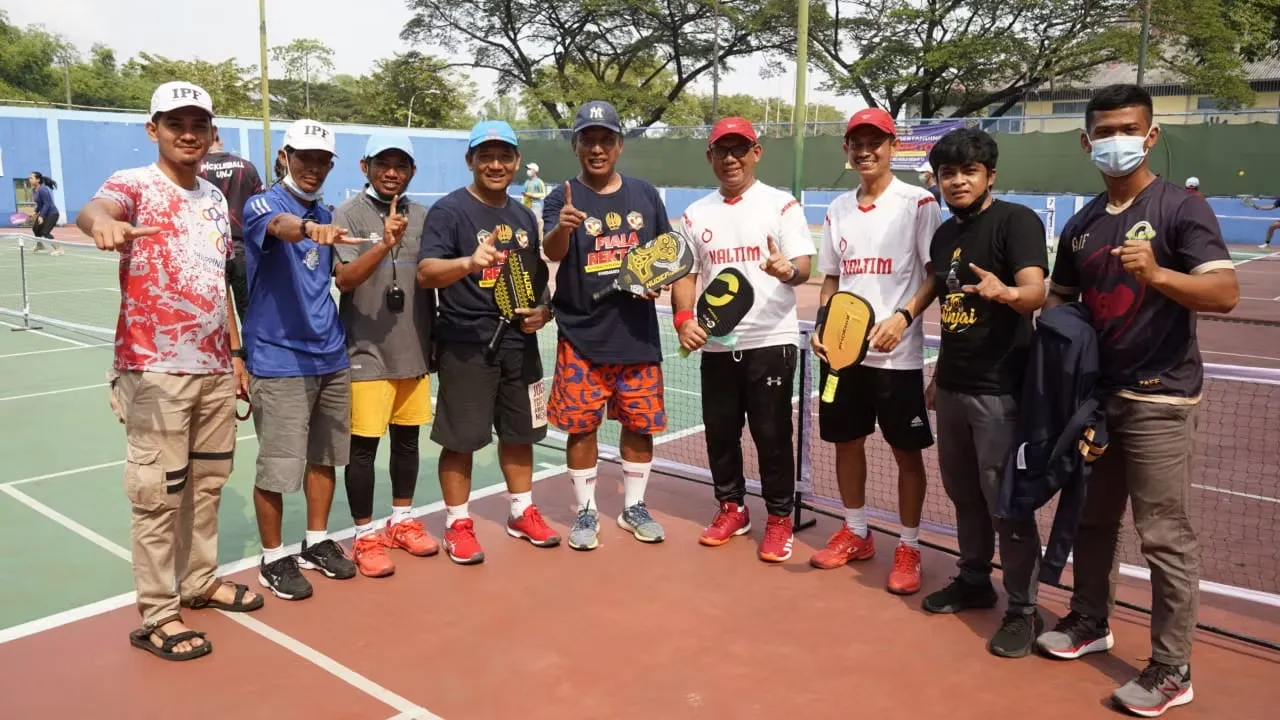
The road to this moment began at PON XXI 2024 in Aceh and North Sumatra, where pickleball competed for the first time on Indonesia’s biggest national sports stage but only as one of eight exhibition sports. Alongside padel, teqball, and floorball, Indonesian pickleball athletes showcased the sport to national audiences, officials, and provincial sports bodies. The reception was strong enough to keep the campaign for full inclusion alive.
At the IPF’s National Working Meeting (Rakernas) in April 2025, federation leaders formally addressed the technical and administrative requirements to secure a place at PON 2028. Secretary General Cak Susilo confirmed at the time that the criteria for full medal status were being actively worked through with KONI, Indonesia’s National Sports Committee. That work has now paid off.
What This Means for Indonesia’s 38 Provinces
With pickleball now a medal sport at PON, all 38 Indonesian provinces will be expected to field competitive athletes in pursuit of gold. That means a nationwide wave of preparation: building and upgrading courts, recruiting and training coaches, identifying talent, and developing provincial programs from scratch in regions where the sport is still in its infancy.
For established provincial hubs like Jakarta, West Java, and North Sumatra (where pickleball communities are already well-developed) the focus will shift to elite-level athlete preparation. For provinces where the sport is newer, the PON medal status provides a powerful incentive to invest in infrastructure and programs that may not have existed before.
NTB, as one of the host provinces for PON 2028, stands in a particularly interesting position. The province’s IPF branch has been vocal about its international ambitions, and in 2024, Pickleball Global recommended NTB develop at least 10 covered courts to meet international standards. With home-court advantage and the eyes of the nation on them, NTB’s pickleball program is expected to accelerate rapidly.
A Sport That Was Ready for This Moment
Pickleball arrived in Indonesia in 2019 and grew quickly despite launching during a global pandemic. The IPF officially formed in 2020 and, within just a few years, built a network of federations spanning all 38 provinces. Today, Indonesia has thousands of active players and a track record of international results, including gold and silver medals at the 2024 World Pickleball Championship Series in Phuket, Thailand, where Indonesia competed against 32 nations.
The sport’s appeal in Indonesia cuts across age groups and income levels. It can be played on existing badminton courts with minimal equipment investment, and research from Universitas Gadjah Mada found that an hour of pickleball burns around 400 calories, making it an attractive option for health-conscious players. For older Indonesians and those new to racket sports, its lower physical intensity compared to tennis or badminton has been a key draw.
A Major Opportunity for the Pickleball Industry
Beyond the sports field, the PON recognition carries significant commercial implications. Indonesia is a market of more than 270 million people, and a government-backed national mandate for pickleball development is the kind of structural tailwind that equipment brands, court developers, academies, and event organizers dream about.
With all 38 provinces now incentivized to build courts, hire coaches, and grow player bases, demand for equipment, training programs, and facilities is expected to surge. Industry estimates suggest an addition of more than 1,000 new players in the near term — a conservative figure given the scope of PON’s national reach. Tournament infrastructure will also need to grow to support regional qualification events leading up to the Games.
For international pickleball brands and businesses looking at Southeast Asia, Indonesia’s PON inclusion represents a rare entry point: a market with an already-active federation, enthusiastic grassroots communities, and now a government-level mandate to develop the sport at scale.
The Bigger Picture: Southeast Asia and Beyond
As the first Southeast Asian nation to give pickleball official medal status in a national multi-sport event, Indonesia may influence neighboring countries to accelerate their own recognition processes, particularly as the sport builds its case for Olympic inclusion.
Pickleball will not feature at the Los Angeles 2028 Olympics because the IOC’s seven-year planning cycle meant the window had already closed by the time the sport went viral around 2020. Brisbane 2032, on the other hand, is the realistic target. The groundwork being laid in Indonesia right now: courts, coaches, provincial programs, and a national competitive structure, puts the country in a strong position to field Olympic-caliber athletes when that moment arrives.
For pickleball globally, Indonesia’s recognition is another data point in the sport’s remarkable rise. From a backyard game invented in Washington State in 1965 to a medal sport in the world’s fourth most populous country, the sport’s trajectory has never looked more promising.
For more viral pickleball stories on your newsfeed, follow us on Instagram @thepicklebase, drop your email below, and join our newsletter.