
The United Pickleball Association of America (UPA-A) — the governing body overseeing the PPA Tour and Major League Pickleball, has released its first-ever official rulebook. This is significant because for years, professional pickleball operated under the same rules as your local recreational league.
The new standards take effect May 22, 2026, at the opening MLP event in Dallas. And while it may read like a governance document on the surface, the implications for professional pickleball are significant.
The rulebook doesn't really change anything within your local scene but is geared more towards the pros. We can still learn about how pickleball is actually played, officiated, and enforced at the highest level of the sport.
Here are the six biggest takeaways.
1. The Drop Serve Is Dead in Pro Play
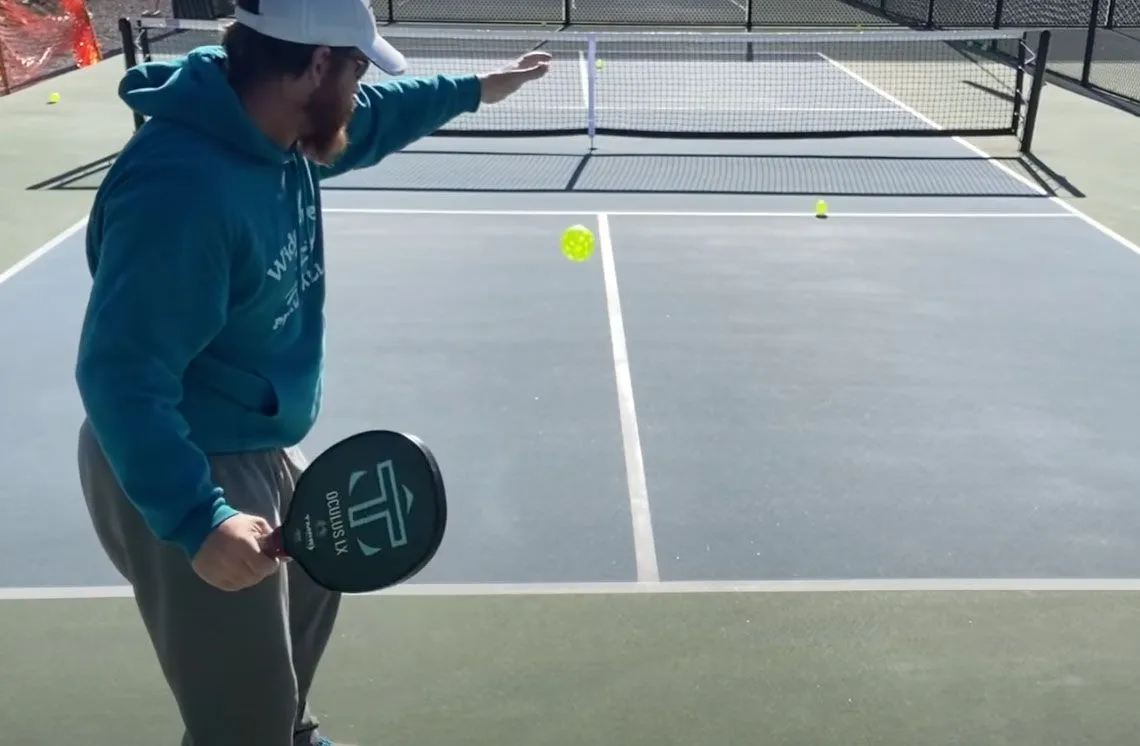
No gradual phase-out, no gray area. The UPA-A has banned the drop serve at the professional level outright:
"Professional competition requires use of the Volley Serve. The Drop Serve is not permitted."
But the serve changes go further than just eliminating the drop serve. The rulebook also tightens enforcement around the volley serve with a zero-tolerance standard for borderline mechanics. If a serve's legality (e.g. foot placement, ball release height, arm swing, point of contact, or paddle position) cannot be clearly confirmed with certainty by visual observation, it's illegal. A fault is called.
That's a dramatic shift from the current standard of calling only clear violations. Players with borderline serve mechanics will need to clean things up fast when competing under UPA-A jurisdiction.
2. Paddle Challenges Are Now a Formal Weapon
Paddle integrity has been a simmering controversy in professional pickleball for some time. The UPA-A has now fully codified paddle challenges, and the rules around them are both powerful and pointed.
Any player can formally challenge an opponent's paddle during a match, including in a gold medal match. The twist? The match result stands regardless of the outcome. Penalties come after the fact:
- Challenged paddle passes → the player who issued the challenge gets fined
- Challenged paddle fails → the player using the non-compliant paddle gets fined and potentially sanctioned
This reframes the challenge entirely. It's not a tactical in-match weapon but a long-term accountability mechanism. Challenging a paddle is now a serious, on-record act with consequences on both sides.
3. Video Challenges Come With Real Teeth
Each team gets one free challenge per game. After that, challenges are still available, but losing one costs you. A lost video challenge results in a Mark being assessed and one point being awarded to the opponent.
The line call accountability aspect is equally notable. If a video review overturns an "out" call, the player or team that made the incorrect out call faces a penalty. That introduces genuine consequences for bad line calls in high-stakes moments, which is something the sport has struggled to enforce consistently.
This is also happening alongside a broader tech rollout: MLP is implementing AI-powered automated line call systems (OWL AI) starting with the 2026 season, which will work in tandem with the new challenge structure.
4. A Card System for Player Behavior
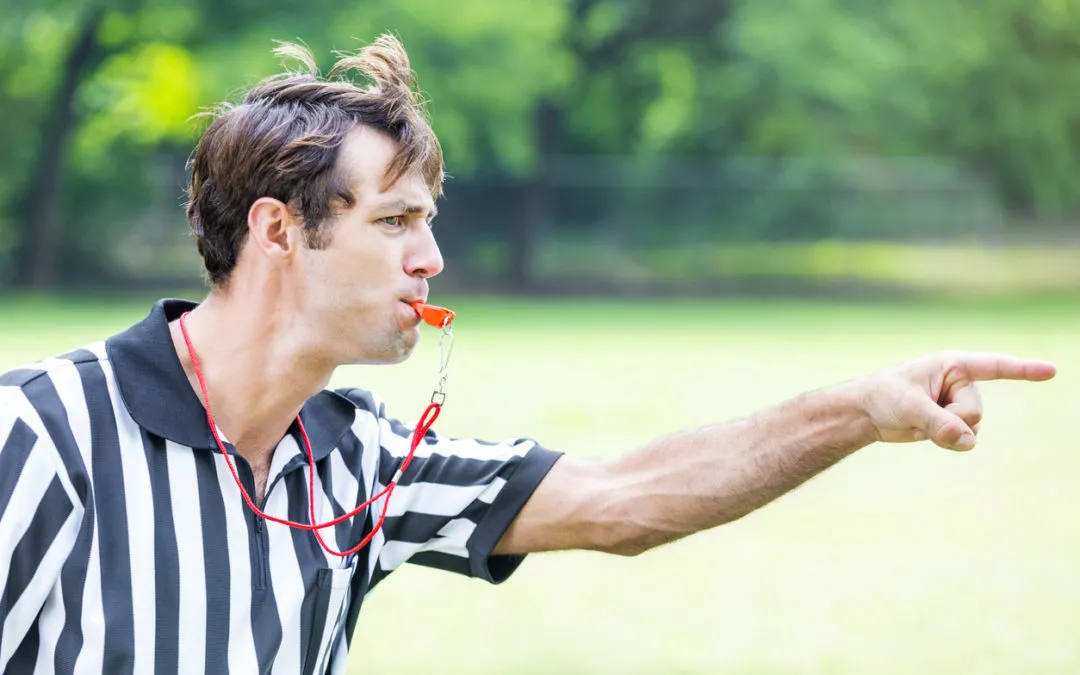
The UPA-A is borrowing a page from soccer with a formal tiered card system for on-court conduct:
Card | Consequence |
Warning | No penalty |
Mark (Blue Card) | Formal warning that can escalate |
Foul (Orange Card) | Automatic 1-point penalty to the opponent |
Four total points awarded against a player or team via fouls results in an automatic match forfeit.
The behaviors that trigger a Foul are spelled out explicitly and include some that will raise eyebrows:
- Paddle throwing near players, referees, or spectators
- Aggressively arguing with officials
- Delay of game tactics
- Coaching violations
- Patterns of play that involve deliberately conceding points
And perhaps most memorably, the rulebook specifically addresses blowing the ball over the net:
"A player may not attempt to influence, propel, or alter the ball's flight by any means other than a legal paddle strike (e.g., blowing on or fanning the ball, directing airflow, or using any object, apparel, or body movement to affect its path). A violation of this rule is a fault."
Yes, it's in the rulebook. Yes, it is now explicitly illegal.
5. Self-Officiating Gets Clearer Rules
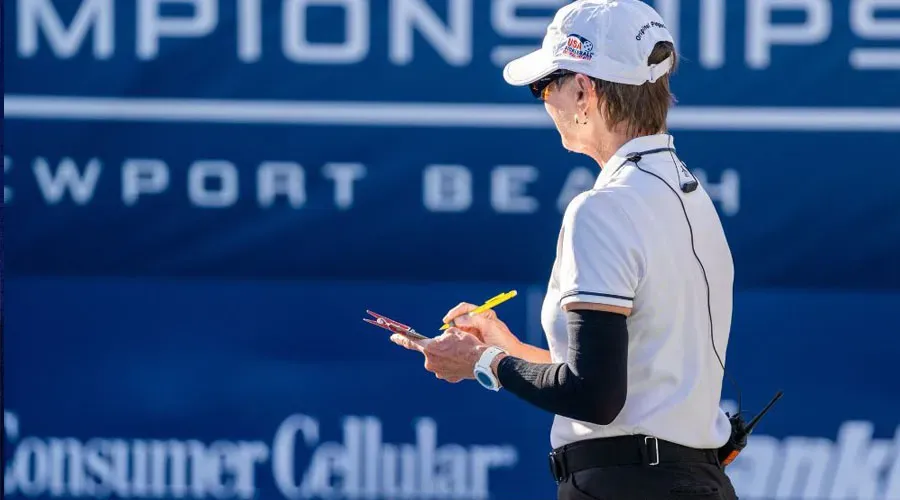
Even at the pro level, not every match has an on-court referee for every moment. The UPA-A addresses this directly, and the framework is tighter than most players are used to.
The core principle: players cannot enforce faults on opponents. They can question a suspected fault, but enforcement authority rests with the player alleged to have committed it.
The rulebook lays out three scenarios:
- Question raised after the rally: If the opponent doesn't acknowledge the fault, the rally stands as played.
- Play stopped during a live rally: The team that stopped play has committed a stoppage fault if the opponent doesn't acknowledge the alleged violation. The rally is awarded to the team that keeps playing.
- Partner disagreement: If partners on the same team disagree about whether their own team committed a fault, the benefit of the doubt goes to the opposing team.
The takeaway is simple: play through, then sort it out or live with the result. Stopping a live rally to enforce a fault against an opponent is now itself a faultable offense.
6. New Leadership Is Built to Enforce This
A rulebook is only as good as the system behind it. The UPA-A paired this release with two key hires that show they're serious about implementation:
- Onisha C. Smith, Director of Competitive Governance and Compliance, who actually led the development of the rulebook itself
- Howard Hepworth, Director of Referee Training and Development, is responsible for standardizing officiating across PPA and MLP events
Smith put it plainly:
"This rulebook is about more than rules — it's about trust, consistency, and the integrity of competition."
Hepworth's role is directly tied to what happens on court. The rulebook expands referee authority considerably, and that only works if referees are trained consistently to apply it. These hires signal that the UPA-A is building the infrastructure to enforce them.
Why This Matters Beyond the Pro Game
The UPA-A has stated openly that its hope is for these standards to eventually be adopted across other professional and minor leagues, competitive tournaments, and moneyballs. It's a blueprint for what professional pickleball governance could look like everywhere.
The UPA-A recently received IRS approval to operate as a not-for-profit, fully independent organization. The timing of this rulebook release is deliberate: this is an organization establishing legitimacy and authority at the moment it has the legal standing to do so.
The sport has been growing faster than its governance infrastructure could keep up with. This rulebook is a direct response to that gap.
As the rulebook itself puts it: "Rules do not limit competition, they make it possible."
The UPA-A rulebook takes effect May 22, 2026 at the MLP season opener in Dallas. Note: The UPA-A rulebook governs professional PPA Tour and MLP competition. Recreational and amateur sanctioned play continues to be governed by USA Pickleball's separate 2026 Official Rulebook.