

For years, you've heard a strictly American narrative about professional pickleball. To see the best players, earn the most points, or witness the "real" game, you had to look toward Utah, Florida, or Texas.
That era is over.
PPA Asia represents a structural revolution in the scene. Launched in 2025 as the regional arm of the United Pickleball Association (UPA), this move unifies the sport globally. Managed by industry veterans such as Kimberly Koh, the tour provides a professional pathway where your local wins finally translate into global PPA ranking points.
From the backcourts of Kuala Lumpur to the arenas of Da Nang, the center of gravity is shifting. This expansion marks the most significant development in the sport’s history since the paddle was first carved.
The End of "Second-Class" Competition
For too long, critics dismissed Asian players as "good…for Asia". PPA Asia deletes that qualifier. This integration into the UPA’s global ecosystem offers a clear hierarchy of competition levels, including 125, 250, 500, and 1000, that mirror the professional standards set in the US.
- Global Standard, Local Access: You aren't just playing local "opens" anymore. With the PPA Asia 125, 500, and 1000 tiers, you earn official PPA ranking points on your home soil. This points system is the "Golden Ticket," allowing top-performing Asian athletes to qualify for the PPA Finals in San Clemente. Stop planning 15-hour flights and massive budgets to climb the global ladder.
- The Arrival of the Giants: Elite professionals like Ben Johns, Anna Bright, and Federico Staksrud now compete in Southeast Asia, immediately raising the local competitive ceiling. Competing against or watching this caliber of talent provides a masterclass that no YouTube tutorial can replicate.
- Strict Professionalism: PPA Asia enforces standardized rules, world-class refereeing, and a level of competitiveness that demands you sharpen your game or get left behind. However, professionalism must be a two-way street. While the standard of play is rising, the community is already demanding better transparency and value. International giants must respect the local players as much as the local players respect the game.
The Gold Rush is Here in Asia
Pickleball now operates as a high-value economy rather than a casual hobby. PPA Asia catalyzes this massive commercial surge, turning a niche sport into a multi-million dollar regional industry. In Vietnam alone, shoppers spent nearly USD $20 million (VND511 billion) on pickleball gear within the first half of 2025. Research conducted by UPA Asia and YouGov Singapore suggests that over 280 million people across Asia now play the sport at least once a month, creating a massive, recurring consumer base for equipment and services.
Major Pickleball Brand Invasion
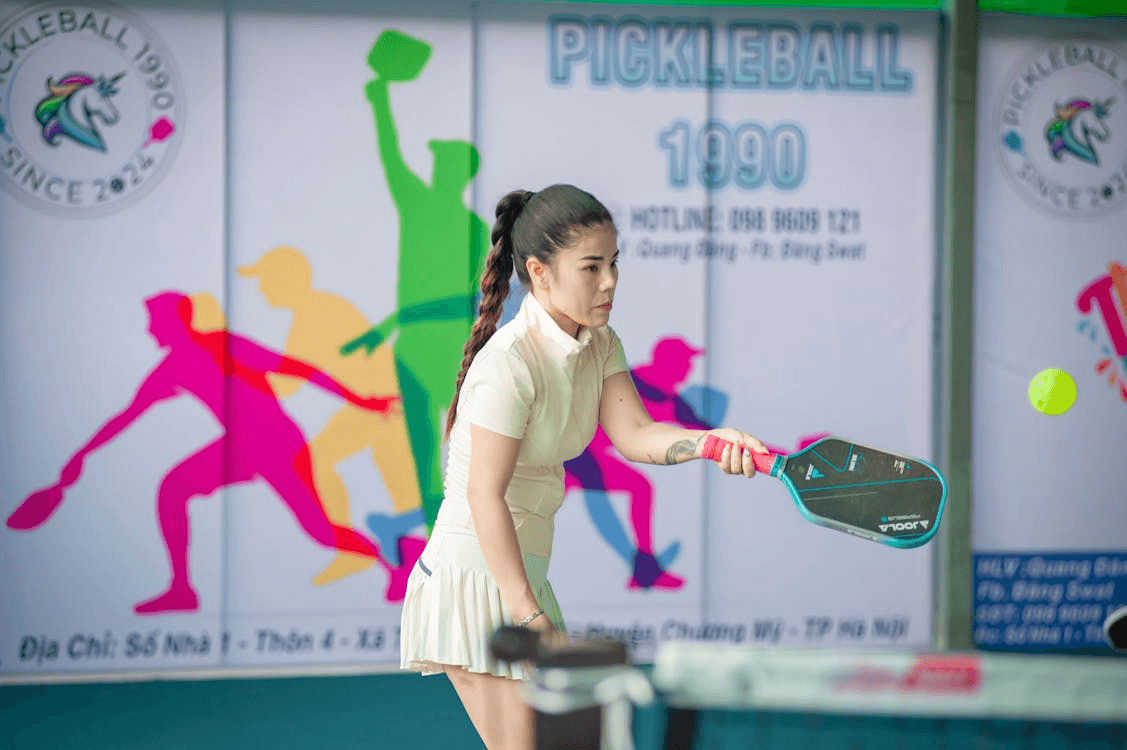
Well-known paddle and apparel brands like JOOLA, Franklin, and Selkirk finally see you as a priority. They are entering the market with full force, bringing better gear and sponsorship opportunities to your doorstep.
Look at the explosion of dedicated retail space: global giants like Decathlon have pivoted heavily toward pickleball inventory in their Asian flagship stores to keep up with the vertical climb in demand.
Availability of Professional Coaching
As the standard of play reaches pro levels, "recreational coaching" no longer cuts it. You need high-performance training, clinics, and certifications that meet international benchmarks. The surge in PPA-sanctioned events has created a lucrative market for professional instructors who can bridge the gap between amateur play and the professional circuit.
Media & Content Value
PPA Asia delivers professional production. When you watch matches broadcast with high-octane commentary and elite visuals, the content gains real value. Social media analysts are replacing influencers as your local highlights go global. Digital viewership for Asian-based tournaments is already rivaling established U.S. events, proving that the Asian consumer base is ready to spend on the sport.
Infrastructure Evolution
We are moving past converted tennis courts. Specialized clubs and multi-million-dollar facilities are emerging because PPA Asia proved there is a sustainable audience for "stadium-style" pickleball.
Specialized clubs and multi-million-dollar facilities are emerging because PPA Asia proved there is a sustainable audience for "stadium-style" pickleball. Look at Tomaz Pickleball Club in Malaysia, which has set a new benchmark as the largest indoor, fully air-conditioned facility with professional-grade court sizing.
Meanwhile, in Ho Chi Minh City, courts are popping up like 7-Elevens. You can find multiple clubs on almost every other street, particularly in District 2, alongside massive investments in purpose-built complexes in Da Nang designed specifically for international tournaments.
Asia is No Longer "Behind"
Vietnam and Malaysia are growing at a scale that makes the U.S. numbers look modest by comparison. While the U.S. celebrated a massive milestone of 24.3 million active players in 2025, the UPA Asia study reveals that over 812 million people across Asia have tried the sport, with 282 million playing at least once a month. To put that in perspective, the number of frequent players in Asia alone is more than ten times the total player base of the United States.
International tours now come HERE. For the first time, the "Asia Leg" has become a vital part of the professional circuit. It's evident in the expansion of MLP (Major League Pickleball) Australia into Asia, the PPA Tour’s 2024 stop in Vietnam, and the massive MLP India event that drew global attention.
The Global Pivot
PPA Asia signals that the "growing pains" of Asian pickleball are finished. Asia has moved beyond being a mere satellite of the American scene to become the sport's new global frontier. Whether you are a player, a coach, or a business owner, the message is clear: The game has changed, and the court finally belongs to you.


Comments
No comments yet. Be the first to share your thoughts!