
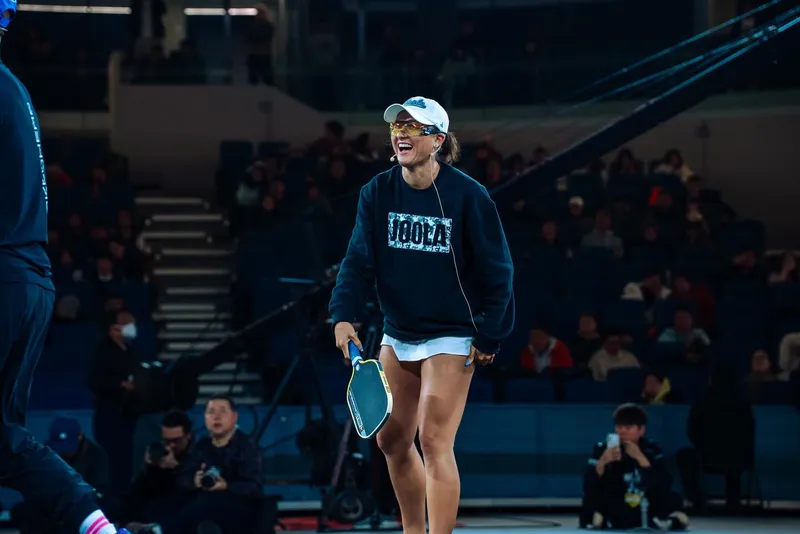
If you have ever watched Anna Bright dominate a pickleball court and wondered, "How does she do it?" you aren't alone. As the number two professional pickleball player in the world, Bright gets that question a lot.
While it's easy to write off a pro's success to natural athleticism or a high-level tennis background, the reality of what separates the elite from the everyday player is much more actionable. In a recent breakdown, Anna Bright pulled back the curtain to share the five brutally honest reasons why she is simply better at pickleball than the average player.
Here are the five key habits that set Anna Bright apart, and how you can implement them into your own game.
1. She Drills More Than You
We have all heard it before: you need to drill to get better. Instead of simply participating in standard drills, Anna Bright actively prioritizes them over casual games.
In her first few months of playing, she rarely drilled because rec play was enough to see rapid improvement. But eventually, everyone hits a plateau. To break through it, Bright shifted her routine. Today, she maintains a staggering 65/35 (and sometimes even 3:1) split of drilling to rec play.
Why it matters: Drilling gives you vastly more touches on the ball than a standard match. It allows you to refine new skills and get dedicated repetitions of your weakest shots. If you want to move a shot from the practice court to a high-stakes match, you need to find a drilling buddy and learn to love the process of improving.
2. She Hates Missing More Than You
Pickleball is supposed to be fun, but if you want to get better, you need to care about your mistakes. According to Bright, the top pros who consistently make tournament finals like Ben Johns, Anna Leigh Waters, and herself share a common trait: they absolutely despise missing.
This isn't about throwing your paddle or throwing a tantrum on the court. It's about being deeply bothered by unforced errors and handing out "unearned points."
Why it matters: If you casually brush off your unforced errors and immediately move to the next point, you aren't mentally logging what went wrong. Bright estimates that 98% of amateur players could improve their DUPR score by a solid half-point simply by decreasing their unforced errors by 10%. Stop giving your opponents free points.
3. She Tries Harder in Rec Play
There is a common mindset that "rec play is just rec play." Bright firmly disagrees. While she acknowledges that she can't replicate true tournament intensity in casual games, she and her practice partners (like Anna Leigh Waters) try incredibly hard to win.
They bring intention, focus, and good footwork to every single session. As Bright points out, every shot you hit either makes you better or makes you worse.
Why it matters: If you are lazy with your footwork or make bad strategic decisions just because "it's only rec," you are actively building terrible habits that will inevitably show up in crunch time during a real match. Use rec play to try new things, but hold yourself to a high standard while doing it.
4. She Studies Her Own Game Tape
When was the last time you watched a full recording of yourself playing a match, especially one where you didn't play well?
For most amateurs, the answer is "never." It's uncomfortable. You might think you look slow, uncoordinated, or clumsy. But Bright insists that watching your own tape is non-negotiable if you want to improve.
You can also get additional insights with the help of AI to know exactly what you need to work on. We have an article about getting your DUPR ratings with the help of AI.
Why it matters: Film doesn't lie. Watching yourself play reveals tendencies you are completely blind to in the moment. You might realize your technique is flawed, you aren't getting up to the kitchen line fast enough, or you have a predictable habit. Bright once realized she wasn't mixing up her shots against Ben Johns only after watching tape, allowing her to fix the leak in her game.
5. She Mastered the Art of Copying
Beyond analyzing her own game tape, Bright obsessively studies the techniques of other players. No great player improves in a vacuum. Ben Johns has openly admitted to piecing his game together by copying other players, and Bright operates the same way.
She admits that one of her biggest talents is watching what someone else does well and figuring out how to adapt it to her own game. For example, she learned how to hit a devastating forehand misdirect up the line simply by screen-recording Vivian David's matches and re-watching them over and over until it clicked.
Why it matters: You can learn from everyone: your peers, players who are slightly better than you, and the pros. Watch with a focused eye, figure out what works for them, and start shadow-swinging those mechanics into your own game.
The Brighter Way Forward
The gap between Anna Bright and the average player is commitment. By replacing mindless games with deliberate drilling, analyzing your own failures on tape, and shamelessly copying the success of others, you transform pickleball from a casual hobby into a craft. If you stop accepting mediocrity in practice and start treating every shot as a data point for improvement, you won't just break your plateau, you'll leave it in the rearview mirror.
Follow @thepicklebase on Instagram for more pickleball tips or subscribe to our newsletter.